
An ancient Kakhetian white grape, and the amber wine made by fermenting it on its skins and stems in a qvevri buried in the ground. That method — now copied worldwide as orange wine — makes a white grape produce something tannic and grippy.
It is wine, made under licence in a buried clay vessel that regulates its own temperature through the ground; there is no kitchen procedure behind it.
What goes into it
- Rkatsiteli grapes, with their skins and stems
- a qvevri — a large clay vessel lined with beeswax and buried
- vineyard yeasts
How it is made
Crushed grapes go into the qvevri with their skins and stems and ferment on wild yeasts. The vessel is sealed and left buried, where the surrounding earth holds it at a steady temperature through the year, for months. The wine is then drawn off the solids. Nothing is added and the skins supply tannin, colour and protection from oxidation.
How long it takes: six months or more in the buried qvevri
How it is eaten
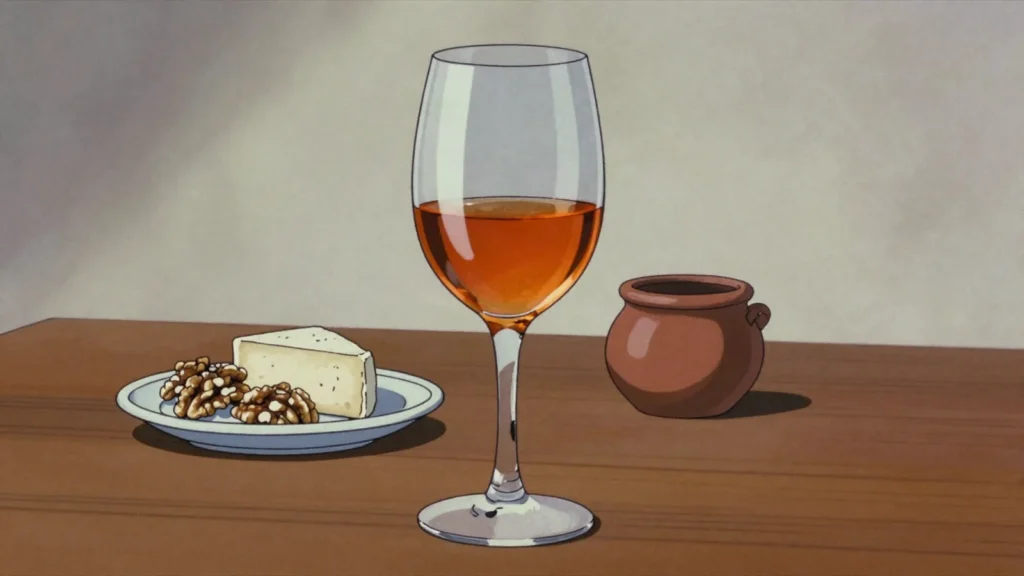
At cellar temperature, not chilled, with walnut sauces, cheese and grilled meat.
History
Ancient Kakhetian white; fermented with skins and stems in qvevri it makes the tannic amber wine now copied worldwide.
Frequently asked questions
What is Rkatsiteli?
Rkatsiteli is a wine & spirit from Georgia: white grape fermented on its skins in buried jars, giving amber wine. Ancient Kakhetian white; fermented with skins and stems in qvevri it makes the tannic amber wine now copied worldwide.
How is Rkatsiteli made?
Crushed grapes go into the qvevri with their skins and stems and ferment on wild yeasts. The vessel is sealed and left buried, where the surrounding earth holds it at a steady temperature through the year, for months. The wine is then drawn off the solids. Nothing is added and the skins supply tannin, colour and protection from oxidation. It takes six months or more in the buried qvevri.
Can I make Rkatsiteli at home?
No, and the atlas gives no method for it. It is wine, made under licence in a buried clay vessel that regulates its own temperature through the ground; there is no kitchen procedure behind it.
What goes into Rkatsiteli?
Rkatsiteli grapes, with their skins and stems, a qvevri — a large clay vessel lined with beeswax and buried, vineyard yeasts.
How is Rkatsiteli eaten?
At cellar temperature, not chilled, with walnut sauces, cheese and grilled meat.