
Ingredients
Tea
- 2 tablespoonsgreen brick tea, or loose green tea
- 1 litrewater
To finish
- 500 mlwhole milk
- 1 teaspoonsalt, or to taste
- 1 tablespoonbutter or cream, optional
Sometimes added
- a handful of toasted millet
- a spoonful of fried dough pieces
- a small piece of mutton fat, in winter
Directions
- Put the tea and the water into a wide pan. Bring it to the boil over a high heat. Lower it and simmer it for about ten minutes. Pour the milk into the boiling tea.
- Bring it back to a simmer over a medium heat. Watch it closely because milk boils over very suddenly.
- Let it simmer gently for about five minutes. Fill a ladle with the hot tea and raise it high. Pour it back into the pan from that height.
- Repeat this ten or fifteen times in a row. Add the salt and stir it in thoroughly. Start with less than you think and taste as you go. It should taste lightly salty like a mild broth.
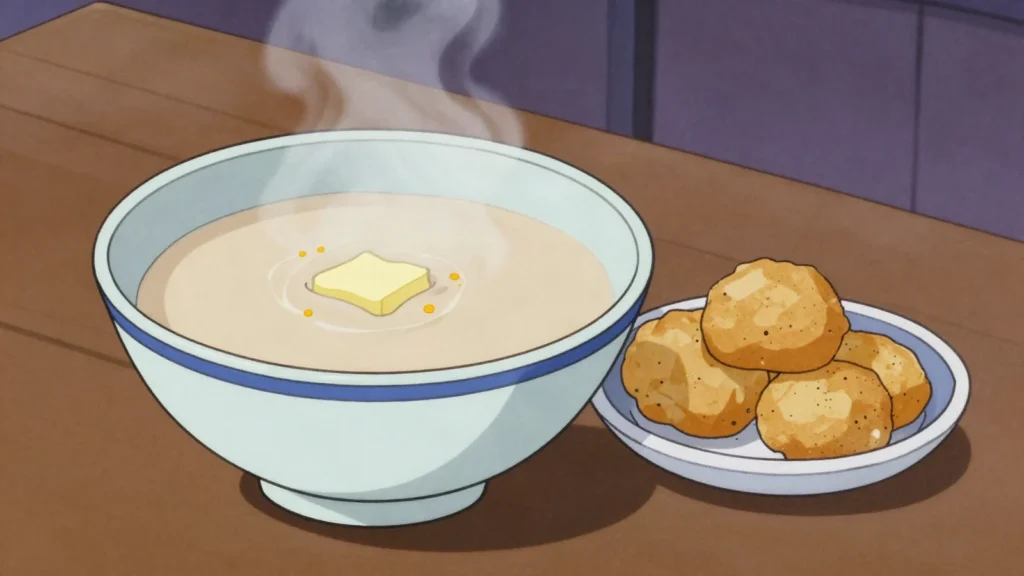
- Add the butter or cream if you want it richer. That version is heavier and suited to cold weather work.
- Pour it through a fine sieve into a jug or thermos. Discard the spent tea leaves in the sieve. Serving it is done hot in bowls rather than cups.
- Hold the bowl in both hands when receiving it from a host. The tea is kept hot in a thermos all day in most households.
Technique
- Brick tea was made from coarse leaves and stems compressed into slabs for transport.
- Its use as a trade currency across Mongolia and Siberia is well documented and continued in remote areas into the twentieth century.
Substitutions
- Any loose green tea replaces brick tea, using slightly less because it is stronger.
- Evaporated milk diluted with water is widely used and keeps far better than fresh milk.
Variations
- A richer winter version adds mutton fat or a large piece of butter.
- Some households cook rice or millet directly in the tea to make a light meal.
- The Kalmyk and Tibetan versions of salted tea are close relatives made the same way.
History
A savory, salted milk tea, traditionally made by boiling brick tea, milk and salt together, sometimes with a small amount of butter or fat added, developed among Mongolian nomadic herding communities where milk and salted, savory flavouring were both more consistently available than sugar, distinguishing it clearly from the sweetened milk teas more common in South Asian and some other cultures. Brick tea itself, compressed blocks of tea leaves that traveled and stored far better than loose leaf tea across long nomadic distances and historic trade routes, reflects centuries of trade contact between Mongolia and China, from which the compressed tea format was generally introduced. Suutei tsai remains an everyday staple across Mongolian households, traditionally offered to any guest immediately upon arrival as a basic mark of hospitality.
Frequently asked questions
What is Suutei Tsai?
Suutei Tsai is a drink from Mongolia: salted milk tea simmered with green tea, drunk throughout the day. A savory, salted milk tea, traditionally made by boiling brick tea, milk and salt together, sometimes with a small amount of butter or fat added, developed among Mongolian nomadic herding communities where milk and salted, savory flavouring were both more consistently available than sugar, distinguishing it clearly from the sweetened milk teas more common in South Asian and some other cultures. Brick tea itself, compressed blocks of tea leaves that traveled and stored far better than loose leaf tea across long nomadic distances and historic trade routes, reflects centuries of trade contact between Mongolia and China, from which the compressed tea format was generally introduced. Suutei tsai remains an everyday staple across Mongolian households, traditionally offered to any guest immediately upon arrival as a basic mark of hospitality.
How long does Suutei Tsai take to make?
Suutei Tsai takes 5 minutes of preparation and 20 minutes of cooking. The recipe makes serves 4. It is rated easy to make.
What can I substitute in Suutei Tsai?
Yes, within limits. Any loose green tea replaces brick tea, using slightly less because it is stronger. Evaporated milk diluted with water is widely used and keeps far better than fresh milk.
What is the most important thing to get right in Suutei Tsai?
Pour it through a fine sieve into a jug or thermos. Discard the spent tea leaves in the sieve. Serving it is done hot in bowls rather than cups.