
Ingredients
The dough
- 700 gstrong white flour
- 470 mlwarm water
- 10 gdried yeast
- 15 gsalt
- 1 tablespoonsugar
- 2 tablespoonsoil, optional
To bake
- flour, to dust
- a baking tray
- a tray of water, for steam
- a sharp blade
To serve
- split hot
- with butter
- or Dominican salami
- and coffee
Directions
- Butter or fried salami goes in. The crust should be crisp and thin. Steam in the first minutes matters. It keeps the crust soft while it rises. Warm all of the water very gently. Stir the yeast and sugar into it. Let it stand there for ten minutes. The yeast should foam visibly.
- Put the flour in a large bowl. Add the salt to one side of it. Salt kills yeast on direct contact. Keep them apart until the water goes in. Combining it is straightforward enough.
- Add the yeast water to the flour. Add the oil if you are using it. Bring it together into a dough. This is a fairly wet sticky dough. Knead it for about ten minutes. A wet dough sticks to everything at first. Use a scraper rather than more flour. Judging it takes a stretch test. Put the dough in an oiled bowl.
- Cover it and leave it somewhere warm. Give it about ninety full minutes. Divide it into eight equal pieces. Weigh them if you want them even. Shape each piece into a short oval. Flatten it and roll it up tightly. Seal the seam as you roll it up. Roll it tight to build surface tension. Set them all out on a lined tray. Cover them and leave them to rise. Give them about forty-five minutes.
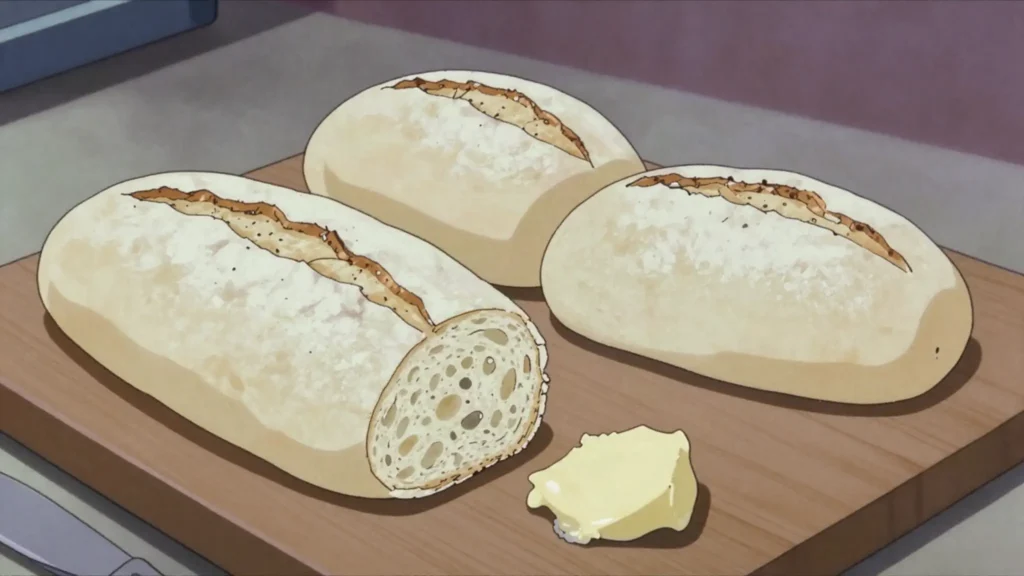
- Leave good wide gaps between them. Heat the oven to two hundred and thirty degrees. Put a tray in the bottom to heat. Bread needs a genuinely hot oven. Preheat it for a full twenty minutes. Slash each roll lengthwise with a blade. Use a very sharp thin razor blade. Slash quickly and confidently. About a centimetre deep is right.
- Pour hot water into the hot bottom tray. Water on a hot tray bursts into steam. Stand back and close the door fast. Never lean out over the hot tray. Bake them for about twenty-five minutes. Twenty-five minutes is usually enough.
- Lift them out onto a wire rack. Serving them is done piping hot. Spread plenty of butter on them. Serve strong coffee alongside. Refresh them briefly in a hot oven.
Technique
- This is a lean dough of flour, water, yeast and salt with no milk or egg and little or no fat — which gives the crisp crust and also means it stales within hours, hence buying it hot twice a day. The atlas also carries pain maison from Mauritius, the same kind of bread and the same habit; a lean roll bought fresh twice daily is a genuinely widespread arrangement descending from European colonial baking.
- Steam in the first minutes keeps the crust soft while the roll expands fully, and the crust crisps once the steam goes. Pour hot water into a preheated bottom tray and close the door immediately — the burst of steam is genuinely hot, so stand back and never lean over it.
- It is a fairly wet dough at about sixty-seven per cent water, which gives the open crumb but sticks to everything at first. Resist adding lots of extra flour and use a dough scraper instead; it becomes manageable as the gluten develops.
Substitutions
- Two tablespoons of oil in the dough is optional and gives a slightly softer crumb; the plain water version is the traditional one.
- Slash each roll lengthwise a centimetre deep with a very sharp blade, quickly and confidently, since a dull knife drags the dough.
Variations
- Dominican salami is a cooked sausage rather than a cured one, fried in slices and eaten in this bread with coffee for breakfast.
- Roll each piece up tightly and seal the seam to build surface tension, which is what gives a good rise; a slack roll spreads flat.
- Cool them on a rack rather than the tray, since a tray traps steam and softens the bottom crust — and listen for the crackling as they cool, which is the crust contracting.
History
The Dominican daily bread, baked in small neighbourhood ovens and bought hot twice a day.
Frequently asked questions
What is Pan de agua?
Pan de agua is a bread & pastry from Dominican Republic: crusty white water roll split for breakfast with butter or salami. The Dominican daily bread, baked in small neighbourhood ovens and bought hot twice a day.
How long does Pan de agua take to make?
Pan de agua takes 30 minutes plus rising of preparation and 25 minutes of cooking. The recipe makes 8 rolls. It is rated medium to make.
What can I substitute in Pan de agua?
Yes, within limits. Two tablespoons of oil in the dough is optional and gives a slightly softer crumb; the plain water version is the traditional one. Slash each roll lengthwise a centimetre deep with a very sharp blade, quickly and confidently, since a dull knife drags the dough.
What is the most important thing to get right in Pan de agua?
Add the yeast water to the flour. Add the oil if you are using it. Bring it together into a dough. This is a fairly wet sticky dough. Knead it for about ten minutes. A wet dough sticks to everything at first. Use a scraper rather than more flour. Judging it takes a stretch test. Put the dough in an oiled bowl.