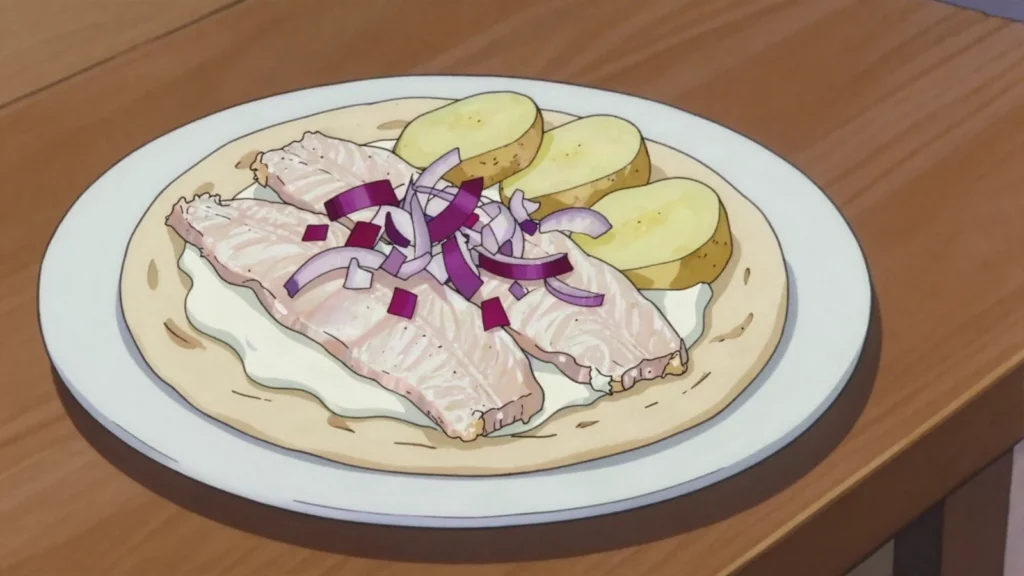

Trout salted and fermented in brine for months, then eaten raw on flatbread with sour cream and onion. The practice is documented in Norway from the fourteenth century, and it is the milder cousin of Swedish surströmming — fermented, but not to the same extreme.
It is a months-long, deliberately low-salt ferment of raw fish held near freezing and then eaten without cooking — and the low salt is the point rather than an oversight. The Norwegian food authority issues guidance on it specifically because home-made batches have caused botulism, and the safety margin depends on holding a temperature close to freezing throughout. Commercial rakfisk is produced under controlled conditions for exactly that reason.
What goes into it
- freshwater trout or char, gutted
- salt, at around 6% of the fish weight
- sometimes a little sugar
- cold water
How it is made
The fish are gutted, packed in barrels with a measured salt dose and covered in brine, then weighted and left in a cold store — traditionally an outhouse or cellar held close to freezing. Over two to twelve months enzymes and salt-tolerant bacteria break the flesh down without cooking it, giving a soft, strongly aromatic fish that is eaten raw. The salt level is deliberately low, which is what allows the ferment to proceed at all.
How long it takes: two to three months for a mild rakfisk, up to a year for a strong one
How it is eaten
Sliced thin on lefse or flatbread with sour cream, raw onion and boiled potato, with beer and aquavit.
History
Fermented trout or char, salted and left to ferment for months, traditionally in a barrel or container kept cool in a cellar or buried in snow, a preservation method documented in Norwegian mountain and inland communities for centuries as a way to store fish through long winters in regions without reliable access to fresh salt for simple salting or to consistent cold enough for freezing before refrigeration existed. Its fermentation produces a notably strong smell and flavour that some outside Norway find challenging, while many Norwegians, particularly in the inland valleys where the tradition remains strongest, consider it a genuine seasonal delicacy. Rakfisk is traditionally eaten in late autumn and winter specifically, timed to when a batch begun months earlier reaches proper fermentation.
Frequently asked questions
What is Rakfisk?
Rakfisk is a fermented & pickled from Norway: months-fermented trout on flatbread with sour cream, onion. Fermented trout or char, salted and left to ferment for months, traditionally in a barrel or container kept cool in a cellar or buried in snow, a preservation method documented in Norwegian mountain and inland communities for centuries as a way to store fish through long winters in regions without reliable access to fresh salt for simple salting or to consistent cold enough for freezing before refrigeration existed. Its fermentation produces a notably strong smell and flavour that some outside Norway find challenging, while many Norwegians, particularly in the inland valleys where the tradition remains strongest, consider it a genuine seasonal delicacy. Rakfisk is traditionally eaten in late autumn and winter specifically, timed to when a batch begun months earlier reaches proper fermentation.
How is Rakfisk made?
The fish are gutted, packed in barrels with a measured salt dose and covered in brine, then weighted and left in a cold store — traditionally an outhouse or cellar held close to freezing. Over two to twelve months enzymes and salt-tolerant bacteria break the flesh down without cooking it, giving a soft, strongly aromatic fish that is eaten raw. The salt level is deliberately low, which is what allows the ferment to proceed at all. It takes two to three months for a mild rakfisk, up to a year for a strong one.
Can I make Rakfisk at home?
No, and the atlas gives no method for it. It is a months-long, deliberately low-salt ferment of raw fish held near freezing and then eaten without cooking — and the low salt is the point rather than an oversight. The Norwegian food authority issues guidance on it specifically because home-made batches have caused botulism, and the safety margin depends on holding a temperature close to freezing throughout. Commercial rakfisk is produced under controlled conditions for exactly that reason.
What goes into Rakfisk?
Freshwater trout or char, gutted, salt, at around 6% of the fish weight, sometimes a little sugar, cold water.
How is Rakfisk eaten?
Sliced thin on lefse or flatbread with sour cream, raw onion and boiled potato, with beer and aquavit.