
Ingredients
Cabbage
- 6firm white cabbages, about 8 kg, outer leaves removed
- 400 gcoarse non-iodised salt, plus more for the brine
Brine
- 5 litreswater
- 250 gcoarse non-iodised salt — 5% of the water’s weight
Aromatics
- 2 tbspblack peppercorns
- 6bay leaves
- 2 tbspcoriander seed
- 2quinces or 2 apples, quartered
- 1 handfulmaize kernels
Directions
- Cut a deep cone out of the core of each cabbage with a knife, leaving the head whole. Pack the cavity tight with coarse salt — this is how the salt reaches the middle of a head that is never cut open.
- Stand the cabbages core-up in a scrubbed crock or food-grade barrel, packing them close so they cannot bob about.
- Dissolve the 250 g of salt fully in the 5 litres of water and pour it over until the cabbages are covered by at least 5 cm. Weigh the salt rather than guessing: 5% is what holds the barrel while the lactic bacteria establish themselves.
- Tuck the peppercorns, bay, coriander, quince and maize among the heads. The maize is traditional and does real work — its starch feeds the bacteria and speeds the first days of the ferment.
- Weight everything down under a scrubbed plate or a clean stone so nothing rises above the brine, and cover with a cloth.
- Once a week, draw off several litres of brine from the bottom with a jug or a tube and pour it back over the top. This is the step Bulgarian households never skip: it redistributes the salt, which otherwise sinks and leaves the top heads under-brined and slimy.
- Ferment somewhere cold — a cellar or an unheated room at 10 to 15°C (50 to 59°F) — for four to six weeks, until the leaves are translucent and sharply sour and the brine is clear and tart.
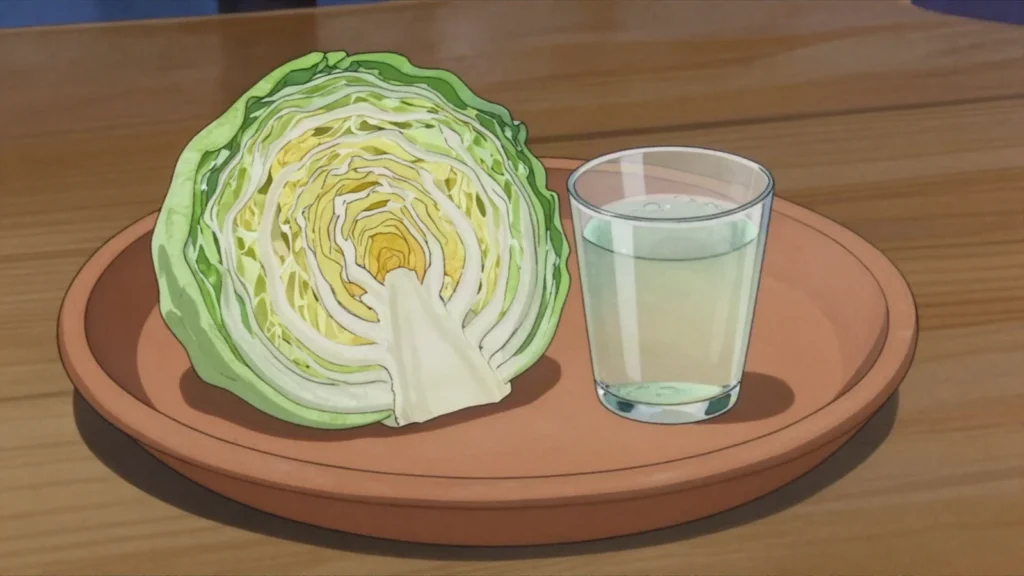
- Keep it cold through the winter. Peel off whole leaves for sarmi, shred the rest for salad, and drink the zelev sok cold.
Technique
- The weekly brine circulation is not optional. Without it the salt stratifies, and the top of the barrel goes soft and ropy while the bottom is fine.
- Cold and slow is the whole method. Fermented warm it is ready in two weeks and the leaves tear when you try to roll them.
- Anything above the brine grows mould. Check the weight every time you circulate the brine.
Substitutions
- A large plastic food-grade bucket in place of a crock, which is what most households now use.
- Shredded cabbage in jars if you have no cellar — the same 5% brine, ready in three weeks, but the leaves are then no use for sarmi.
Variations
- The Serbian kiseli kupus and Romanian varză murată are the same preserve.
- Some households add a beetroot, which turns the whole barrel pink and is done as much for looks as for taste.
History
Bulgarian households ferment cabbage each autumn, and the zelev sok brine is a famed hangover remedy.
Frequently asked questions
What is Kiselo zele?
Kiselo zele is a fermented & pickled from Bulgaria: whole cabbages soured in barrels; leaves used for sarmi, brine drunk cold. Bulgarian households ferment cabbage each autumn, and the zelev sok brine is a famed hangover remedy.
How long does Kiselo zele take to make?
Kiselo zele takes 45 min plus 4 to 6 weeks fermenting of preparation and no cooking at all. The recipe makes fills a 10-litre crock, about 6 cabbages. It is rated medium to make.
What can I substitute in Kiselo zele?
Yes, within limits. A large plastic food-grade bucket in place of a crock, which is what most households now use. Shredded cabbage in jars if you have no cellar — the same 5% brine, ready in three weeks, but the leaves are then no use for sarmi.
What is the most important thing to get right in Kiselo zele?
Cut a deep cone out of the core of each cabbage with a knife, leaving the head whole. Pack the cavity tight with coarse salt — this is how the salt reaches the middle of a head that is never cut open.