
Ingredients
Sugar base
- 500 gsugar
- 150 mlwater
- 1 tbsplemon juice
Flour roux
- 250 gbutter
- 250 gplain flour
Optional
- 1 tspvanilla
- 100 gground pistachio, to finish
Equipment
- a sugar thermometer
- a large marble slab or a very clean worktop
- a second pair of hands
Directions
- Make the flour roux first: melt the butter in a wide pan and stir in the flour. Cook it over a low heat, stirring constantly, for 25 to 30 minutes. Cook the roux slowly and for a long time until it turns pale sandy gold and smells nutty. Do not let it brown, which turns the floss grey.
- Keep it warm and loose, and it should be pourable rather than stiff. It inverts some of the sugar and stops it crystallising, which is essential for a syrup that has to be pulled.
- Use a thermometer and be exact. Pour the syrup onto a lightly oiled marble slab and let it cool at the edges. Fold the edges into the centre with a scraper as they cool, working the mass into a thick pliable lump.
- Work carefully and keep everyone else back. When it is cool enough to handle but still hot, form it into a ring. Put the ring on the slab and coat it generously with the warm flour roux, inside and out. The roux is what keeps the strands separate. Coat it in roux again, and repeat.
- Add more roux at every single fold, without exception, and work fast while the sugar is still warm. The sugar hardens as it cools and once it stops stretching, it is finished.
- Keep the slab warm if you can, or work near a low oven. Continue until the strands are fine and silky and the whole thing has gone from a rope to a soft mass.
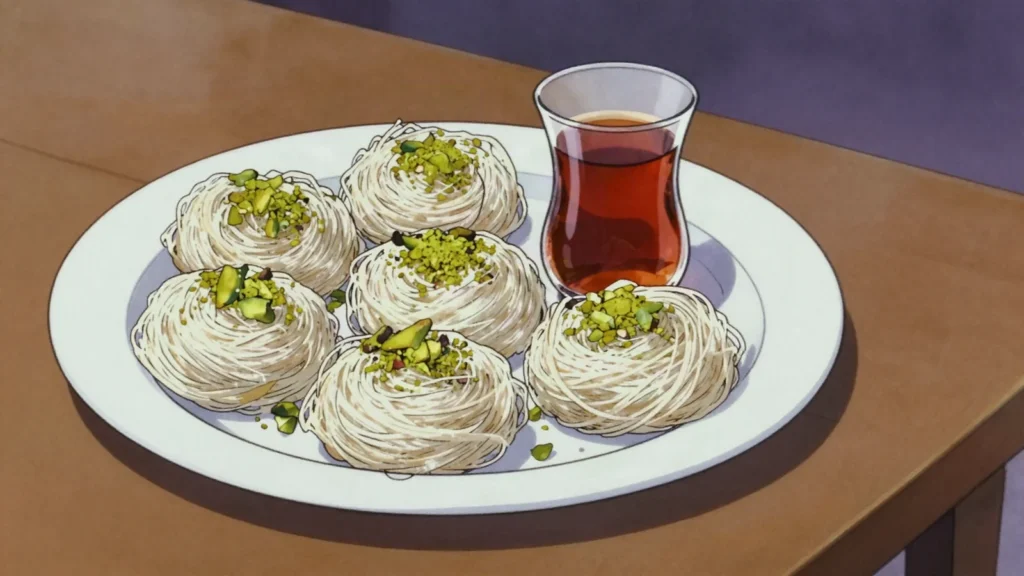
- Cut the finished floss into pieces with scissors. Press the pieces very lightly into small nests, and handle them as little as possible. Dust with ground pistachio if you want. Pişmaniye dissolves and goes sticky within hours in a damp room, and it is traditionally made in cold dry weather.
Technique
- It is sold in boxes across Turkey and Kocaeli is the place most associated with it.
- It keeps a few weeks sealed and dry, and collapses quickly once opened in humid air.
- The name is said to relate to regret, from a story about a cook, though the etymology is disputed.
Substitutions
- Ready-made pişmaniye, which is a reasonable decision given the difficulty.
- Pashmak, the Persian version, which is essentially the same.
Variations
- With cocoa worked into the roux.
- Dusted with pistachio or hazelnut.
- Pashmak, flavoured with saffron or rose.
History
A speciality of Kocaeli, made by repeatedly stretching a roasted flour and sugar dough into silky strands.
Frequently asked questions
What is Pismaniye?
Pismaniye is a dessert from Turkey: fine threads of pulled flour-and-sugar floss, eaten by the handful with tea. A speciality of Kocaeli, made by repeatedly stretching a roasted flour and sugar dough into silky strands.
How long does Pismaniye take to make?
Pismaniye takes 1 hr of preparation and 40 min of cooking. The recipe makes about 500 g. It is rated hard to make.
What can I substitute in Pismaniye?
Yes, within limits. Ready-made pişmaniye, which is a reasonable decision given the difficulty. Pashmak, the Persian version, which is essentially the same.
What is the most important thing to get right in Pismaniye?
Make the flour roux first: melt the butter in a wide pan and stir in the flour. Cook it over a low heat, stirring constantly, for 25 to 30 minutes. Cook the roux slowly and for a long time until it turns pale sandy gold and smells nutty. Do not let it brown, which turns the floss grey.