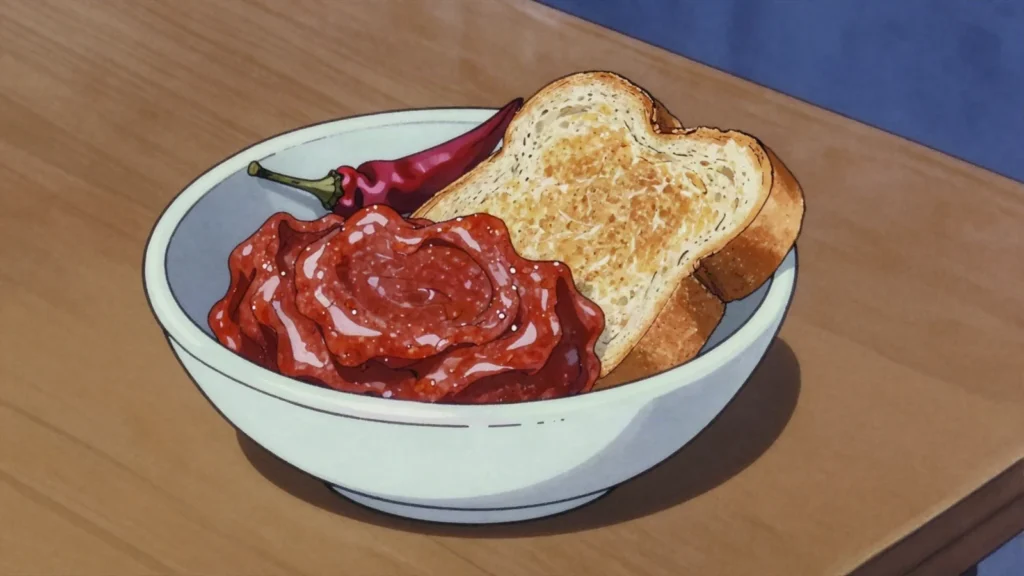

A fiery, spreadable pork salame, red with Calabrian chilli, from Spilinga in Calabria. It was made from the poorest cuts and heavily chillied to carry them, and its name is related to the French andouille.
It is a raw fermented pork product deliberately kept soft and moist, which removes the safety margin drying provides — it depends on hitting a pH target and on a salt and chilli ratio worked out over generations.
What goes into it
- fatty pork trimmings, belly and jowl
- roasted Calabrian chilli, up to a third by weight
- salt
- a wide casing
How it is made
Fatty pork and a very large proportion of chilli are minced to a paste, salted, and stuffed into a wide casing. It is smoked lightly over oak, then hung to mature for months. It stays soft because the fat content is high and it is never dried hard, and the chilli’s capsaicin and its antioxidants do real preservative work alongside the salt.
How long it takes: three to six months
How it is eaten
Spread on hot bread, stirred into pasta and tomato sauce, or melted onto pizza.
History
From Spilinga in Calabria, made from the poorest cuts and heavily chillied; its name is related to the French andouille.
Frequently asked questions
What is ‘Nduja?
‘Nduja is a charcuterie & cured from Italy: fiery spreadable pork salame red with Calabrian chilli. From Spilinga in Calabria, made from the poorest cuts and heavily chillied; its name is related to the French andouille.
How is ‘Nduja made?
Fatty pork and a very large proportion of chilli are minced to a paste, salted, and stuffed into a wide casing. It is smoked lightly over oak, then hung to mature for months. It stays soft because the fat content is high and it is never dried hard, and the chilli’s capsaicin and its antioxidants do real preservative work alongside the salt. It takes three to six months.
Can I make ‘Nduja at home?
No, and the atlas gives no method for it. It is a raw fermented pork product deliberately kept soft and moist, which removes the safety margin drying provides — it depends on hitting a pH target and on a salt and chilli ratio worked out over generations.
What goes into ‘Nduja?
Fatty pork trimmings, belly and jowl, roasted Calabrian chilli, up to a third by weight, salt, a wide casing.
How is ‘Nduja eaten?
Spread on hot bread, stirred into pasta and tomato sauce, or melted onto pizza.