
Ingredients
Sausage mix
- 1 litrefresh pig blood, strained (with 1 tsp salt stirred in at collection to stop it clotting)
- 600 gpork back fat, cut into 5 mm dice
- 800 gonions, finely chopped
- 200 gcooked short-grain rice, optional but usual in the Buenos Aires style
- 22 gfine salt per kg of total mix
- 2 tspground black pepper
- 1 tspground nutmeg
- 1 tbspdried oregano
- 1 tspsweet paprika
- ½ tspground cloves
- 100 mlred wine
Casing
- 3m natural pork casing, 34 to 38 mm, rinsed and soaked 1 hr
To grill and serve
- coarse salt
- crusty bread
- chimichurri
Directions
- Melt a quarter of the back fat gently and combine it, with the remaining diced fat, with the cooled onions, rice, wine and all the spices.
- Strain the blood through a fine sieve to catch any clots, then fold it into the mix.
- Fry a teaspoon in a pan and taste for salt and nutmeg: this is your only chance to correct it. Slide the soaked casing onto a wide funnel or a sausage stuffer and fill loosely, no more than three quarters full, because the mix expands as it sets.
- Twist into 15 cm links and tie the ends.
- Prick each link a few times with a fine needle, then lower them into water held at 80°C (175°F), never boiling, and poach for 30 to 40 minutes until a needle comes out clean rather than bloody and the internal temperature reads 75°C (165°F).
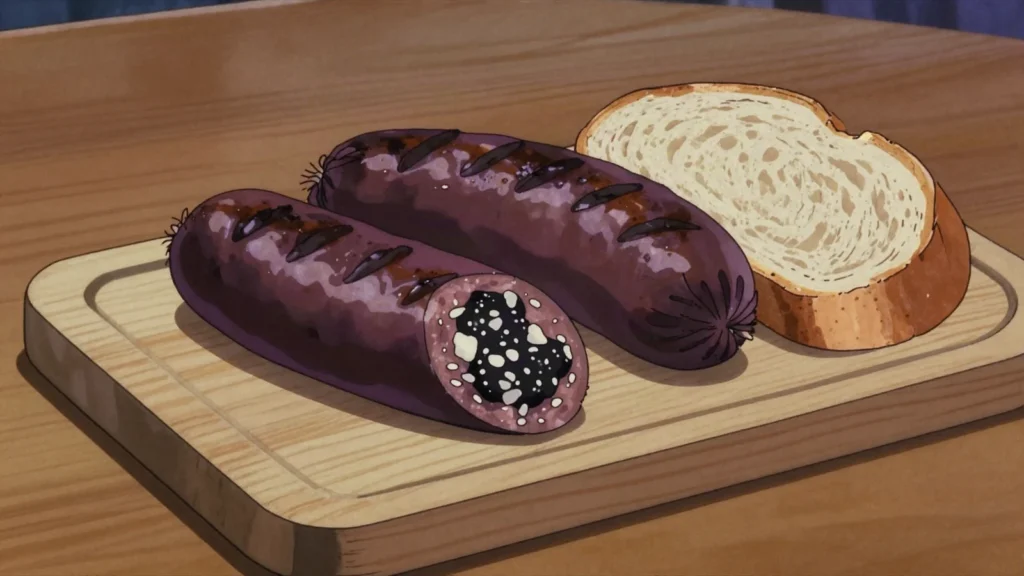
- Lift them into iced water for 5 minutes to firm the fat, then hang or lay them on a rack in the fridge overnight; morcilla always tastes and slices better the next day. To serve at an asado, set the sausages on the coolest part of the parrilla over grey coals and grill 6 to 8 minutes a side, turning once, until the skin blisters and splits and the inside is hot through.
Technique
- Blood is a high-risk ingredient. Use it within 24 hours of collection from a licensed butcher, keep everything below 4°C (40°F) while you work, and take the poach to a verified 75°C (165°F) core.
- The 80°C (175°F) poach is the whole craft. A rolling boil bursts the casings and turns the blood grainy; too cool and the sausage never sets.
- Argentine morcilla is milder and sweeter than Spanish morcilla de Burgos, because there is more onion and less smoked pimenton, and it is grilled rather than fried.
Substitutions
- No natural casing: pack the mix into a wide collagen casing or into a lidded terrine and poach it in a bain-marie at 80°C (175°F) for 1 hour, then chill and slice.
Variations
- Morcilla dulce, the Argentine sweet version, adds raisins, walnuts and candied orange peel.
- Morcilla vasca, common in Buenos Aires butchers of Basque descent, is heavier on rice and leek.
History
Spanish in origin and made with onion, rice or spices; served with chorizo in the opening round of the Argentine grill.
Frequently asked questions
What is Morcilla?
Morcilla is a charcuterie & cured from Argentina: blood sausage grilled whole and spread on bread at the asado. Spanish in origin and made with onion, rice or spices; served with chorizo in the opening round of the Argentine grill.
How long does Morcilla take to make?
Morcilla takes 1 hr of preparation and 45 min poaching plus 15 min grilling of cooking. The recipe makes about 10 sausages (1.5 kg). It is rated hard to make.
What can I substitute in Morcilla?
Yes, within limits. No natural casing: pack the mix into a wide collagen casing or into a lidded terrine and poach it in a bain-marie at 80°C (175°F) for 1 hour, then chill and slice.
What is the most important thing to get right in Morcilla?
Prick each link a few times with a fine needle, then lower them into water held at 80°C (175°F), never boiling, and poach for 30 to 40 minutes until a needle comes out clean rather than bloody and the internal temperature reads 75°C (165°F).