
Ingredients
Dough
- 500 gplain flour
- 1 teaspoonsalt
- 1 teaspoonsugar
- about 320 ml warm water
- 3 tablespoonsoil
To laminate
- 200 gbutter, melted
- or ghee
- more oil, for the surface
To finish
- more melted butter
- honey, to pour over
- or date syrup
Sometimes served with
- clotted cream
- qishta
- black seed or sesame
- Arabic coffee
Directions
- Butter between the layers is what separates them. Make smaller sheets rather than one huge one. Put the flour, salt and sugar in a bowl. Add warm water gradually as you work. Add the oil as you bring it together. Make a very soft and slack dough. This dough must be very soft indeed.
- Knead it for a good twelve minutes. That network is what holds it together thin. Take the full twelve minutes over it. Judging the dough takes a test. Knead it for longer if it tears. Divide it into even sized balls. Coat each one generously in oil. Set them out on an oiled tray. Cover them over and let them rest. Give them at least one full hour. Oil a large work surface generously.
- Put one ball on the oiled surface. Press it flat with oiled hands. Work with the flats of your hands. Let gravity help stretch it downwards. Stretch it until it is transparent. Work slowly and quite evenly throughout. Brush melted butter all over the sheet. A thin brushing gives few layers. Cover the whole surface properly. Fold the sides of the sheet inwards. Brush butter on after each fold.
- Butter must sit between every layer. Folding dry dough onto dry dough fuses it. Brush after each fold to prevent that. Set the folded squares on an oiled tray. Cover them and rest them again. Give them at least twenty minutes. Press each square out very gently. Work from the centre outwards.
- Press gently rather than forcing it. Aim for about a centimetre thick. Heat the oven to two hundred degrees. Lay the squares on a lined tray. Brush them with more melted butter. Brush it on generously before baking. Brush again halfway through baking. Baking them takes about twenty minutes.
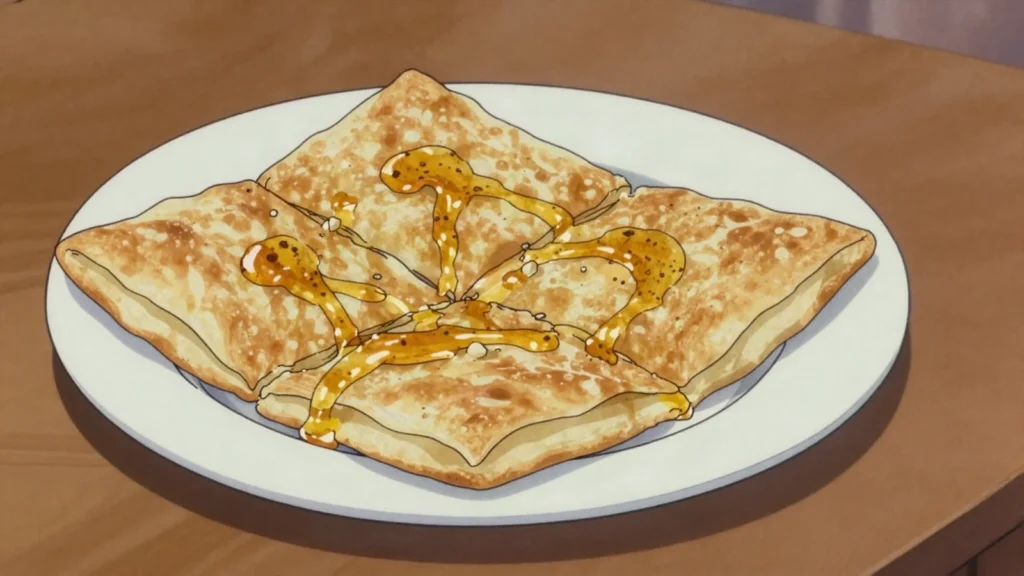
- Bake them for about twenty minutes. Judging them takes a careful look. Brush them with more melted butter. Pour honey over them generously. Honey soaks in better while they are hot.
- Pour it on as they come out hot. Serving it is always done warm. Cut it into squares or wedges. Serve clotted cream alongside if you like. Serve Arabic coffee alongside it. It is best within an hour of baking. Warm it briefly in an oven to revive it.
Technique
- The dough is stretched over a whole table until transparent, and that thinness is the whole technique: the sheet is folded into many layers, and each must be paper thin or the bread comes out heavy and doughy. A large oiled work surface and smaller sheets work at home — the technique is the same at any size.
- Butter between the layers is what separates them, melting and steaming as the bread bakes to push them apart; brush it generously and brush again after every fold, since folding dry dough onto dry dough fuses it into one mass. Three or four folds is plenty — more makes it heavy rather than flaky.
- The atlas also carries msemen and meloui, Moroccan griddled layered breads with similar stretching and buttering; mishaltat is baked rather than griddled and considerably larger, giving a drier crisper result. They are related in technique rather than the same thing.
Substitutions
- Ghee stands in for melted butter throughout.
- Date syrup replaces honey in some places, being darker and less sweet; both are served in the Hijaz.
Variations
- Bakeries make it through Ramadan and it is strongly associated with iftar.
- Clotted cream, qishta, is served alongside in some households.
- Pour the honey on while the bread is still hot, when it soaks in and spreads best.
History
A Hijazi pastry from Mecca and Medina, sold especially in Ramadan by bakeries that stretch the dough over a table.
Frequently asked questions
What is Mishaltat?
Mishaltat is a bread & pastry from Saudi Arabia: layered buttery flatbread stretched paper-thin, folded and baked, eaten with honey. A Hijazi pastry from Mecca and Medina, sold especially in Ramadan by bakeries that stretch the dough over a table.
How long does Mishaltat take to make?
Mishaltat takes 45 minutes plus resting of preparation and 30 minutes of cooking. The recipe makes serves 6. It is rated hard to make.
What can I substitute in Mishaltat?
Yes, within limits. Ghee stands in for melted butter throughout. Date syrup replaces honey in some places, being darker and less sweet; both are served in the Hijaz.
What is the most important thing to get right in Mishaltat?
Butter between the layers is what separates them. Make smaller sheets rather than one huge one. Put the flour, salt and sugar in a bowl. Add warm water gradually as you work. Add the oil as you bring it together. Make a very soft and slack dough. This dough must be very soft indeed.