Ingredients
Dough
- 400 gfine maize meal
- 100 gplain flour
- or all maize meal
- 1 teaspoonsalt
- about 300 ml warm water
- 2 teaspoonsbaking powder, optional
To cook
- a dry heavy pan
- or hot ashes
- a little oil, optional
To serve
- butter
- sour milk
- a green relish
- or plain, carried on a journey
Directions
- Put the maize meal in a large bowl. Add the wheat flour if using it. Add the salt and the baking powder. Mix the dry ingredients together. Adding the water in takes care. Add the warm water in gradually. Mix it in with a spoon at first. The water should be hot to the touch.
- Use a spoon rather than your hands at first. Once it is cool enough, work it by hand. Knead it firmly in the mixing bowl. Give it about five full minutes.
- Add more warm water if it crumbles. Add more meal if it is sticky. Work it in thoroughly each time. It means that it needs more water.
- Add it in a spoonful at a time. Cover the dough and let it rest. Give it about ten full minutes. Divide the dough into even pieces. Roll each one into a smooth ball. Flatten it between your palms.
- Press them rather than rolling them. Hands keep the dough compressed. Heat a heavy dry pan over a medium heat. Get it properly hot before they go on.
- Lay the cakes onto the dry hot pan. Too hot and the outside burns. Leave it alone until it releases. Turning them over takes real care. Turn it over in one single movement. Give it another eight minutes. Cover the pan over with a lid. Rake a wood fire down to hot ashes.
- Lay the cakes directly on them. Rake more hot ash over the top. Brush all the ash off thoroughly. Brush them all properly clean. Serving them is always done warm. Serve sour milk alongside them. They keep two days wrapped up. Warm them on a pan to soften them.
Technique
- Maize meal has no gluten, so the dough holds together only through starch and water and crumbles as you shape it; warm water helps considerably by starting to gelatinise the starch, which then acts as a binder, and a little wheat flour gives just enough gluten to bind. All-maize cakes are more traditional and harder to handle.
- Press the cakes between the palms rather than rolling them, since a rolling pin cracks the edges and those cracks open up and break the cake apart in cooking; smooth any cracks with wet fingers first.
- Leave them alone for the first eight minutes: a crust forms against the hot pan and that crust is what holds the cake together, so moving it early breaks it apart. Support the whole cake with a wide spatula when turning.
Substitutions
- All maize meal is more traditional, though a little wheat flour makes the dough far easier.
- A dry heavy pan does the same job as hot ashes, and no oil is needed for either.
Variations
- Covering the pan with a lid traps heat and cooks the middle faster.
- Baking powder is added in some households for a lighter cake.
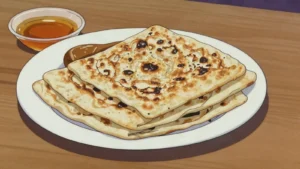
- They are eaten with butter and sour milk, or carried plain on a journey.
History
Flat maize-meal breads baked on a dry pan or in ashes, carried by herd boys into the mountains.
Frequently asked questions
What is Liphaphatha?
Liphaphatha is a bread & pastry from Lesotho: griddle-cooked flat cakes, everyday bread. Flat maize-meal breads baked on a dry pan or in ashes, carried by herd boys into the mountains.
How long does Liphaphatha take to make?
Liphaphatha takes 15 minutes of preparation and 25 minutes of cooking. The recipe makes about 8 cakes. It is rated easy to make.
What can I substitute in Liphaphatha?
Yes, within limits. All maize meal is more traditional, though a little wheat flour makes the dough far easier. A dry heavy pan does the same job as hot ashes, and no oil is needed for either.
What is the most important thing to get right in Liphaphatha?
Use a spoon rather than your hands at first. Once it is cool enough, work it by hand. Knead it firmly in the mixing bowl. Give it about five full minutes.