
Ingredients
The porridge
- 150 gsorghum meal
- finely ground
- 1.5 litreswater
- 1/2 teaspoonsalt
To finish
- sugar, to taste
- or left plain
- milk, to pour over
- a knob of butter, optional
Sometimes added
- a pinch of cinnamon
- a little peanut butter
- condensed milk
To serve
- warm in bowls or mugs
- at breakfast
- to children
Directions
- Adjust it to your own preference. Meal added to hot water lumps at once. Put the sorghum meal in a bowl. Add about three hundred millilitres of cold water.
- Whisk it into a smooth thin paste. It must be completely smooth first. Whisk it thoroughly before it goes in. Break up any lumps with your fingers.
- Put the rest of the water in a heavy pot. Add the measured salt to it as well. Bring the pot up to a full boil. A thin pan burns it on the bottom. Pour the slurry in a slow steady stream.
- Whisk it hard as you pour it in. Keep whisking until it is all in. Whisk continuously through this stage. Bring it back to a gentle simmer. Let it cook for about twenty minutes. Stir it regularly as it cooks. Sorghum needs real time to cook out.
- Stir right into the corners each time. Lower the heat if it starts to stick. Leave it thinner than you want it. Add hot water if it has thickened too far. Simmer it longer if it is too thin.
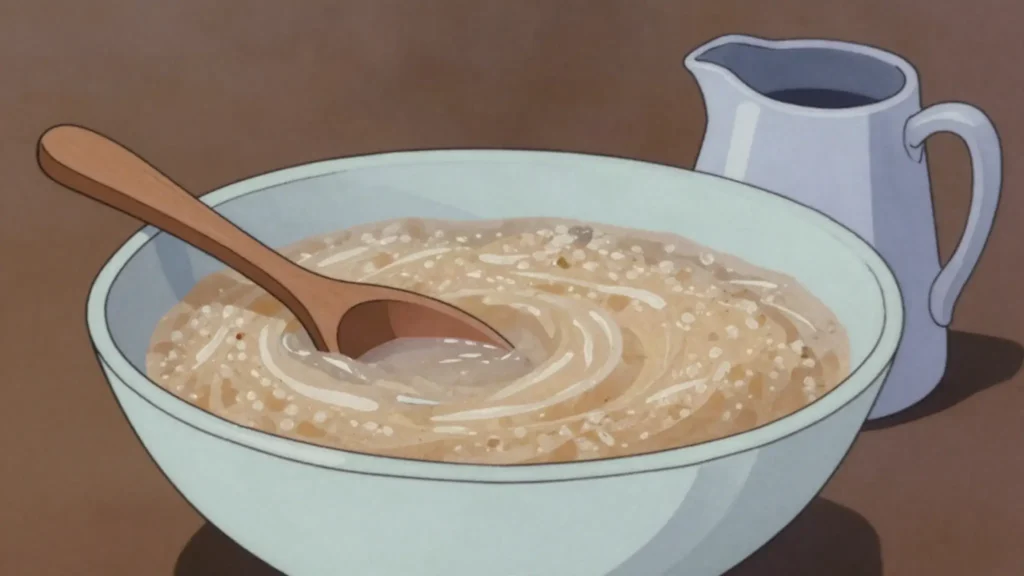
- Add sugar to taste if you want it sweet. Adults often take it plain or salted. Pour milk over it in the bowl. Serving it is always done warm. Pour it into bowls or into mugs. Thin porridge is drunk from a mug.
- Add a knob of butter if you like. It keeps two days refrigerated. Stir it constantly as it reheats.
Technique
- This porridge is deliberately thin enough to drink from a mug rather than spoon, which is what distinguishes it from papa, the stiff porridge eaten with the hands as a staple; roughly one part meal to ten of water, far more than for a thick porridge.
- Meal added straight to hot water lumps at once and those lumps never break down, so it must be slaked first: whisked with cold water into a smooth thin paste that disperses cleanly, exactly as for any starch slurry.
- Sorghum tolerates drought far better than maize and grows where maize would fail, which is why it suits the Lesotho highlands; motoho is the soured fermented version of the same porridge and a related but different thing.
Substitutions
- Maize meal works the same way, though sorghum is traditional here.
- Milk poured over or stirred in at the end makes it richer.
Variations
- It is sweetened for children and often taken plain or salted by adults.
- A little peanut butter or condensed milk is stirred in by some households.
- Motoho, the fermented sour version, is made from the same meal.
History
Basotho households boil sorghum meal thin for breakfast and for children, sweetened or left plain.
Frequently asked questions
What is Lesheleshele?
Lesheleshele is a breakfast from Lesotho: thin sorghum porridge cooked loose and drunk warm from a bowl. Basotho households boil sorghum meal thin for breakfast and for children, sweetened or left plain.
How long does Lesheleshele take to make?
Lesheleshele takes 5 minutes of preparation and 25 minutes of cooking. The recipe makes serves 4. It is rated easy to make.
What can I substitute in Lesheleshele?
Yes, within limits. Maize meal works the same way, though sorghum is traditional here. Milk poured over or stirred in at the end makes it richer.
What is the most important thing to get right in Lesheleshele?
Whisk it into a smooth thin paste. It must be completely smooth first. Whisk it thoroughly before it goes in. Break up any lumps with your fingers.