
Ingredients
Dough
- 1.5 kgfloury potatoes
- 100 gbutter
- 100 mldouble cream
- 1 tspsalt
- 1 tspsugar
- about 250 g plain flour
To roll
- extra flour
- a grooved rolling pin
To serve
- butter
- sugar
- cinnamon
Equipment
- a flat griddle
- a lefse stick
Directions
- Boil the potatoes, peel them hot, and press them through a ricer. Rice them, never mash or blend them. Beat in the butter, cream, salt and sugar while still hot, then spread the mixture on a tray to cool. Chill it overnight, uncovered or loosely covered. Cold potato takes far less flour, and every extra spoonful of flour makes the lefse tougher.
- Work in the flour the next day, a little at a time, only until the dough just holds together. Add as little flour as you can get away with. Keep the dough refrigerated and take out only one ball at a time.
- Warm dough sticks to everything and cannot be rolled thin, so the rest of it stays cold while you work. Roll each ball out on a well-floured cloth-covered board, turning it a quarter turn between passes.
- Roll it until it is almost translucent, thinner than a tortilla, about 30 cm across. A grooved lefse pin helps enormously, because it presses rather than drags and the dough is too fragile for a smooth pin at this thinness.
- Brush the excess flour off the surface with a soft brush before it goes on the griddle. Loose flour scorches on the hot griddle and speckles the next several lefse with black. Heat a dry griddle to about 230°C (445°F), with no fat at all. The stick exists because a lefse this thin cannot be picked up by hand without tearing.
- Cook for about 30 seconds a side, until brown blisters appear and the surface looks dry. Turn it once with the stick. It should stay pale between the blisters and stay completely soft. Stack the finished lefse between damp tea towels as you go. The damp cloth is what keeps them pliable.
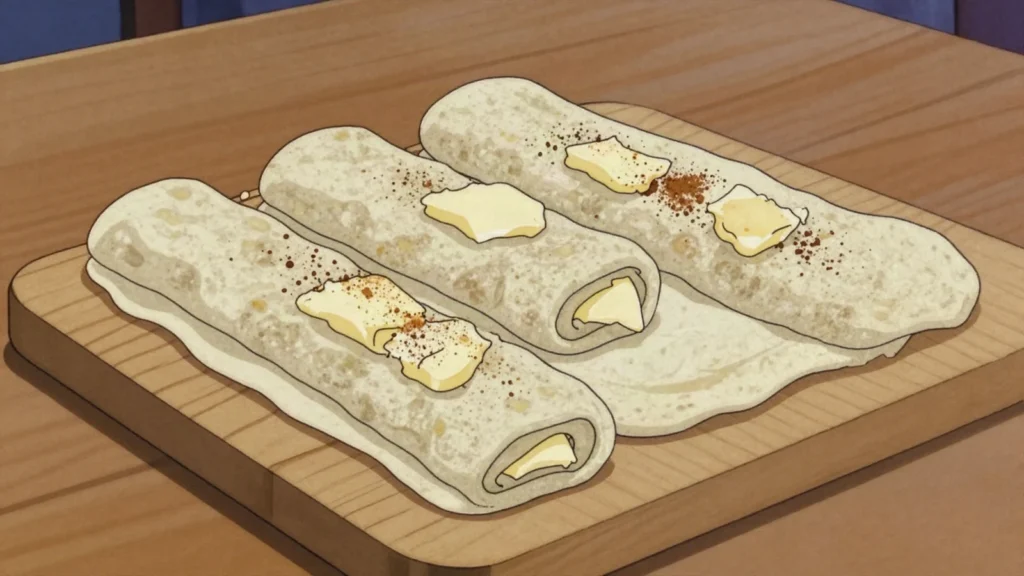
- Serve spread with butter and sprinkled with sugar and cinnamon, rolled up or folded into quarters. It is Christmas baking above all, and Norwegian-American households in the Midwest keep the tradition as strongly as Norway does.
Technique
- Potato lefse is the soft sweet version; there are drier flatbread lefse across Norway that are quite different.
- It freezes well between sheets of paper and thaws soft.
- The specialist kit, a grooved pin, a cloth board cover and a stick, is cheap and makes the difference between frustration and pleasure.
Substitutions
- A smooth rolling pin used lightly, accepting more tearing.
- A large flat non-stick pan in place of a griddle.
Variations
- With brown cheese, brunost, instead of sugar.
- Tjukklefse, the thicker version.
- Rolled around cured meat as a savoury wrap.
History
Soft potato flatbread baked in quantity on a takke griddle, stored dry and softened with water before being spread with butter and sugar.
Frequently asked questions
What is Lefse?
Lefse is a bread & pastry from Norway: soft potato flatbread rolled with butter, sugar, cinnamon. Soft potato flatbread baked in quantity on a takke griddle, stored dry and softened with water before being spread with butter and sugar.
How long does Lefse take to make?
Lefse takes 40 min plus overnight chilling of preparation and 30 min of cooking. The recipe makes about 12. It is rated hard to make.
What can I substitute in Lefse?
Yes, within limits. A smooth rolling pin used lightly, accepting more tearing. A large flat non-stick pan in place of a griddle.
What is the most important thing to get right in Lefse?
Boil the potatoes, peel them hot, and press them through a ricer. Rice them, never mash or blend them. Beat in the butter, cream, salt and sugar while still hot, then spread the mixture on a tray to cool. Chill it overnight, uncovered or loosely covered. Cold potato takes far less flour, and every extra spoonful of flour makes the lefse tougher.