
Ingredients
Cucumbers
- 2 kgsmall pickling cucumbers, firm and fresh
- ice water, for soaking
Brine
- 2 litreswater
- 120 gcoarse non-iodised salt — a 6% brine
Aromatics
- 1large bunch dill, with flower heads
- 1 headgarlic, cloves peeled
- 1small piece horseradish root, sliced, plus a leaf if you have one
- 10blackcurrant leaves
- 4cherry leaves
- 1 tspblack peppercorns
Directions
- Soak the cucumbers in ice water for four hours before you start. This is what makes them snap rather than bend — a cucumber that has sat in a warm kitchen has already lost water and will never crisp up again.
- Use only firm fresh cucumbers with no soft ends. One soft cucumber will soften the whole jar.
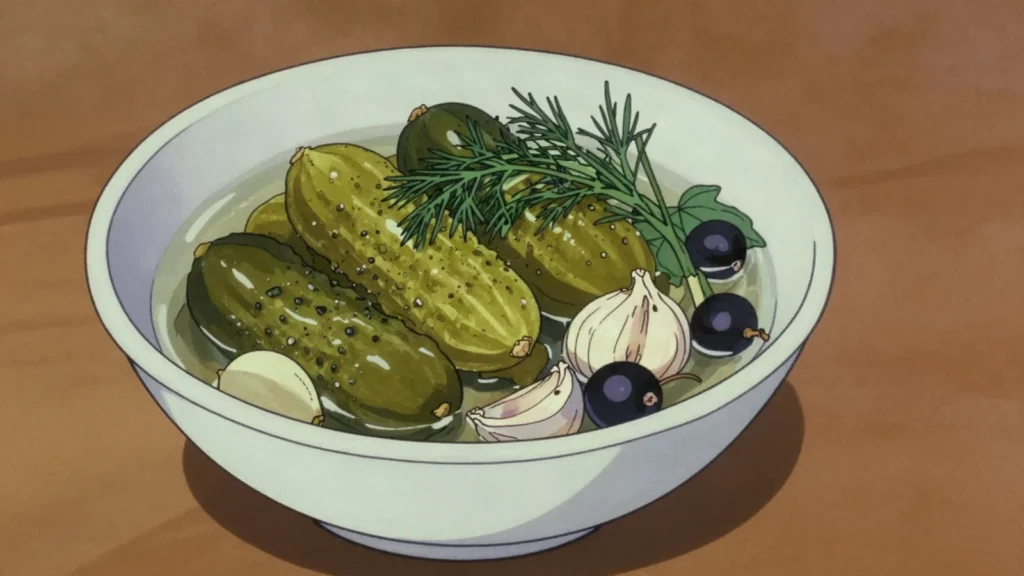
- Layer the cucumbers upright in the jar with the dill, garlic, horseradish, peppercorns and leaves.
- The blackcurrant, cherry and horseradish leaves are not there for flavour. They carry tannins that inhibit the enzymes that soften a pickle, and a jar made without them goes hollow and limp — which is why they appear in every Ukrainian recipe and why the horseradish leaf goes on top.
- Dissolve the salt in the water to a 6 percent brine and pour it over cold, covering everything by 3 cm.
- Weigh the cucumbers down so none floats. Cover with a cloth or a loose lid.
- Leave at room temperature three to five days. The brine will cloud and fizz and the cucumbers will turn from bright to olive green.
- Skim any white film daily and keep everything submerged.
- When they are sour but still firm, move the jar to a cold cellar or the fridge for three weeks more to finish slowly.
- They keep several months cold. Keep the brine: it is drunk cold as a hangover cure and used to sour rassolnyk soup.
Technique
- Ice water first, blackcurrant and horseradish leaves always.
- Six percent brine, everything submerged, film skimmed daily.
- Cloudy fizzing brine is correct. Slimy brine or a hollow cucumber means it went too warm.
Substitutions
- Oak or grape leaves in place of blackcurrant, which work the same way.
- A whole rye crust added, which speeds the ferment and is done in some villages.
- Chilli or mustard seed for a sharper jar.
Variations
- The Russian malosolnye ogurtsy are the same pickle stopped after three days.
- Chopped into olivier salad and rassolnyk.
History
Fermented in brine rather than vinegar, often in oak barrels; the sour brine is drunk and used to sour soups.
Frequently asked questions
What is Kvasheni ohirky?
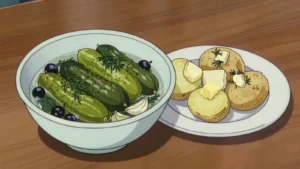
Kvasheni ohirky is a fermented & pickled from Ukraine: brine-fermented cucumbers with dill, horseradish and blackcurrant leaf. Fermented in brine rather than vinegar, often in oak barrels; the sour brine is drunk and used to sour soups.
How long does Kvasheni ohirky take to make?
Kvasheni ohirky takes 30 min plus 3 to 5 days, then 3 weeks of preparation and 5 min of cooking. The recipe makes fills a 3-litre jar. It is rated easy to make.
What can I substitute in Kvasheni ohirky?
Yes, within limits. Oak or grape leaves in place of blackcurrant, which work the same way. A whole rye crust added, which speeds the ferment and is done in some villages. Chilli or mustard seed for a sharper jar.
What is the most important thing to get right in Kvasheni ohirky?
Soak the cucumbers in ice water for four hours before you start. This is what makes them snap rather than bend — a cucumber that has sat in a warm kitchen has already lost water and will never crisp up again.