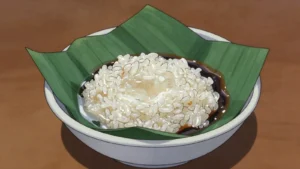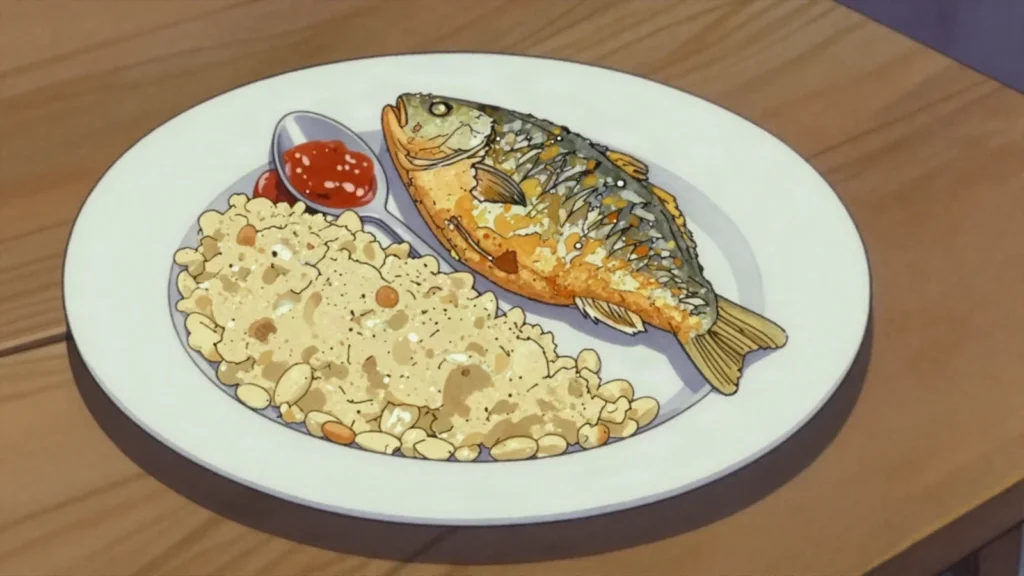

A deliberately coarse, crunchy grade of fermented cassava grain, soaked in water or eaten alongside fried fish. Cassava reached the Gulf of Guinea from Brazil on Portuguese ships, and Ivorian millers toast this grade larger than ordinary gari for the texture.
The pressing and fermenting is the detoxification step for cassava, not a flavouring one, and shortening it is how cassava poisoning occurs; gari is sold ready-made everywhere.
What goes into it
- cassava roots
- water
- palm oil, for some styles
How it is made
Cassava is peeled, grated and pressed in sacks under weights for two to four days while it ferments and the liquid drains away. That combined pressing and fermenting is what removes the cyanogenic glycosides. The drained mash is sieved coarse and toasted in a shallow pan over fire until the grains are dry and hard.
How long it takes: two to four days of pressing and fermenting, then toasting
How it is eaten
Soaked in cold water with sugar and groundnuts, or eaten dry with fried fish and pepper.
History
Cassava reached the Gulf of Guinea coast from Brazil on Portuguese ships; Ivorian millers toast a deliberately coarse grade prized for its crunch.
Frequently asked questions
What is Kpokpo gari?
Kpokpo gari is a fermented & pickled from Côte d’Ivoire: coarse crunchy grains of fermented cassava, soaked in water or eaten with fried fish. Cassava reached the Gulf of Guinea coast from Brazil on Portuguese ships; Ivorian millers toast a deliberately coarse grade prized for its crunch.
How is Kpokpo gari made?
Cassava is peeled, grated and pressed in sacks under weights for two to four days while it ferments and the liquid drains away. That combined pressing and fermenting is what removes the cyanogenic glycosides. The drained mash is sieved coarse and toasted in a shallow pan over fire until the grains are dry and hard. It takes two to four days of pressing and fermenting, then toasting.
Can I make Kpokpo gari at home?
No, and the atlas gives no method for it. The pressing and fermenting is the detoxification step for cassava, not a flavouring one, and shortening it is how cassava poisoning occurs; gari is sold ready-made everywhere.
What goes into Kpokpo gari?
Cassava roots, water, palm oil, for some styles.
How is Kpokpo gari eaten?
Soaked in cold water with sugar and groundnuts, or eaten dry with fried fish and pepper.