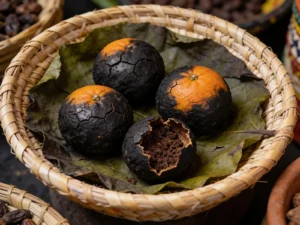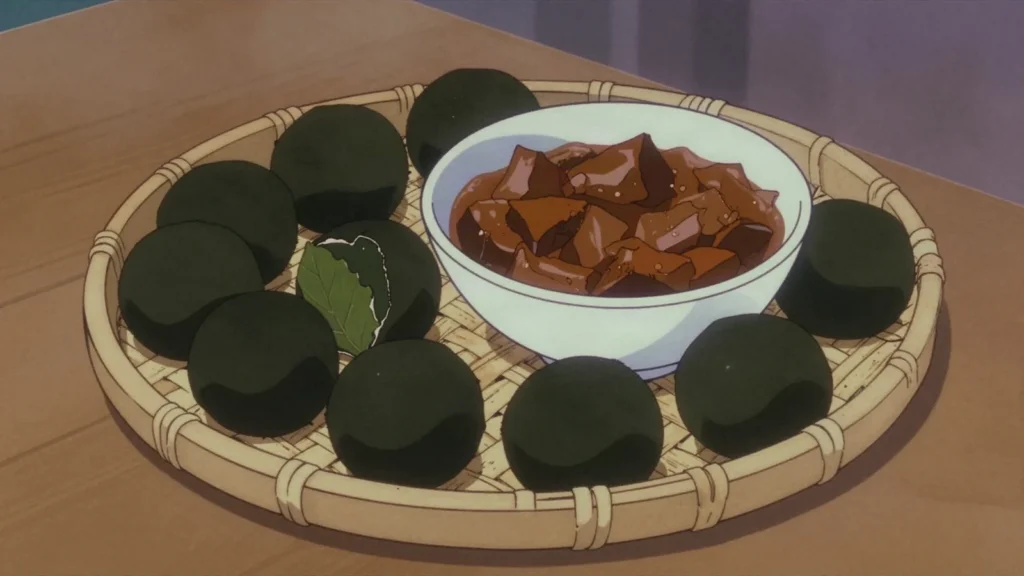

Wild senna leaves pounded and fermented into dark, pungent balls, made in eastern Chad around Abéché and dropped into stews. It gives a meat-like savour to a pot with no meat in it, which is exactly why it exists.
It is an alkaline Bacillus ferment of raw leaves sealed in a buried jar for weeks, and the wild senna it is made from is bitter and requires the ferment to be edible at all; there is no domestic substitute for either.
What goes into it
- fresh Senna obtusifolia leaves
- water
How it is made
The leaves are pounded to a wet mass, packed into a clay jar, sealed and buried in the ground for one to two weeks while Bacillus species ferment them and break the proteins down. The fermented paste is then shaped into balls and dried in the sun until hard, after which it keeps for a year.
How long it takes: one to two weeks buried, then sun-drying
How it is eaten
Crumbled into stews and mulah sauces for depth and salt.
History
Prepared in eastern Chad around Abeche, the leaves buried in jars to ferment and then dried, giving a meat-like savour without meat.
Frequently asked questions
What is Kawal?
Kawal is a fermented & pickled from Chad: wild senna leaves pounded and fermented into dark pungent balls for stews. Prepared in eastern Chad around Abeche, the leaves buried in jars to ferment and then dried, giving a meat-like savour without meat.
How is Kawal made?
The leaves are pounded to a wet mass, packed into a clay jar, sealed and buried in the ground for one to two weeks while Bacillus species ferment them and break the proteins down. The fermented paste is then shaped into balls and dried in the sun until hard, after which it keeps for a year. It takes one to two weeks buried, then sun-drying.
Can I make Kawal at home?
No, and the atlas gives no method for it. It is an alkaline Bacillus ferment of raw leaves sealed in a buried jar for weeks, and the wild senna it is made from is bitter and requires the ferment to be edible at all; there is no domestic substitute for either.
What goes into Kawal?
Fresh Senna obtusifolia leaves, water.
How is Kawal eaten?
Crumbled into stews and mulah sauces for depth and salt.