
Ingredients
Sausage
- 500 mlfresh pig’s blood, strained
- 400 gbuckwheat groats, cooked and cooled
- 400 gpork offal — liver, lung, heart — simmered and minced
- 200 gpork fat or fatty trimmings, chopped small
- 300 gonions, chopped fine
- 2 tspsalt
- 1 tbspground black pepper
- 1 tspdried marjoram
- 1 tspground allspice
- wide natural hog casing, about 2 m
To cook and serve
- 3 litreswater
- lard, for frying
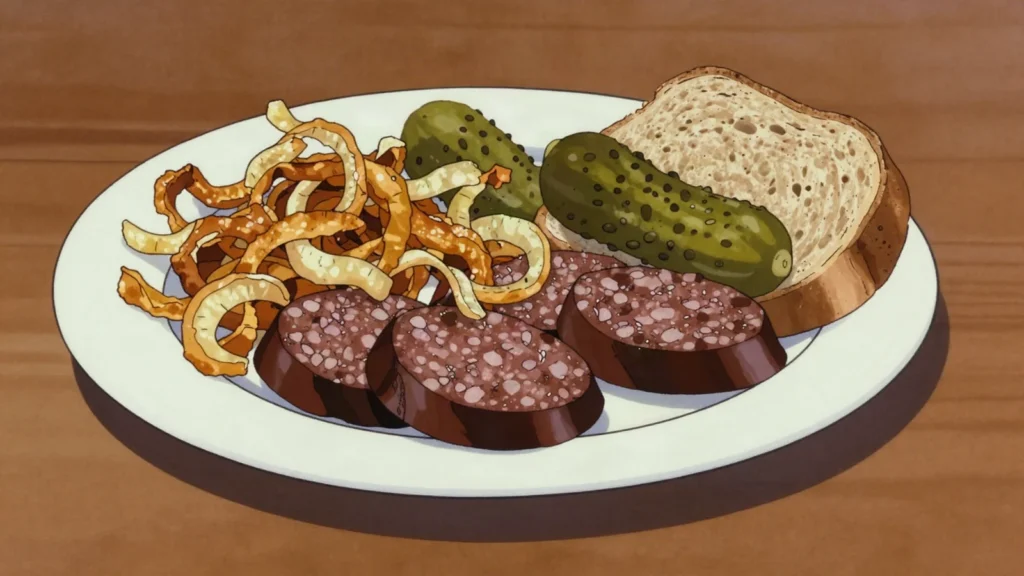
- fried onion
- rye bread, or mashed potato
Directions
- Cook the buckwheat until just tender but still with bite, then drain and cool completely. It swells further inside the casing, so slightly undercooked here is correct.
- Simmer the offal for 20 minutes — the liver for only 10, since overcooked liver goes grainy and bitter — then cool and mince coarsely.
- Sweat the onion in a little fat over low heat for 15 minutes until soft but not coloured, then cool. Raw onion never cooks through inside a sausage.
- Strain the blood through a fine sieve to catch any clots, then mix it with the cooled buckwheat, minced offal, chopped fat, onion, salt, pepper, marjoram and allspice.
- Fill the casing no more than two-thirds full — the buckwheat is the reason, and an overfilled kaszanka splits every time — and tie into 15 cm lengths. Prick each three or four times.
- Bring the water to 80°C (176°F), barely a bubble, and poach for 45 minutes to an hour until a skewer comes out clean rather than bloody.
- Never let it boil. Blood sets hard and the casings burst, which empties the pot.
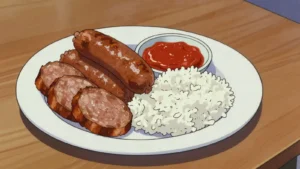
- Cool completely and refrigerate. Fry thick slices in lard with onion until crisp, and serve with rye bread or mashed potato.
Technique
- Two-thirds full, and never a boil. Those are the two rules of a grain-filled blood sausage.
- Undercook the buckwheat slightly.
- Fresh blood on the day it is collected — which is why kaszanka belongs to the winter slaughter.
Substitutions
- Pearl barley or rice in place of buckwheat, both of which are used regionally.
- Beef blood, which is easier to source in some places.
- All liver and no lung, which is milder.
Variations
- Baked in the oven with onion and apple rather than fried in slices.
- Crumbled out of its casing into a pan and fried loose, which sidesteps the bursting problem.
History
A blood sausage made from pig’s blood mixed with buckwheat groats and often other grains, reflecting a broader European tradition of using an animal’s blood after slaughter rather than discarding it, a practical necessity when meat itself was historically too valuable to waste any part of a slaughtered animal. Its use of buckwheat specifically, called kasza in Polish and giving the sausage its name, reflects that grain’s long cultivation across Poland and its role as an accessible, inexpensive filler ingredient well suited to stretching a limited quantity of blood and fat into a substantial sausage. Kaszanka is traditionally fried in slices until crisp on the outside, and it remains a traditional, if today somewhat less commonly eaten, part of Polish charcuterie and home cooking.
Frequently asked questions
What is Kaszanka?
Kaszanka is a charcuterie & cured from Poland: blood sausage with buckwheat groats, fried with onion. A blood sausage made from pig’s blood mixed with buckwheat groats and often other grains, reflecting a broader European tradition of using an animal’s blood after slaughter rather than discarding it, a practical necessity when meat itself was historically too valuable to waste any part of a slaughtered animal. Its use of buckwheat specifically, called kasza in Polish and giving the sausage its name, reflects that grain’s long cultivation across Poland and its role as an accessible, inexpensive filler ingredient well suited to stretching a limited quantity of blood and fat into a substantial sausage. Kaszanka is traditionally fried in slices until crisp on the outside, and it remains a traditional, if today somewhat less commonly eaten, part of Polish charcuterie and home cooking.
How long does Kaszanka take to make?
Kaszanka takes 1 hour of preparation and 1 hour 15 minutes of cooking. The recipe makes makes 8 sausages. It is rated medium to make.
What can I substitute in Kaszanka?
Yes, within limits. Pearl barley or rice in place of buckwheat, both of which are used regionally. Beef blood, which is easier to source in some places. All liver and no lung, which is milder.
What is the most important thing to get right in Kaszanka?
Sweat the onion in a little fat over low heat for 15 minutes until soft but not coloured, then cool. Raw onion never cooks through inside a sausage.