
Ingredients
Sausage
- 1.2 kgpork shoulder, coarsely minced
- 300 gpork belly, minced fine
- 200 gpork back fat, chopped small
- 30 gfine salt
- 4 gcuring salt (nitrite salt)
- 1whole head garlic, crushed
- 1 tbspblack pepper, coarsely ground
- 2 tspmarjoram, dried
- 1 tspground allspice
- 150 mliced water
- 2m natural hog casing, rinsed and soaked
To smoke and cook
- beech, alder or fruitwood chips
- juniper branches, if you have them
To serve
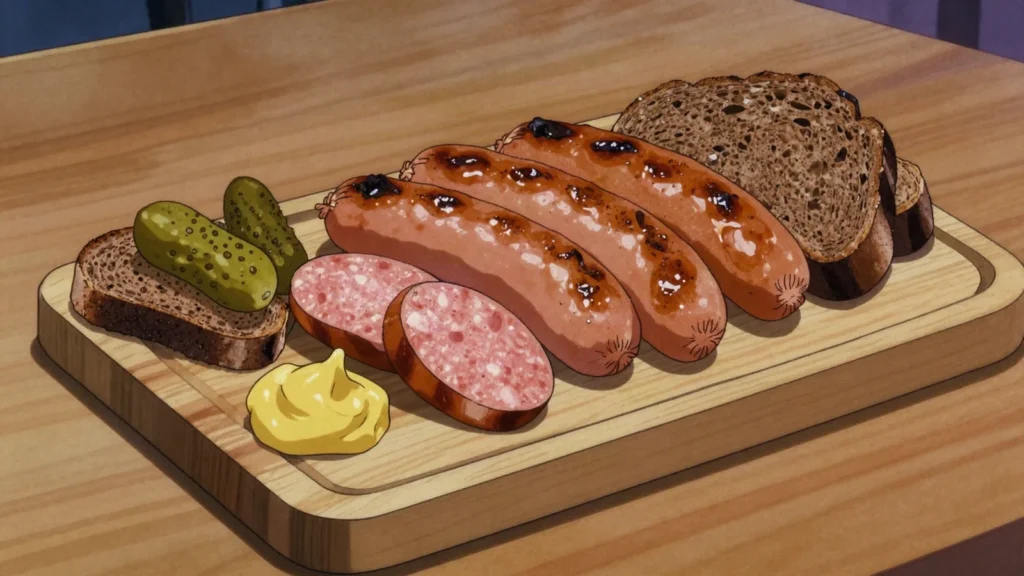
- rye bread and mustard
- horseradish
Directions
- Mix the minced meats with both salts, garlic, pepper, marjoram and allspice, then work in the iced water and knead hard for several minutes until the mixture turns tacky and binds.
- Weigh the curing salt exactly. It is what makes the sausage safe through hours of warm smoking, and gives it the pink colour and cured flavour — this is not a step to eyeball in either direction.
- Cover and refrigerate overnight so the cure works through the meat.
- Fill the casing firmly and twist into 25 cm links, tying the ends. Prick any air pockets.
- Hang the sausages somewhere cool and airy for two hours until the surfaces are dry to the touch. Smoke does not stick to a wet casing — it beads and runs off, and the sausage comes out pale and streaked.
- Smoke at 50 to 60°C (122 to 140°F) for two to three hours over beech or alder, until deep mahogany.
- Then raise the smoker to 75 to 80°C (167 to 176°F), or move the sausages to a pot of water at that temperature, and cook until the centre reaches 68°C (154°F). Use a probe; there is no other way to know.
- Plunge them into cold water for five minutes to stop the cooking and set the casing, then hang to dry and bloom for a few hours before refrigerating.
Technique
- Curing salt at the stated rate, and nothing else. Warm-smoking raw meat for hours without it is exactly the condition botulism needs.
- Dry the casings before smoking. It is the difference between mahogany and pale grey.
- Cook to a core temperature, not a clock.
Substitutions
- Skip the smoking and simply poach them as a fresh biała kiełbasa, which needs no curing salt at all.
- Beef for a third of the pork, which is done in some regions.
- A kettle barbecue with a lid, run low, in place of a proper smoker.
Variations
- Biała kiełbasa is the fresh unsmoked version, poached and eaten with żurek.
- Kiełbasa lisiecka and several other regional types hold EU protection.
History
A general Polish term simply meaning sausage, rather than one specific recipe, encompassing dozens of distinct regional and traditional varieties across Poland that differ significantly in meat, spicing, smoking method and shape, meaning the word functions more like an entire category, similar to how ‘cheese’ names an enormous range of very different products, than a single fixed dish. Kielbasa wiejska, or country sausage, and kielbasa krakowska, associated with the city of Krakow, are among the most recognized named varieties, each with its own particular spice blend and production tradition documented over generations. Sausage-making itself in Poland traces back centuries as a practical way to preserve pork through smoking and curing before refrigeration existed, a necessity across a country with cold winters and a long pork-farming tradition.
Frequently asked questions
What is Kielbasa?
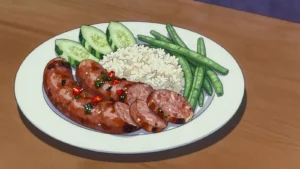
Kielbasa is a charcuterie & cured from Poland: garlicky smoked sausages, grilled at bonfires or with bread. A general Polish term simply meaning sausage, rather than one specific recipe, encompassing dozens of distinct regional and traditional varieties across Poland that differ significantly in meat, spicing, smoking method and shape, meaning the word functions more like an entire category, similar to how ‘cheese’ names an enormous range of very different products, than a single fixed dish. Kielbasa wiejska, or country sausage, and kielbasa krakowska, associated with the city of Krakow, are among the most recognized named varieties, each with its own particular spice blend and production tradition documented over generations. Sausage-making itself in Poland traces back centuries as a practical way to preserve pork through smoking and curing before refrigeration existed, a necessity across a country with cold winters and a long pork-farming tradition.
How long does Kielbasa take to make?
Kielbasa takes 1 hour plus overnight curing of preparation and 2 hours of cooking. The recipe makes makes 10 sausages. It is rated hard to make.
What can I substitute in Kielbasa?
Yes, within limits. Skip the smoking and simply poach them as a fresh biała kiełbasa, which needs no curing salt at all. Beef for a third of the pork, which is done in some regions. A kettle barbecue with a lid, run low, in place of a proper smoker.
What is the most important thing to get right in Kielbasa?
Dry the casings before smoking. It is the difference between mahogany and pale grey.