
Ingredients
Curd
- 5 litreswhole cow’s milk
- ¼ tspcalcium chloride in 2 tbsp water, if using shop milk
- ½ tspliquid rennet in 50 ml cool water
- 1 tbspnigella seed, optional
Brine
- 1.5 litreswater
- 180 gcoarse non-iodised salt — a 12% brine
- 3 tbspwhey from the cheese
Directions
- Warm the milk to 33°C (91°F) and stir in the calcium chloride if using pasteurised shop milk.
- Stir in the diluted rennet with a few slow strokes, stop the milk moving, and leave undisturbed for 45 minutes until it gives a clean break.
- Cut the curd into 1.5 cm cubes, rest 10 minutes, then stir gently for 20 minutes at 33°C (91°F).
- Drain off the whey, keeping some for the brine, and pack the curd into a cloth-lined mould with the nigella seed if using.
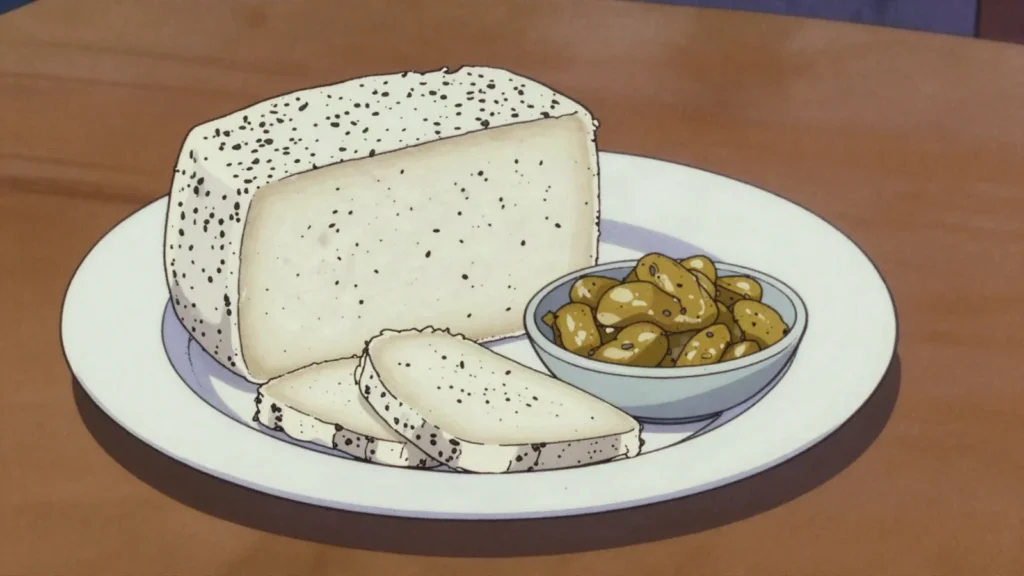
- Press under a 4 kg weight for 12 hours, turning once. It should come out firm and close-textured — jibna beida is a pressed cheese that squeaks against the teeth.
- Cut into blocks and pack them into a tin or jar.
- Dissolve the salt in the water, stir in the reserved whey, cool completely, and pour it over so the blocks are submerged. Cold brine only: warm brine softens the surfaces and the blocks slump into one another.
- Ripen in the brine for at least two weeks in a cool place. It keeps for months and grows saltier as it goes. Soak a slice in cold water for an hour before eating if it has become too salty.
Technique
- Whey in the brine. Plain salt water leaches calcium from the surface and leaves it slimy.
- Twelve percent brine, cold.
- Soak before serving if it has been in brine for months. This is normal practice, not a rescue.
Substitutions
- Vegetarian microbial rennet.
- Nigella or fenugreek seed pressed into the curd, both of which are traditional.
- Goat’s milk, which gives a sharper cheese.
Variations
- Eaten at breakfast with ful medames and bread, which is its standard place.
- The Egyptian domiati and Levantine baladi cheeses are close relatives.
History
Made from cow’s milk in the irrigated Gezira scheme and kept in brine tins; it is the standard breakfast cheese across northern Sudan.
Frequently asked questions
What is Jibna beida?
Jibna beida is a cheese & dairy from Sudan: salty white brined cheese, squeaky and firm, eaten at breakfast with ful. Made from cow’s milk in the irrigated Gezira scheme and kept in brine tins; it is the standard breakfast cheese across northern Sudan.
How long does Jibna beida take to make?
Jibna beida takes 40 min plus 12 hours pressing and 2 weeks in brine of preparation and 20 min of cooking. The recipe makes makes about 700 g. It is rated medium to make.
What can I substitute in Jibna beida?
Yes, within limits. Vegetarian microbial rennet. Nigella or fenugreek seed pressed into the curd, both of which are traditional. Goat’s milk, which gives a sharper cheese.