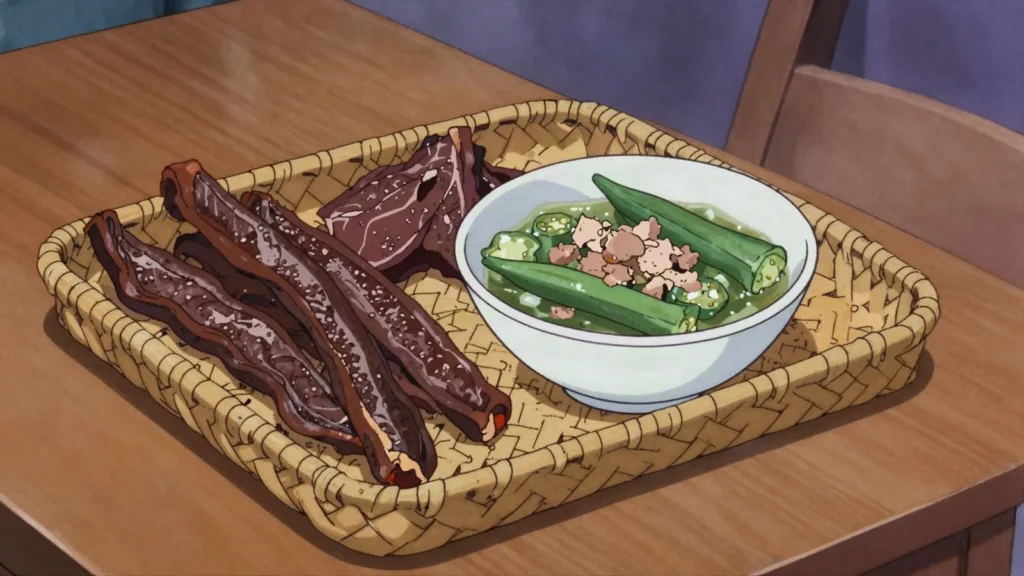

Strips of beef or goat sun-dried to leather, then pounded into soups. It is a Nile valley preservation method that turns meat into a keeping food, and the dried strips are soaked and cooked into thick soups.
Drying raw meat with little or no salt works only in Sahelian humidity — the same strips hung in a temperate kitchen spoil from the inside while the surface looks dry.
What goes into it
- beef or goat, cut in long thin strips
- sometimes salt
- sun
How it is made
The meat is cut into long thin strips and hung on lines or laid on racks in full sun, often with little or no salt, since the dry-season heat does the work. It hardens within a few days into something like leather and keeps for months, and is pounded to a powder or soaked before cooking.
How long it takes: three to seven days in the sun
How it is eaten
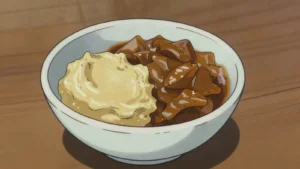
Pounded and cooked into thick soups and stews with okra, or soaked and simmered.
History
A Nile valley preservation method that turns meat into a keeping food; the dried strips are soaked and cooked into thick soups.
Frequently asked questions
What is Sharmout?
Sharmout is a charcuterie & cured from South Sudan: strips of beef or goat sun-dried to leather, then pounded into soups. A Nile valley preservation method that turns meat into a keeping food; the dried strips are soaked and cooked into thick soups.
How is Sharmout made?
The meat is cut into long thin strips and hung on lines or laid on racks in full sun, often with little or no salt, since the dry-season heat does the work. It hardens within a few days into something like leather and keeps for months, and is pounded to a powder or soaked before cooking. It takes three to seven days in the sun.
Can I make Sharmout at home?
No, and the atlas gives no method for it. Drying raw meat with little or no salt works only in Sahelian humidity — the same strips hung in a temperate kitchen spoil from the inside while the surface looks dry.
What goes into Sharmout?
Beef or goat, cut in long thin strips, sometimes salt, sun.
How is Sharmout eaten?
Pounded and cooked into thick soups and stews with okra, or soaked and simmered.