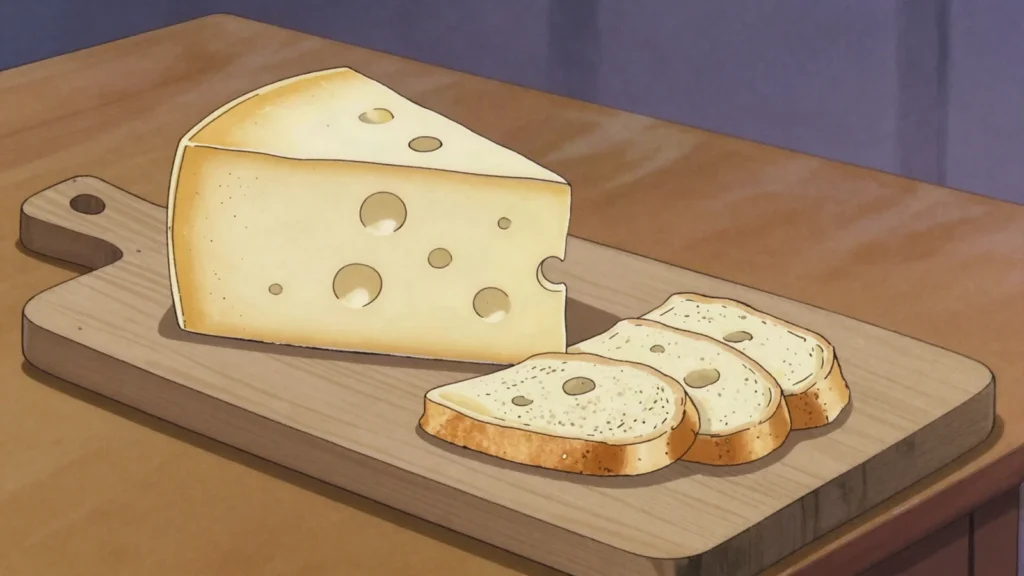

A mild, sweet, holey cow’s cheese sliced for open sandwiches. It was developed in 1956 at the agricultural college at Ås from a nineteenth-century Jarlsberg estate recipe, and it became Norway’s biggest cheese export.
The eyes come from a specific propionic culture worked at a controlled warm-room temperature, and the strain and the process are the producer’s — Jarlsberg is a trademarked cheese, not a generic style.
What goes into it
- cow’s milk
- rennet
- a starter culture
- Propionibacterium freudenreichii
- salt
How it is made
The milk is set with rennet and the curd cut and pressed into wheels, then brined. The wheels are moved to a warm room where a propionic bacterium ferments the lactic acid and gives off carbon dioxide, which forms the large round eyes and the sweet nutty flavour together. They are then moved back to cold storage to finish. The eye formation is the tricky part and the culture is proprietary.
How long it takes: one to fifteen months depending on the expression
How it is eaten
Sliced on bread for breakfast, melted in a sandwich, or cubed as a snack.
History
Developed in 1956 at the agricultural college at Ås from a nineteenth-century Jarlsberg estate recipe; it became Norway’s biggest cheese export.
Frequently asked questions
What is Jarlsberg?
Jarlsberg is a cheese & dairy from Norway: mild, sweet, holey cow’s cheese sliced for open sandwiches. Developed in 1956 at the agricultural college at Ås from a nineteenth-century Jarlsberg estate recipe; it became Norway’s biggest cheese export.
How is Jarlsberg made?
The milk is set with rennet and the curd cut and pressed into wheels, then brined. The wheels are moved to a warm room where a propionic bacterium ferments the lactic acid and gives off carbon dioxide, which forms the large round eyes and the sweet nutty flavour together. They are then moved back to cold storage to finish. The eye formation is the tricky part and the culture is proprietary. It takes one to fifteen months depending on the expression.
Can I make Jarlsberg at home?
No, and the atlas gives no method for it. The eyes come from a specific propionic culture worked at a controlled warm-room temperature, and the strain and the process are the producer’s — Jarlsberg is a trademarked cheese, not a generic style.
What goes into Jarlsberg?
Cow’s milk, rennet, a starter culture, propionibacterium freudenreichii, salt.
How is Jarlsberg eaten?
Sliced on bread for breakfast, melted in a sandwich, or cubed as a snack.