
A hard aged cow’s cheese from Samogitia, crystalline and salty, shaved over salads and pasta. It has been made since 1993 and is named after a legendary giant; it is aged like an alpine hard cheese, up to three years.
It is a pressed, scalded cheese ripened for one to three years in a store held at a controlled temperature and humidity — a dairy operation, not a kitchen one.
What goes into it
- cow’s milk
- rennet
- a starter culture
- salt
How it is made
The milk is set with rennet, the curd cut very fine and scalded, then pressed hard into large wheels and brined. The wheels ripen in a cool store for one to three years, turned and cared for throughout, during which the paste loses moisture and tyrosine crystals form — the crunch that a long-aged hard cheese is judged on.
How long it takes: twelve to thirty-six months
How it is eaten
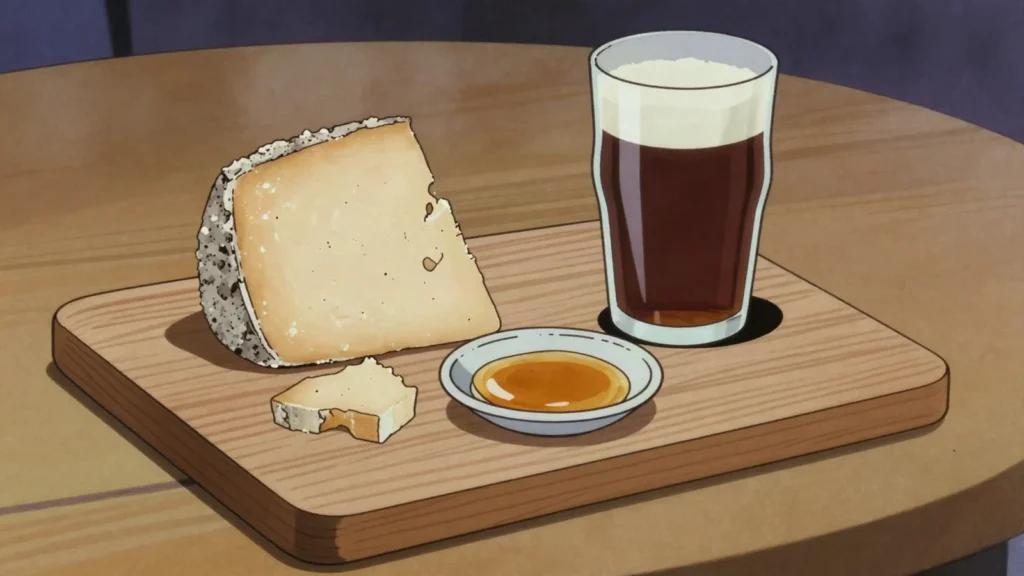
Shaved over salads and pasta, or eaten in shards with honey and dark beer.
History
Made in Samogitia since 1993 and named after the legendary giant Džiugas; it is aged up to three years like an alpine hard cheese.
Frequently asked questions
What is Džiugas?
Džiugas is a cheese & dairy from Lithuania: hard aged cow’s cheese, crystalline and salty, shaved over salads. Made in Samogitia since 1993 and named after the legendary giant Džiugas; it is aged up to three years like an alpine hard cheese.
How is Džiugas made?
The milk is set with rennet, the curd cut very fine and scalded, then pressed hard into large wheels and brined. The wheels ripen in a cool store for one to three years, turned and cared for throughout, during which the paste loses moisture and tyrosine crystals form — the crunch that a long-aged hard cheese is judged on. It takes twelve to thirty-six months.
Can I make Džiugas at home?
No, and the atlas gives no method for it. It is a pressed, scalded cheese ripened for one to three years in a store held at a controlled temperature and humidity — a dairy operation, not a kitchen one.
What goes into Džiugas?
Cow’s milk, rennet, a starter culture, salt.
How is Džiugas eaten?
Shaved over salads and pasta, or eaten in shards with honey and dark beer.