
Ingredients
Cakes
- 300 gfine semolina
- 100 gbutter, melted
- 2 tbspsugar
- 1 tspbaking powder
- ½ tspsalt
- about 150 ml warm milk
To coat
- extra fine semolina
To serve
- butter
- honey
- jam
- soft cheese
Directions
- Rub the melted butter into the semolina with your fingertips until every grain is coated and the mixture looks like damp sand.
- Rub it in thoroughly and take a couple of minutes over it. Coating each grain in fat is what gives harcha its sandy crumbling texture, and butter simply poured in gives a doughy cake instead.
- Stir in the sugar, baking powder and salt.
- Add the warm milk a little at a time, mixing with your hand, until it only just comes together.
- Add the milk gradually and stop early. The mixture should barely hold rather than form a smooth dough, because a wet harcha bakes heavy.
- Let it rest for 10 minutes so that the semolina drinks up the milk.
- Press the mixture into rounds about 1.5 cm thick, either in a ring mould or by patting between your palms.
- Coat both sides in dry semolina.
- That outer coat of dry semolina is what makes the sandy crust, and it is essentially the whole surface of the cake.
- Heat a heavy dry pan or griddle over a low to medium heat, with no fat in it at all.
- A dry pan and a low heat. There is already plenty of butter in the mixture, and a hot pan browns the outside long before the middle has cooked.
- Cook for 6 to 8 minutes a side, turning carefully, until golden with darker speckles.
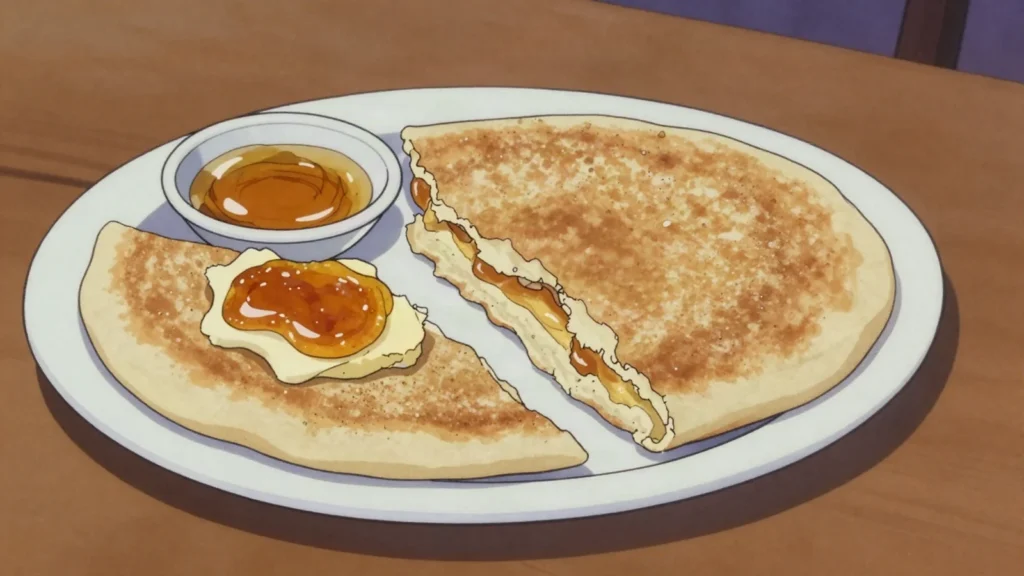
- Split them open while still warm and fill them with butter, honey, jam or soft cheese.
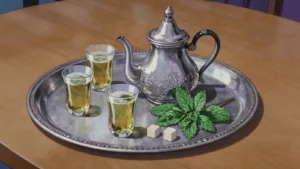
- Serve at breakfast or with afternoon mint tea, which is when Moroccan homes eat them.
Technique
- Fine semolina, smida, and neither coarse semolina nor flour, both of which give the wrong texture entirely.
- There is no yeast in it, so there is no waiting; from cupboard to plate is half an hour.
- They keep a day and are brought back by a couple of minutes in a dry pan.
Substitutions
- Water in place of milk, for a plainer version.
- Olive oil instead of butter, which is common in the countryside.
Variations
- Savoury, with cheese and herbs worked in and no sugar.
- Made small as a base for canapés.
- With orange blossom water added to the milk.
History
A quick unleavened griddle cake of fine semolina, cooked on a flat pan rather than in an oven, and eaten at breakfast and with afternoon mint tea.
Frequently asked questions
What is Harcha?
Harcha is a bread & pastry from Morocco: pan-griddled semolina cakes with a sandy crust, split for butter and jam. A quick unleavened griddle cake of fine semolina, cooked on a flat pan rather than in an oven, and eaten at breakfast and with afternoon mint tea.
How long does Harcha take to make?
Harcha takes 15 min of preparation and 15 min of cooking. The recipe makes 6 cakes. It is rated easy to make.
What can I substitute in Harcha?
Yes, within limits. Water in place of milk, for a plainer version. Olive oil instead of butter, which is common in the countryside.
What is the most important thing to get right in Harcha?
Add the milk gradually and stop early. The mixture should barely hold rather than form a smooth dough, because a wet harcha bakes heavy.