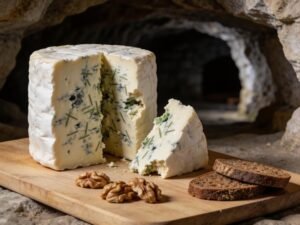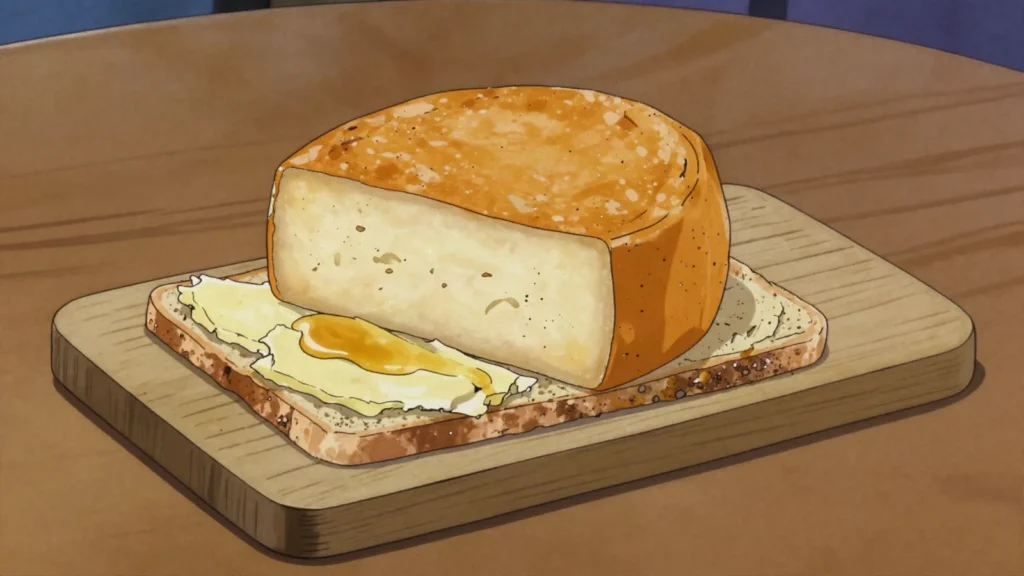

A grainy brown sour-milk cheese, sharp and strongly smelling, made without any rennet at all. It is an ancient Norwegian cheese whose production survives at Vik in Sogn, where a festival celebrates it.
It depends on a specific Mucor culture worked into the surface in a room held at controlled warmth and humidity; what grows on curd left out in a different kitchen is not the same organism.
What goes into it
- skimmed sour milk
- Mucor mould
- no rennet
How it is made
Skimmed milk is soured until it curdles on its own, heated, and the curd drained and pressed into moulds. The young cheeses are then held in a warm humid room and deliberately colonised by Mucor mould, which is rubbed and worked into the surface repeatedly over two to four weeks, breaking the paste down from the outside in until it turns brown and grainy.
How long it takes: two to four weeks of mould ripening
How it is eaten
In thin slices on flatbread with butter and honey, or with sour cream porridge.
History
An ancient Norwegian cheese made without rennet from skimmed sour milk; production survives at Vik in Sogn, where a festival celebrates it.
Frequently asked questions
What is Gamalost?
Gamalost is a cheese & dairy from Norway: grainy brown sour-milk cheese, sharp and strongly smelling. An ancient Norwegian cheese made without rennet from skimmed sour milk; production survives at Vik in Sogn, where a festival celebrates it.
How is Gamalost made?
Skimmed milk is soured until it curdles on its own, heated, and the curd drained and pressed into moulds. The young cheeses are then held in a warm humid room and deliberately colonised by Mucor mould, which is rubbed and worked into the surface repeatedly over two to four weeks, breaking the paste down from the outside in until it turns brown and grainy. It takes two to four weeks of mould ripening.
Can I make Gamalost at home?
No, and the atlas gives no method for it. It depends on a specific Mucor culture worked into the surface in a room held at controlled warmth and humidity; what grows on curd left out in a different kitchen is not the same organism.
What goes into Gamalost?
Skimmed sour milk, mucor mould, no rennet.
How is Gamalost eaten?
In thin slices on flatbread with butter and honey, or with sour cream porridge.