
Ingredients
Milk
- 10 litreswhole pasteurised milk, not ultra-pasteurised
- ¼ tspmesophilic starter culture
- 2.5 mlvegetarian microbial rennet, diluted in 60 ml cool unchlorinated water
- 2 mlcalcium chloride solution, diluted (for shop-bought milk)
Salting
- 40 gfine cheese salt (about 2 to 2.5 percent of the drained curd weight)
Equipment
- 1large stainless pot
- 1accurate thermometer
- 1long curd knife
- 1colander and cheesecloth
Directions
- Warm the milk slowly to 31°C (90°F), stirring gently. Sprinkle the starter culture over the surface, let it rehydrate 3 minutes, then stir it through and ripen for 45 minutes at 31°C (90°F).
- Stir in the calcium chloride, then the diluted rennet, with 20 slow up-and-down strokes. Stop the milk moving and leave it undisturbed for 30 to 45 minutes.
- Test for a clean break: push a knife in at an angle and lift. The curd should split cleanly and the crack should fill with clear whey, not milky liquid.
- Cut the curd into 1 cm cubes and rest 5 minutes, then raise the temperature to 39°C (100°F) over 30 minutes, no faster than half a degree per minute, stirring gently and constantly so the cubes do not mat.
- Hold at 39°C (100°F), stirring, for 45 minutes until the cubes have shrunk to the size of small beans and feel springy rather than custardy when squeezed.
- Drain the whey through cheesecloth, then cheddar the curd: leave it as a slab in the warm pot, cut it into blocks, and stack and turn the blocks every 15 minutes for about 1 hour, keeping them at 38°C (100°F). The slabs should knit and become fibrous, tearing in strands like poached breast of poultry, and the pH should drop to about 5.3.
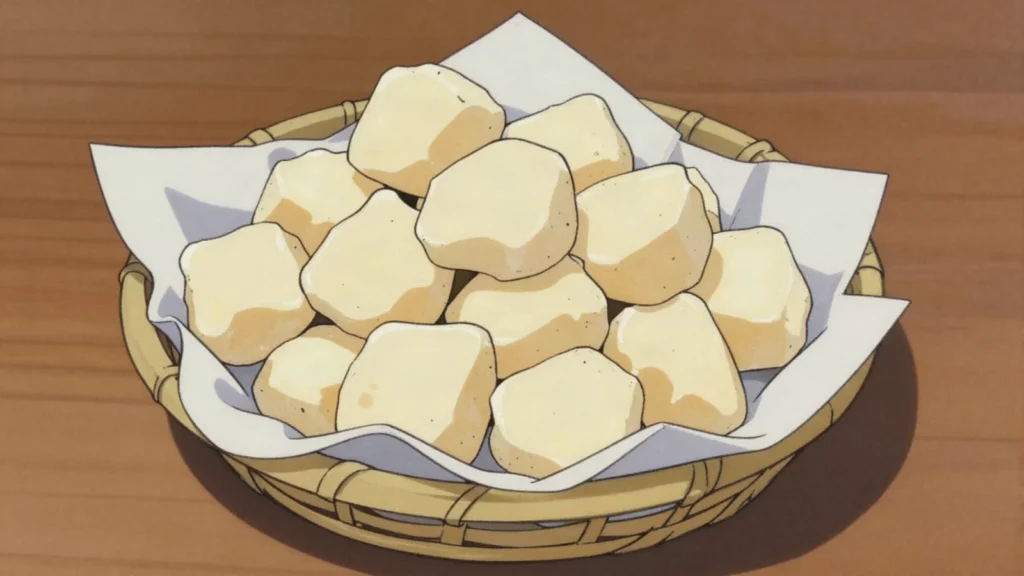
- Tear or mill the slabs into thumb-sized pieces, then toss with the salt in three additions, letting each dissolve. The curds will squeak between your teeth as soon as they are salted.
- Eat them the same day, at room temperature. They keep the squeak for about 12 hours and no longer.
Technique
- The squeak is intact, un-aged casein protein rubbing against tooth enamel. Refrigeration firms the protein and kills it, which is why curds are sold unrefrigerated in Quebec and Ontario dairy country and why bags carry a date rather than a use-by. Twenty seconds in a microwave restores it partially.
- Use pasteurised but not ultra-pasteurised milk. UHT milk will never form a proper curd, no matter how much rennet you add.
- Food safety: sanitise every piece of equipment, keep to the temperatures given, and eat fresh curds within a day or refrigerate them. Fresh, unaged cheese has none of the protective acidity and salt of an aged one.
Substitutions
- Microbial or fermentation-produced chymosin is what most commercial curd makers use anyway and keeps the cheese suitable for vegetarians.
- No mesophilic culture: 120 ml of cultured buttermilk stirred into the warm milk works as a starter, though the acidification is less predictable.
Variations
- Some Quebec dairies flavour fresh curds with garlic, dill or cracked pepper.
- The same curds, battered and deep-fried, are a Prairie and Wisconsin bar snack; in Quebec they go straight onto fries with hot gravy for poutine.
History
A by-product of Quebec cheddar making sold same-day at dairies; their squeak and melt make poutine work.
Frequently asked questions
What is Cheese curds?
Cheese curds is a cheese & dairy from Canada: fresh unaged cheddar curds eaten by the bag while still squeaky. A by-product of Quebec cheddar making sold same-day at dairies; their squeak and melt make poutine work.
How long does Cheese curds take to make?
Cheese curds takes 45 min of preparation and 3 hr of cooking. The recipe makes about 1 kg of curds. It is rated hard to make.
What can I substitute in Cheese curds?
Yes, within limits. Microbial or fermentation-produced chymosin is what most commercial curd makers use anyway and keeps the cheese suitable for vegetarians. No mesophilic culture: 120 ml of cultured buttermilk stirred into the warm milk works as a starter, though the acidification is less predictable.
What is the most important thing to get right in Cheese curds?
Cut the curd into 1 cm cubes and rest 5 minutes, then raise the temperature to 39°C (100°F) over 30 minutes, no faster than half a degree per minute, stirring gently and constantly so the cubes do not mat.