
Ingredients
Nuts
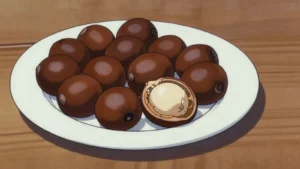
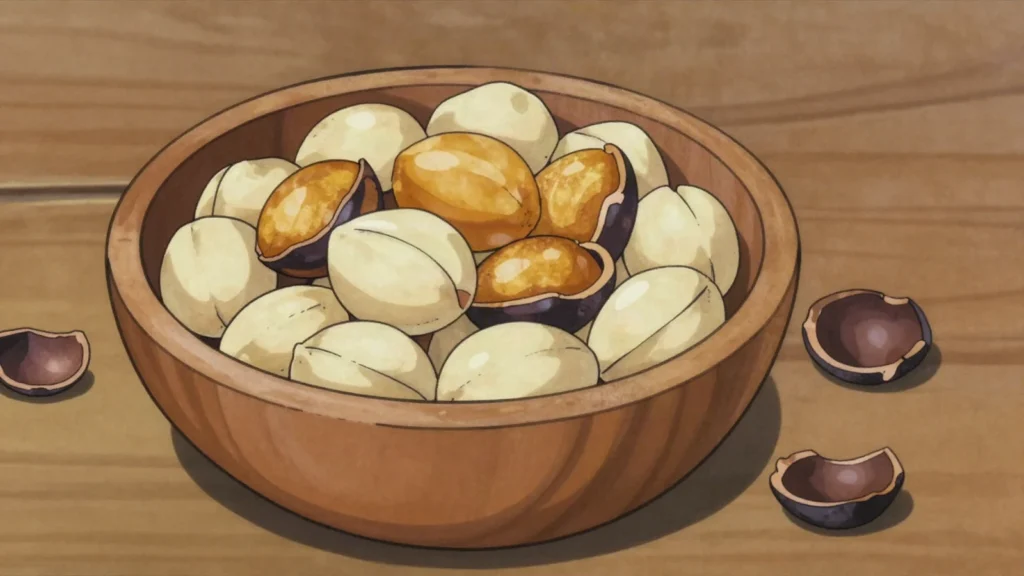
- 2 kggalip nuts in the shell, or 500 g shelled kernels
To season
- 1 tbspfine salt
- 1 tbspwater, to dissolve the salt
- 1 tbspcoconut oil, if wanted
Equipment
- a hammer, a heavy stone, or a mechanical nutcracker
- a hard surface with a small hollow in it
Directions
- Use one firm blow rather than several light ones, which shatter the kernel. The shell should split along its length and release the kernel in one piece.
- Pick the kernel out and discard any fragments of shell clinging to it. Expect to lose some kernels to bad blows, since this takes practice.
- Spread the kernels in a single layer on a tray in a dry airy place. Leave them for two or three days, turning them once a day. They should lose their moisture and firm up noticeably to the bite.
- Heat the oven to 140C, which is lower than you would use for most nuts. Add the coconut oil at this point if you want a glossier finish. Spread them in a single layer on a baking tray with a lip.
- Roast them for about twenty minutes, shaking the tray every five minutes. They are done when they are pale gold through and smell strongly nutty. Tip them straight onto a cold tray so they stop cooking in their own heat.
- Let them cool completely before you taste one, since the flavour changes as they cool. They will crisp up as they cool and should snap rather than bend.
- Serve them plain as a snack, or chop them over rice and vegetable dishes.
Technique
- The shell is very hard and needs one firm hammer blow, not several light ones.
- Roast low at 140C, since the high oil content scorches quickly.
- Fresh raw kernels do not keep, so dry the rest within a day.
Substitutions
- Macadamia nuts, which are the closest widely available substitute.
- A macadamia cracker in place of hammer and stone.
Variations
- Eaten raw and fresh, straight from the shell.
- Pressed for oil, which is used for cooking and for skin.
- Ground into a paste and stirred into vegetable dishes.
History
Grown around village houses in East New Britain for generations and developed into a commercial snack industry since the 2010s.
Frequently asked questions
What is Galip Nut?
Galip Nut is a snack from Papua New Guinea: buttery canarium nut, eaten raw, roasted or pressed into oil. Grown around village houses in East New Britain for generations and developed into a commercial snack industry since the 2010s.
How long does Galip Nut take to make?
Galip Nut takes 1 hour of preparation and 20 min of cooking. The recipe makes 500 g roasted nuts. It is rated medium to make.
What can I substitute in Galip Nut?
Yes, within limits. Macadamia nuts, which are the closest widely available substitute. A macadamia cracker in place of hammer and stone.
What is the most important thing to get right in Galip Nut?
Use one firm blow rather than several light ones, which shatter the kernel. The shell should split along its length and release the kernel in one piece.