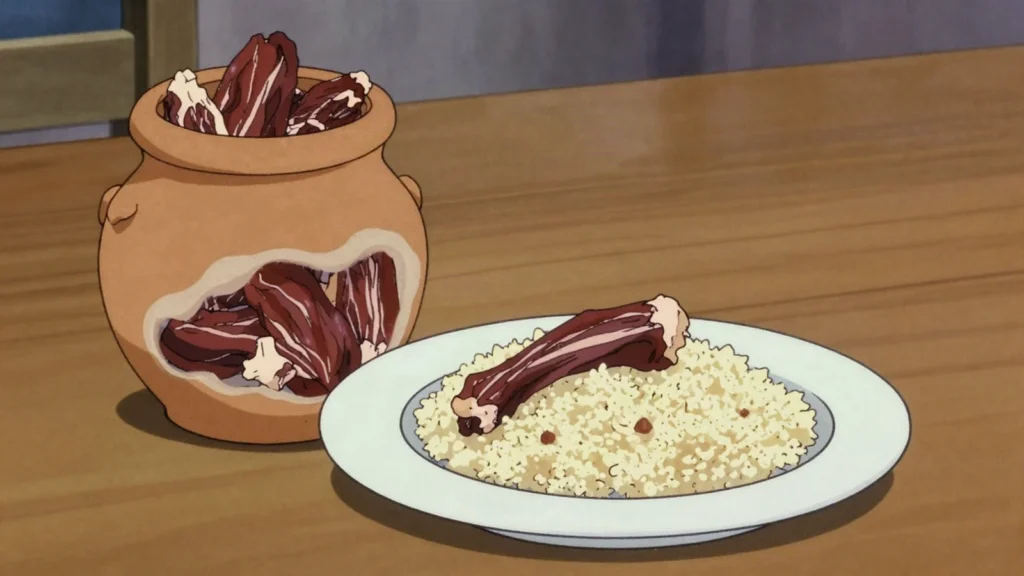

Eid mutton salted with turmeric and chilli, sun-dried on rooftops and then packed in its own rendered fat. It is made across Libya after Eid al-Adha, when there is more meat at once than a household can eat, and it is drawn on through the year.
It is raw meat dried in open Saharan heat and then sealed under fat — a low-oxygen store at ambient temperature, which is the classic botulism setting; the dryness reached in that climate is what makes it work and a damp kitchen cannot reach it.
What goes into it
- mutton or lamb, cut in strips
- coarse salt
- turmeric
- chilli and other spices
- the animal’s own rendered fat
How it is made
Strips of meat are rubbed with salt, turmeric and chilli and hung on rooftop lines in the dry Libyan heat for several days until they are hard. They are then fried in the animal’s rendered fat and packed into jars submerged in that fat, which seals them from air. Both stages matter: the drying removes the water, the fat keeps the air out.
How long it takes: several days of drying, then sealed under fat for months
How it is eaten
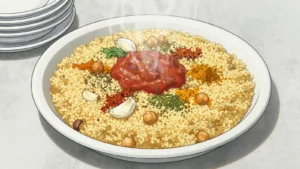
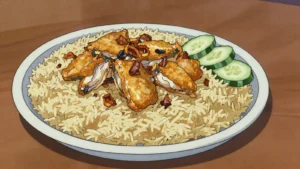
Lifted from the fat and cooked into couscous, rice and bazin, a few pieces at a time.
History
Made after Eid al-Adha across Libya: strips are dried on rooftops in the dry heat, then sealed in their own rendered fat and used through the year.
Frequently asked questions
What is Gadeed?
Gadeed is a charcuterie & cured from Libya: eid mutton salted with turmeric and chili, sun-dried and packed in fat. Made after Eid al-Adha across Libya: strips are dried on rooftops in the dry heat, then sealed in their own rendered fat and used through the year.
How is Gadeed made?
Strips of meat are rubbed with salt, turmeric and chilli and hung on rooftop lines in the dry Libyan heat for several days until they are hard. They are then fried in the animal’s rendered fat and packed into jars submerged in that fat, which seals them from air. Both stages matter: the drying removes the water, the fat keeps the air out. It takes several days of drying, then sealed under fat for months.
Can I make Gadeed at home?
No, and the atlas gives no method for it. It is raw meat dried in open Saharan heat and then sealed under fat — a low-oxygen store at ambient temperature, which is the classic botulism setting; the dryness reached in that climate is what makes it work and a damp kitchen cannot reach it.
What goes into Gadeed?
Mutton or lamb, cut in strips, coarse salt, turmeric, chilli and other spices, the animal’s own rendered fat.
How is Gadeed eaten?
Lifted from the fat and cooked into couscous, rice and bazin, a few pieces at a time.