
Ingredients
Fish
- 1 kgsmall river fish
- gudgeon, bleak or small roach
- or 1 kg whitebait or smelt
- 2 teaspoonssalt
To coat
- 200 gplain flour
- 1 teaspoonsalt
- 1 teaspoonwhite pepper
- a little milk, for dipping
To fry
- oil, for deep frying
To serve
- lemon wedges
- coarse salt
- bread and butter
- a green salad
- a glass of Riesling or Elbling
Directions
- Rinse the fish thoroughly in cold water. Drain them well in a colander. Pat them dry with kitchen paper.
- Salt them lightly and leave them ten minutes. Gut anything larger than a finger. Rinse the cavity out afterwards. Put the flour in a wide shallow bowl. Add the salt and white pepper. Whisk it all together thoroughly.
- Flour alone gives the light crisp result. Coating the fish takes a moment. Dip the fish briefly in a little milk. That helps the flour cling to them. Work in small handfuls at a time. Shake off all the excess flour. Coat them just before frying, not ahead.
- Flour left on wet fish turns to paste. Frying them needs the right heat. Pour oil into a deep pan to eight centimetres. Never fill a pan more than halfway with oil.
- Heat the oil to about 180C for frying. A pinch of flour should sizzle up at once. Fry them for about two minutes. They should be golden and crisp. Lift them out with a spider or slotted spoon.
- Lift them onto a wire rack over a tray. A rack keeps them crisp on all sides. Scatter coarse salt over them while hot. Salt clings well to hot oily fish.
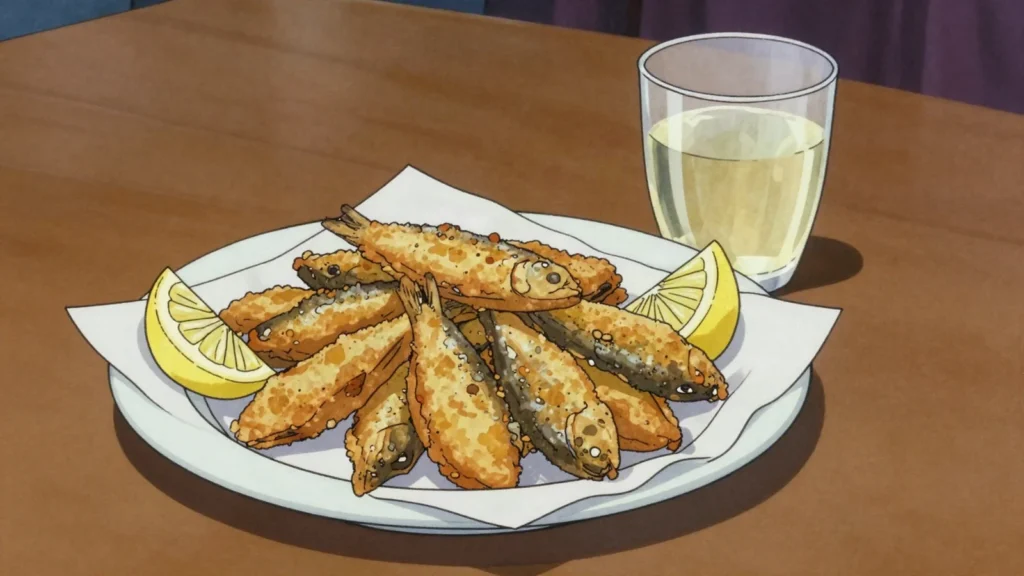
- Let them cool between the two fryings. Serving them is done immediately. Pile them into a bowl or onto paper. Pour a glass of Luxembourg Riesling. Pick each one of them up by the tail. They soften within minutes of cooling.
Technique
- The fish are eaten whole, bones and all, since small fish have soft bones that fry crisp, and that is the entire point of a friture.
- The Moselle forms Luxembourg’s eastern border with vineyards on terraced slopes at Remich, Grevenmacher and Wormeldange, and the river fish and the river wine go together as a tradition.
- Flour alone is used rather than a batter, and the fish must be coated just before frying, since flour left sitting on wet fish turns to paste.
Substitutions
- Whitebait or smelt stand in for river fry and fry exactly the same way.
- Any small fish works provided it is no longer than a finger.
Variations
- Some cooks fry them twice for an especially crisp result.
- Similar fritures are served all along the Moselle in France and Germany.
- A garlic mayonnaise is offered alongside in some restaurants.
History
Served in the wine villages along the Luxembourg Moselle, where small fry from the river were fried whole and eaten with the local Riesling.
Frequently asked questions
What is Friture de la Moselle?
Friture de la Moselle is a main from Luxembourg: small river fish floured and deep-fried whole, eaten with lemon and wine. Served in the wine villages along the Luxembourg Moselle, where small fry from the river were fried whole and eaten with the local Riesling.
How long does Friture de la Moselle take to make?
Friture de la Moselle takes 25 minutes of preparation and 20 minutes of cooking. The recipe makes serves 4. It is rated medium to make.
What can I substitute in Friture de la Moselle?
Yes, within limits. Whitebait or smelt stand in for river fry and fry exactly the same way. Any small fish works provided it is no longer than a finger.
What is the most important thing to get right in Friture de la Moselle?
Flour left on wet fish turns to paste. Frying them needs the right heat. Pour oil into a deep pan to eight centimetres. Never fill a pan more than halfway with oil.