
Sweet air-cured ham from the hills south of Parma, sliced paper-thin. It is salted and dried for at least twelve months, and Roman writers were already praising the cured hams of the area.
It is a protected designation of origin made from designated pig breeds in one defined area, and a whole leg cured for a year depends on the hill air’s temperature and humidity cycling as it does there — and it uses no nitrate at all, which leaves salt and airflow as the only safeguards.
What goes into it
- a hind leg from a heavy Italian pig of designated breed
- sea salt
- nothing else — no nitrate, no smoke, no spice
How it is made
The leg is salted in two stages over about three weeks, then rested cold for a couple of months so the salt equalises through the muscle. It is washed, dried, and hung in rooms whose windows are opened to the hill breezes; the exposed surface is later sealed with a paste of lard and flour so the ham does not dry too fast. It matures for a year or more and is tested with a horse-bone needle before it earns the ducal crown.
How long it takes: at least twelve months, often eighteen to thirty
How it is eaten
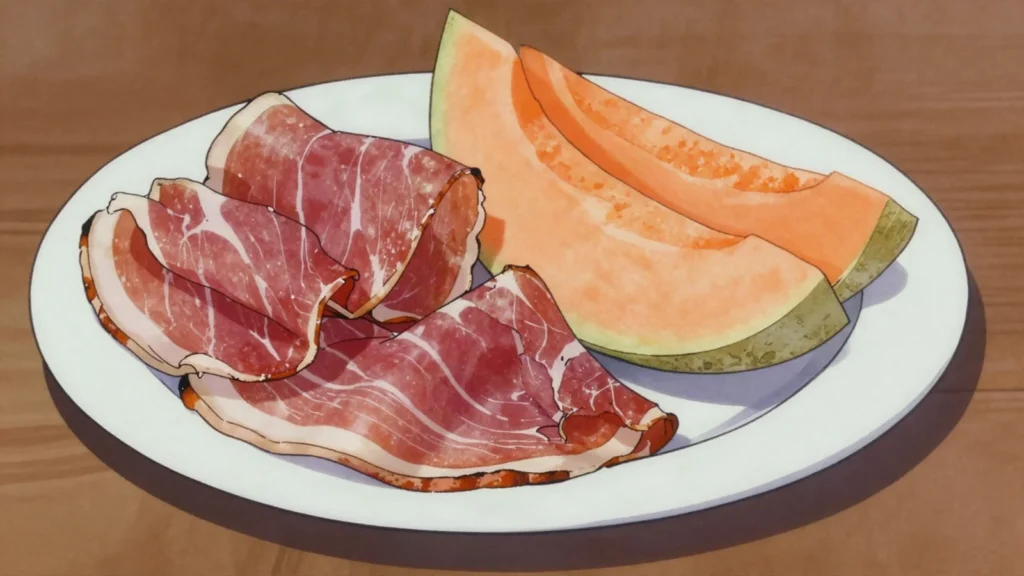
Sliced paper-thin with bread and butter, with melon or figs, or draped over hot pasta.
History
Dry-cured ham, made from the hind leg of specially raised pigs and cured with salt alone, without smoking, for a minimum of twelve months, documented across the region surrounding Parma in northern Italy for many centuries, with production methods and geographic origin protected today under strict European Union regulation defining what may officially be labeled Prosciutto di Parma. Its extended curing period, along with the specific mineral-rich air of the Parma region historically believed to contribute to the ham’s distinctive flavour, reflects generations of accumulated regional expertise in dry-curing technique. Prosciutto di Parma remains one of Italy’s most internationally celebrated and strictly protected culinary products.
Frequently asked questions
What is Prosciutto di Parma?
Prosciutto di Parma is a charcuterie & cured from Italy: sweet air-cured ham sliced paper-thin. Dry-cured ham, made from the hind leg of specially raised pigs and cured with salt alone, without smoking, for a minimum of twelve months, documented across the region surrounding Parma in northern Italy for many centuries, with production methods and geographic origin protected today under strict European Union regulation defining what may officially be labeled Prosciutto di Parma. Its extended curing period, along with the specific mineral-rich air of the Parma region historically believed to contribute to the ham’s distinctive flavour, reflects generations of accumulated regional expertise in dry-curing technique. Prosciutto di Parma remains one of Italy’s most internationally celebrated and strictly protected culinary products.
How is Prosciutto di Parma made?
The leg is salted in two stages over about three weeks, then rested cold for a couple of months so the salt equalises through the muscle. It is washed, dried, and hung in rooms whose windows are opened to the hill breezes; the exposed surface is later sealed with a paste of lard and flour so the ham does not dry too fast. It matures for a year or more and is tested with a horse-bone needle before it earns the ducal crown. It takes at least twelve months, often eighteen to thirty.
Can I make Prosciutto di Parma at home?
No, and the atlas gives no method for it. It is a protected designation of origin made from designated pig breeds in one defined area, and a whole leg cured for a year depends on the hill air’s temperature and humidity cycling as it does there — and it uses no nitrate at all, which leaves salt and airflow as the only safeguards.
What goes into Prosciutto di Parma?
A hind leg from a heavy Italian pig of designated breed, sea salt, nothing else — no nitrate, no smoke, no spice.
How is Prosciutto di Parma eaten?
Sliced paper-thin with bread and butter, with melon or figs, or draped over hot pasta.