
Ingredients
Malt
- 2 kgfinger millet (bulo)
- Water, for steeping and sprouting
Mash and ferment
- 2 kgunmalted millet or sorghum flour
- 6 litreswater
- 500 gof a previous batch of malwa, or bakers’ yeast, as a starter
- Clean banana leaves, for covering
To drink
- Warm water at about 50°C (120°F), to fill the pot
- 1large clay or plastic pot (ekita)
- Long reed drinking straws (epi), one per person
Directions
- Cook the unmalted millet flour with 4 litres water into a thick porridge, stirring hard over medium heat for 20 minutes, then let it cool to about 55°C (130°F) – hot enough to convert, cool enough not to destroy the enzymes.
- Stir the ground malt into the warm porridge and hold it warm for 2–3 hours. The mash will visibly thin and turn sweet as the starch converts to sugar; taste it to check.
- Cool to blood heat, add the remaining water and the starter, cover with banana leaves and leave in a warm place to ferment for 3–5 days. Some households dry and store the fermented mash as a cake at this point, reconstituting it when guests arrive.
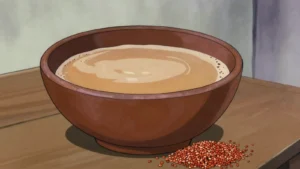
- Set the pot on the ground with everyone seated around it, each with a long reed straw reaching to the bottom. Drink slowly, topping the pot up with warm water as the level falls, and pass the conversation round with it.
Technique
- Malwa is drunk communally from a single pot through metre-long reed straws, an old Ugandan and East African custom that makes drinking a social act rather than an individual one.
- The malting stage is what separates real malwa from a sour porridge. Without sprouted grain there are no enzymes, no sugar and therefore no fermentation.
- Wild fermentation is unpredictable: keep everything clean, keep the pot covered, and discard any batch that smells of vinegar, solvent or mould rather than sour bread. Home brews vary widely in strength.
Substitutions
- Sorghum or maize can replace part of the millet; sorghum beer of this kind is brewed across the region under many names.
- A pinch of bakers’ yeast makes the first fermentation more reliable if you have no previous batch to use as a starter.
Variations
- Ajono, the Teso name for the same drink in eastern Uganda.
- Tonto, made from fermented bananas rather than millet, drunk the same way.
History
Fermented millet is topped with hot water in a communal pot; among the Iteso and Bagisu, elders drink and negotiate around the malwa pot for hours.
Frequently asked questions
What is Malwa?
Malwa is a wine & spirit from Uganda: warm millet beer shared from one pot through long reed straws. Fermented millet is topped with hot water in a communal pot; among the Iteso and Bagisu, elders drink and negotiate around the malwa pot for hours.
How long does Malwa take to make?
Malwa takes 1 hr of preparation and 10 days of cooking. The recipe makes about 8 litres, shared from one pot. It is rated hard to make.
What can I substitute in Malwa?
Yes, within limits. Sorghum or maize can replace part of the millet; sorghum beer of this kind is brewed across the region under many names. A pinch of bakers’ yeast makes the first fermentation more reliable if you have no previous batch to use as a starter.
What is the most important thing to get right in Malwa?
Malwa is drunk communally from a single pot through metre-long reed straws, an old Ugandan and East African custom that makes drinking a social act rather than an individual one.