
Ingredients
What goes into the still at Antigua Distillery
- 1,000 kgblackstrap molasses from Caribbean cane sugar, diluted with fresh water to about 18–20 degrees Brix
- Distillery yeast culture, pitched at around 30°C (85°F)
- Dunder (stillage from the previous run), a small proportion added back to the wash for continuity of character
Ageing and finishing
- Ex-bourbon American oak barrels of 200 litres
- Tropical warehouse conditions in St John’s, roughly 28–32°C (80–90°F) year round
- Demineralised water to bring the strength down to 40% ABV at bottling
To serve
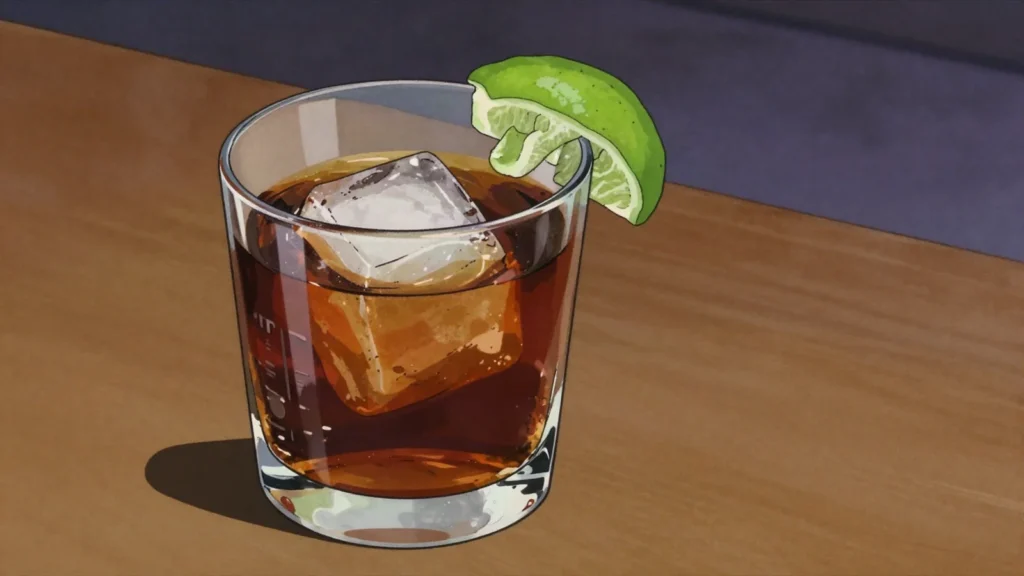
- 60 mlEnglish Harbour 5 Year Old
- 1large clear ice cube, or 10 ml still water
- 1strip of lime peel, oils expressed over the glass (optional)
Directions
- Understand the source: this is a molasses rum, not a cane-juice rhum. Molasses left from sugar making is diluted with water to a fermentable wash.
- The wash is fermented with the house yeast for roughly 24–36 hours to about 7–8% ABV; a short, clean ferment gives the light, fruity ester profile English Harbour is known for.
- The wash goes through a multi-column continuous still at the Antigua Distillery, coming off high and clean, which is why the rum is elegant rather than heavy and pot-still funky.
- The new spirit is filled into ex-bourbon barrels and aged in the tropics, where evaporation runs 5–7% a year against 2% in Scotland. Five tropical years mature the spirit far more than five temperate ones.
- Casks are married and reduced to 40% ABV, then bottled; the 10 Year and the older reserve bottlings simply spend longer in the same warehouses.
- To serve, pour 60 ml into a tulip or a rocks glass and let it sit two minutes; the alcohol vapour blows off and the dried fruit, molasses and toasted oak come forward.
- Add one large cube or a teaspoon of water, taste again, and note how the vanilla and banana lift as the strength drops.
- In Antigua it is also drunk long over ice with soda or coconut water, and it is the standard rum in a local rum punch.
Technique
- This is a commercial distillate, not a home project. Home distilling is illegal in most countries and dangerous without a licensed still and a trained operator; what you can do at home is age nothing and taste well.
- The angel’s share is the key fact for Caribbean rum: a 10 year tropical rum is roughly comparable in extraction to a 25–30 year old temperate spirit.
- Antigua Distillery Ltd in St John’s has produced rum since the 1930s and consolidated the island’s earlier distilleries; the English Harbour name comes from Nelson’s Georgian naval dockyard on the south coast.
Substitutions
- If you cannot find English Harbour, another lightly aged column-still Caribbean rum such as a 5 year Barbadian or Trinidadian bottling behaves the same way in punches.
- For cooking, use any dark rum of 40% ABV; the cask nuance is lost in a hot pan anyway.
Variations
- English Harbour 5 Year, the everyday expression, and the 10 Year, deeper and drier.
- Cask-finished releases in sherry, port or Madeira wood, released in small batches.
- The 1981 Reserve, a long tropical-aged bottling from a single ageing regime.
History
Distilled by Antigua Distillery, founded in 1932, and named for English Harbour, the Georgian naval dockyard UNESCO listed in 2016.
Frequently asked questions
What is English Harbour rum?
English Harbour rum is a wine & spirit from Antigua and Barbuda: aged Antiguan rum with dried fruit and molasses notes. Distilled by Antigua Distillery, founded in 1932, and named for English Harbour, the Georgian naval dockyard UNESCO listed in 2016.
How long does English Harbour rum take to make?
English Harbour rum takes 10 min to serve of preparation and 5 to 10 years of tropical cask ageing of cooking. The recipe makes 1 bottle, 700 ml (about 23 servings of 30 ml). It is rated hard to make.
What can I substitute in English Harbour rum?
Yes, within limits. If you cannot find English Harbour, another lightly aged column-still Caribbean rum such as a 5 year Barbadian or Trinidadian bottling behaves the same way in punches. For cooking, use any dark rum of 40% ABV; the cask nuance is lost in a hot pan anyway.
What is the most important thing to get right in English Harbour rum?
The wash goes through a multi-column continuous still at the Antigua Distillery, coming off high and clean, which is why the rum is elegant rather than heavy and pot-still funky.