
Ingredients
Fruit
- 1tonne hand-picked Saperavi grapes from Kakheti, at 22–24 Brix, giving roughly 650 litres of wine
- Indigenous yeast from the skins, or a selected Bordeaux strain
- 30 mgper litre sulphur dioxide at crush, for protection
Vessel and ageing
- Stainless steel or oak fermenters, or a qvevri for the traditional style
- Georgian or French oak barrels, 300 litres, for 12–36 months
To serve
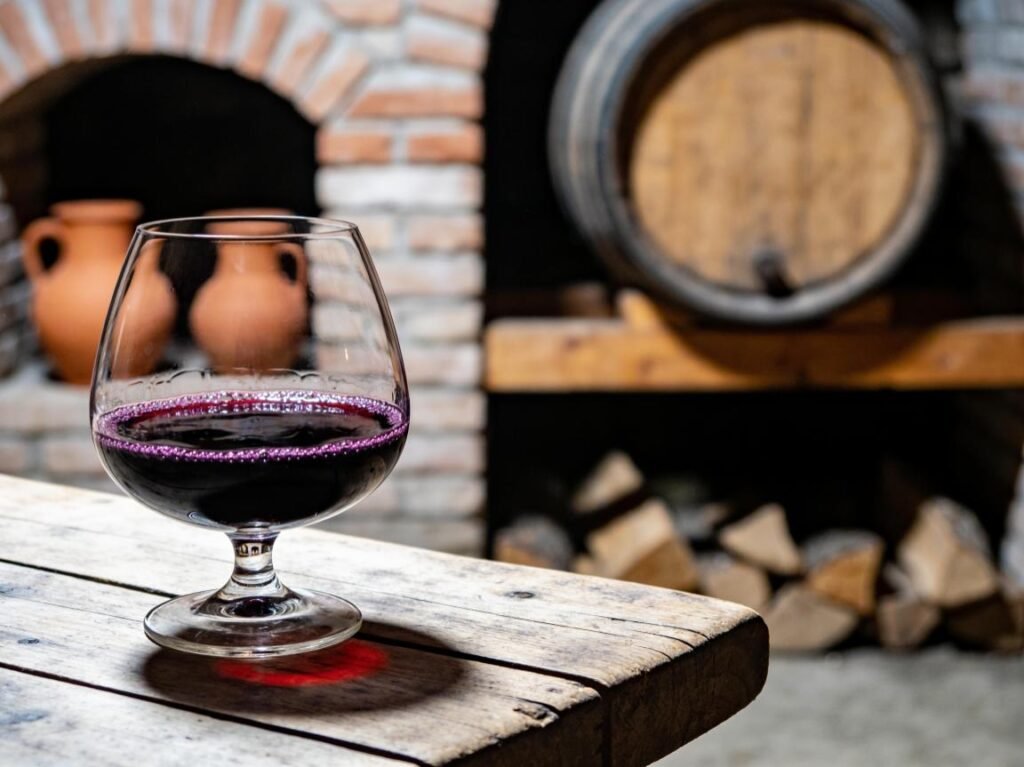
- Large-bowled red wine glasses
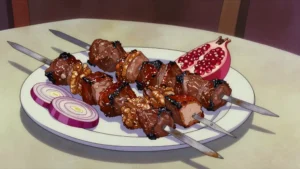
- Mtsvadi grilled over vine cuttings, walnut sauces, aged sulguni
Directions
- Pick in late September or October when the pips are brown and the skins taste sweet rather than green; Saperavi keeps high acidity even when very ripe. Destem and crush gently, keeping most berries whole, and run the must into the fermenter.
- Drain the free-run wine and press the skins separately at low pressure, keeping the harder press fraction apart for later blending.
- Warm the wine to 18–20°C (65–70°F) for malolactic fermentation, which takes 2–4 weeks and softens the sharp malic acid into rounder lactic acid. Age 12–36 months in oak, racking every 3–4 months off the lees; Mukuzani, the benchmark dry Saperavi, is required to spend at least three years maturing before release.
- Serve at 16–18°C (60–65°F), decanted 30–60 minutes, in a big glass, with chargrilled mtsvadi and walnut sauces.
Technique
- Saperavi means dye or paint in Georgian, and the name is literal: even the flesh is pigmented, so it stains a glass opaque black-purple in a way almost no other grape does.
- Its natural acidity is very high and it ripens late, which is why it survives Kakhetian summers and can carry both 14 per cent alcohol and decades of ageing.
- The same grape is made in two quite different ways, in steel and oak on the European model, or on skins in a buried qvevri; the qvevri version is more tannic, more savoury and less fruity.
- Semi-sweet Kindzmarauli and Akhasheni from Kvareli are also pure Saperavi, stopped before all the sugar ferments, and are a distinct style rather than a fault.
Substitutions
- Cannot find Saperavi: a Georgian Tavkveri is lighter and softer, while a northern Rhone Syrah gives comparable dark fruit but far less acid.
- For a home-scale trial, 100 kg of grapes and a 100-litre food-grade fermenter follow exactly the same sequence.
Variations
- Mukuzani, dry and oak-aged at least three years, the classic serious bottling.
- Napareuli and Kvareli, dry single-region Saperavi with less oak.
- Kindzmarauli, naturally semi-sweet, from the Kvareli microzone.
History
Saperavi means dye; one of the few grapes with red flesh, it is Georgia’s flagship red, grown mainly in Kakheti.
Frequently asked questions
What is Saperavi?
Saperavi is a wine & spirit from Georgia: deep red wine from a grape whose flesh is red as well as its skin. Saperavi means dye; one of the few grapes with red flesh, it is Georgia’s flagship red, grown mainly in Kakheti.
How long does Saperavi take to make?
Saperavi takes 3 hr at harvest of preparation and 12–36 months ageing of cooking. The recipe makes one 750 ml bottle serves 4–6. It is rated hard to make.
What can I substitute in Saperavi?
Yes, within limits. Cannot find Saperavi: a Georgian Tavkveri is lighter and softer, while a northern Rhone Syrah gives comparable dark fruit but far less acid. For a home-scale trial, 100 kg of grapes and a 100-litre food-grade fermenter follow exactly the same sequence.
What is the most important thing to get right in Saperavi?
Pick in late September or October when the pips are brown and the skins taste sweet rather than green; Saperavi keeps high acidity even when very ripe. Destem and crush gently, keeping most berries whole, and run the must into the fermenter.