
Ingredients
Cheese
- 800 gRaclette du Valais AOP, as a half wheel for scraping or cut in 5 mm slices for pans
- allow 200 g per person, which sounds like a lot and is not
Potatoes
- 1.2 kgsmall waxy potatoes, Charlotte or Ratte, scrubbed but unpeeled
- 2 tspcoarse salt
- 1 sprigrosemary, optional
On the table
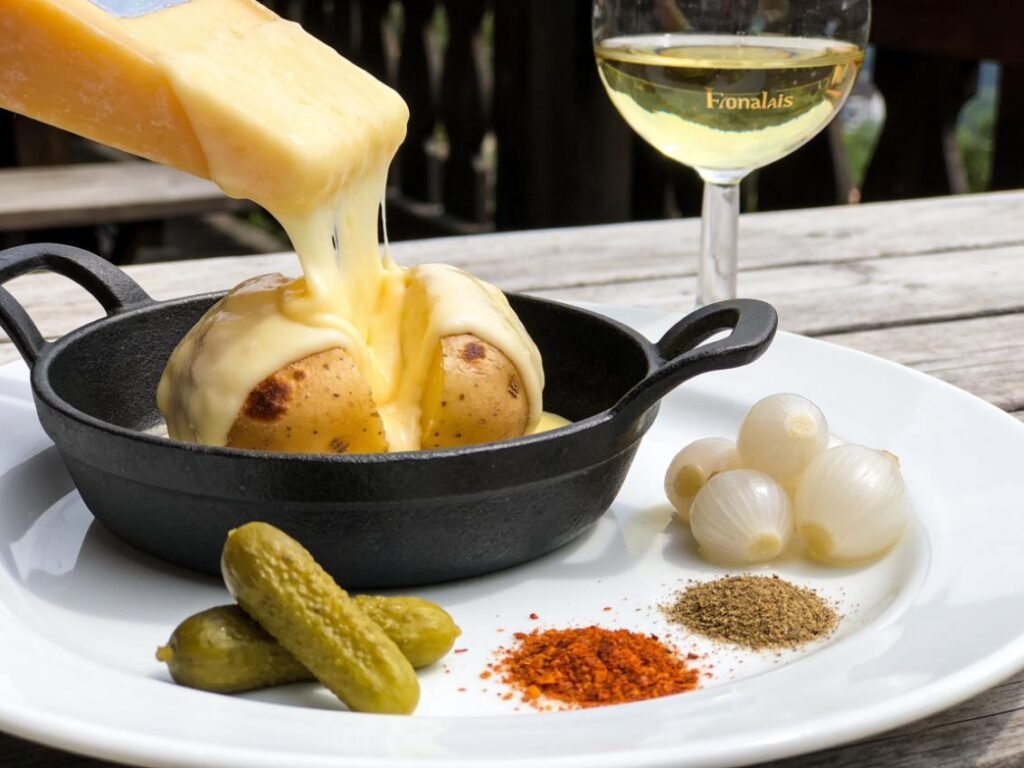
- 200 gcornichons
- 200 gpickled silverskin onions
- black pepper in a mill
- sweet paprika
- ground cumin, the Valaisan touch
To drink
- 1 bottleFendant or another dry Valais white, at 10°C (50°F)
- or hot black tea, which the Valais insists on in winter
Directions
- Boil the potatoes whole in their skins in well-salted water, 18 to 22 minutes, until a knife slides in with slight resistance. Drain and keep them in a covered dish or under a cloth; they must stay hot.
- Take the cheese out of the fridge an hour before you eat. Cold cheese scorches on the outside before the middle softens.
- For the traditional method, cut a wheel in half and set the cut face towards a wood fire or under a raclette lamp at about 15 cm distance.
- Let the surface heat until it bubbles, blisters and slumps, roughly 3 to 5 minutes, watching for the moment it goes glossy but before the fat separates and runs clear.
- Scrape the molten layer off in one movement with the back of a broad knife or a raclette spatula, straight onto a warm plate; the plate must be hot or the cheese sets into rubber on contact.
- Return the wheel to the heat immediately so the next serving is melting while the first is eaten.
- For the tabletop grill, lay slices in the little pans, slide them under the element and melt 4 to 6 minutes until bubbling and freckled brown at the edges.
- Each person crushes a hot potato on their plate, pours the cheese over it, and adds cornichons, pickled onions, pepper, paprika or cumin to taste.
- Serve in continuous rounds rather than all at once, one scrape at a time, and eat quickly while it is molten.
- Finish with a small glass of Valais white or a pot of hot tea and no dessert heavier than fruit.
Technique
- Raclette is a verb before it is a dish: racler means to scrape, and Valaisan herdsmen melted the cut face of a wheel at the fire long before the tabletop grill existed.
- Raclette du Valais AOP is made from raw milk and is bred to melt without splitting. Generic supermarket raclette melts, but it weeps oil and tastes flat by comparison.
- Serve plates hot and portions small. Cheese that cools on the plate goes tough and greasy, and the whole meal depends on continuous rhythm rather than a single big serving.
Substitutions
- No raclette lamp or grill: put slices of cheese on hot potatoes in a shallow dish and melt them under a very hot overhead grill for 3 to 4 minutes, in batches.
- No Valais AOP cheese: French raclette de Savoie or a young Morbier melt acceptably, though both are milder.
Variations
- Raclette au feu de bois, melted at an open wood fire in the mountains.
- Raclette with pickled sweetcorn, mushrooms and peppers in the pans, the modern home version.
- Raclette du Valais AOP served with only potatoes, cornichons and onions, which purists consider the only correct accompaniment.
History
Valais herdsmen melted cheese at the fire and scraped it onto bread; the name, from racler, to scrape, was fixed in 1874.
Frequently asked questions
What is Raclette?
Raclette is a main from Switzerland: cheese wheel melted and scraped over potatoes, gherkins, onions. Valais herdsmen melted cheese at the fire and scraped it onto bread; the name, from racler, to scrape, was fixed in 1874.
How long does Raclette take to make?
Raclette takes 20 min of preparation and 40 min of cooking. The recipe makes 4 servings. It is rated easy to make.
What can I substitute in Raclette?
Yes, within limits. No raclette lamp or grill: put slices of cheese on hot potatoes in a shallow dish and melt them under a very hot overhead grill for 3 to 4 minutes, in batches. No Valais AOP cheese: French raclette de Savoie or a young Morbier melt acceptably, though both are milder.
What is the most important thing to get right in Raclette?
Boil the potatoes whole in their skins in well-salted water, 18 to 22 minutes, until a knife slides in with slight resistance. Drain and keep them in a covered dish or under a cloth; they must stay hot.
