Ingredients
What to buy
- John Watling’s pale rum
- for punch and mixing
- or the amber
- or the aged expressions
- for drinking neat
- bottled at the Buena Vista Estate, Nassau
- see the note on why no method is given
To serve neat
- in a short glass
- at room temperature
- or over one large ice cube
To mix
- lime juice
- pineapple and orange juice
- grenadine
- Angostura bitters
- freshly grated nutmeg
- coconut water
- ginger beer
Directions
- John Watling’s is rum bottled in Nassau.
- It is made at a restored colonial estate.
- It is drunk neat and mixed into punch.
- Now to an honest statement, which comes first.
- This entry gives no method for making rum.
- The atlas states that plainly.
- Now to the first reason. Rum is a distilled spirit.
- Home distilling is illegal in most countries without a licence.
- That includes the United Kingdom, the United States and most of the European Union.
- It is illegal regardless of quantity or purpose.
- The atlas states that plainly.
- Now to the second reason. Distilling carries genuine physical hazards.
- Alcohol vapour is flammable and it collects.
- A still under pressure is dangerous.
- The atlas states that plainly.
- Now to the third reason. Badly made spirit can contain harmful levels of methanol.
- Methanol causes blindness and death.
- Separating it correctly is a technical skill.
- The atlas states that plainly.
- Now to the fourth reason, which is separate.
- This is a specific branded product.
- Even a licensed distiller could not reproduce it.
- The atlas states that plainly.
- Now to what follows. The atlas gives no instructions and no quantities.
- That omission is deliberate. The atlas states that plainly.
- Now to what the atlas gives instead.
- It records what the rum is and where it is made.
- It records how it is drunk and what it goes into.
- That is the honest thing to give.
- The atlas states that plainly.
- Now to the name. John Watling was a seventeenth-century buccaneer.
- The distillery is named for him.
- The atlas records that plainly.
- Now to an honest note about that.
- Buccaneers were pirates. The romance around them is a later invention.
- The atlas records the naming without endorsing the mythology.
- Now to the place. The distillery is at the Buena Vista Estate in Nassau.
- That is a restored colonial-era property.
- It opened as a distillery in twenty thirteen.
- The atlas records that plainly.
- Now to a note about that. The estate house dates from the eighteenth century.
- The distillery is a modern operation inside an old building.
- The atlas records that plainly rather than implying centuries of production.
- Now to the expressions. There is a pale rum, an amber and aged bottlings.
- The atlas records that plainly.
- Now to what those mean. Pale rum is unaged or lightly aged and filtered.
- Amber and aged rums have spent time in barrels.
- The atlas records that plainly.
- Now to a genuinely useful note about rum colour.
- Colour does not reliably indicate age.
- The atlas states that plainly.
- Now to why. Caramel colouring is permitted in rum in most markets.
- A dark rum may be young and coloured.
- A pale rum may be aged and then filtered clear.
- The atlas states that as fact.
- Now to what follows. Read the label rather than the colour.
- The atlas states that plainly.
- Now to a note about age statements in the Caribbean.
- Age labelling rules vary by country.
- Some markets allow an average age, some the youngest.
- The atlas records that the variation exists.
- Now to how it is drunk. Aged rum is drunk neat.
- Pale rum goes into punch and mixed drinks.
- The atlas records that plainly.
- Now to drinking it neat. Use a short glass.
- Room temperature shows more of it.
- One large ice cube dilutes slowly.
- The atlas records that plainly.
- Now to a note about ice. Small cubes melt fast and water it down.
- One big cube is the practical answer.
- The atlas records that plainly.
- Now to Bahamian rum punch. The old rhyme runs one of sour, two of sweet, three of strong, four of weak.
- The atlas records that plainly.
- Now to what those are. Sour is lime juice.
- Sweet is sugar syrup or grenadine.
- Strong is the rum. Weak is juice or water.
- The atlas records that plainly.
- Now to an honest note about the rhyme.
- It is a rule of thumb rather than a recipe.
- Proportions vary by island and by bar.
- The atlas records it as the framework it is.
- Now to the nutmeg. Grated nutmeg goes on top of a Caribbean punch.
- That is standard practice. The atlas records that plainly.
- Now to a note about nutmeg. Grate it fresh.
- Pre-ground nutmeg loses its aroma quickly.
- The atlas records that plainly.
- Now to a genuine caution about nutmeg.
- Nutmeg is toxic in large quantities.
- Several whole nutmegs can cause serious poisoning.
- That is documented rather than folklore.
- A grating on a drink is nowhere near that.
- The atlas records both plainly.
- Now to Goombay Smash. That is the Bahamian rum punch.
- It uses rum, coconut, pineapple and citrus.
- The atlas records that plainly.
- Now to a note about that. Its origin is claimed by a bar in Green Turtle Cay.
- The exact recipe is closely held.
- The atlas records the claim as a claim.
- Now to what it is drunk with. It is drunk before and after food rather than through it.
- It goes with conch, grilled fish and coconut.
- The atlas records that plainly.
- Now to Nassau Royale. That is the Bahamian liqueur.
- It appears in the same drinks.
- The atlas holds a separate entry for it.
- The atlas cross-references rather than repeating.
- Now to alcohol. This is a strong spirit.
- The atlas states that plainly and without moralising.
- Now to a practical warning about punch.
- Rum punch tastes far weaker than it is.
- Fruit juice and sugar hide the alcohol completely.
- People drink more than they intend.
- The atlas states that plainly.
- Now to who should not drink it.
- Anyone pregnant should not drink alcohol.
- Anyone driving or handling a boat should not.
- Anyone on medication that interacts with alcohol should not.
- Anyone who does not want to should not be pressed.
- The atlas states that plainly and moves on.
- Now to a note about sun and water.
- Drinking in heat dehydrates fast.
- Drinking near open water is a documented drowning risk.
- The atlas records that as fact and moves on.
- Now to keeping it. Spirits keep for years unopened.
- An opened bottle slowly loses aroma.
- Keep it upright, away from light and heat.
- Rum does not age in the bottle.
- The atlas states that plainly.
Technique
- The atlas gives no method, deliberately. Home distilling is illegal without a licence in most countries — the UK, the US and most of the EU included — regardless of quantity or purpose; distilling carries real fire and pressure hazards; badly made spirit can contain harmful levels of methanol, which causes blindness and death; and this is in any case a specific branded product no one else could reproduce.
- Colour does not reliably indicate age. Caramel colouring is permitted in rum in most markets, so a dark rum may be young and coloured while a pale one may be aged and filtered clear. Read the label rather than the colour.
- Age labelling rules vary by country — some markets allow an average age, others require the youngest in the blend.
- The distillery opened at the Buena Vista Estate in 2013, a modern operation inside an eighteenth-century building. The atlas records that plainly rather than implying centuries of production.
- The punch rhyme — one of sour, two of sweet, three of strong, four of weak — is a rule of thumb rather than a recipe, and proportions vary by island and by bar.
- Grate the nutmeg fresh; pre-ground loses its aroma quickly. Nutmeg is genuinely toxic in quantity — several whole nutmegs can cause serious poisoning, which is documented rather than folklore — but a grating on a drink is nowhere near that.
- Rum punch tastes far weaker than it is. Fruit juice and sugar hide the alcohol completely and people drink more than they intend.
- One large ice cube dilutes slowly; small cubes melt fast and water the rum down.
- Drinking in heat dehydrates fast, and drinking near open water is a documented drowning risk.
- Do not drink alcohol if you are pregnant, driving, handling a boat, or on medication that interacts with it.
- Rum does not age in the bottle. Store it upright away from light and heat; an opened bottle slowly loses aroma.
- Buccaneers were pirates, and the romance around them is a later invention. The atlas records the naming without endorsing the mythology.
Substitutions
- Any Caribbean pale rum substitutes for mixing and punch.
- An aged Barbadian or Jamaican rum substitutes for sipping.
- Falernum adds the lime, clove and almond note to a rum drink.
- Nassau Royale is the Bahamian liqueur used in the same drinks.
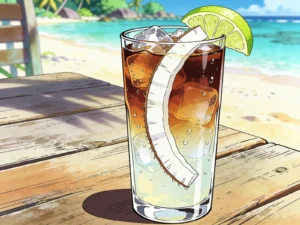
- Coconut water and lime make the non-alcoholic version of the same refreshment.
- Ginger beer turns any of these into a long drink.
Variations
- The pale expression is for punch and mixing.
- The amber and aged expressions are for drinking neat.
- Goombay Smash is the Bahamian rum punch it goes into.
- Bahama Mama is the other tourist-bar rum drink.
- Sky juice pairs gin rather than rum with coconut water.
- Guava duff sauce uses rum or Nassau Royale.
History
Distilled at the Buena Vista Estate in Nassau since 2013 and named for a seventeenth-century buccaneer.
Frequently asked questions
What is John Watling’s rum?
John Watling’s rum is a wine & spirit from Bahamas: pale and aged rums bottled in Nassau, drunk neat or in punch. Distilled at the Buena Vista Estate in Nassau since 2013 and named for a seventeenth-century buccaneer.
How long does John Watling’s rum take to make?
John Watling’s rum takes 2 minutes of preparation and none of cooking. The recipe makes buy by the bottle. It is rated easy to make.
What can I substitute in John Watling’s rum?
Yes, within limits. Any Caribbean pale rum substitutes for mixing and punch. An aged Barbadian or Jamaican rum substitutes for sipping. Falernum adds the lime, clove and almond note to a rum drink. Nassau Royale is the Bahamian liqueur used in the same drinks. Coconut water and lime make the non-alcoholic version of the same refreshment. Ginger beer turns any of these into a long drink.
What is the most important thing to get right in John Watling’s rum?
The atlas records that plainly rather than implying centuries of production.