
Ingredients
Batter
- 300 gyellow split peas, soaked overnight
- 3 clovesgarlic
- 2cm ginger
- 2green chillies
- 1 tspground cumin
- 1 tspground turmeric
- 1 tspsalt
- a handful of curry leaves, chopped
Also
- 1onion, finely chopped
- 1 tspbaking powder, optional
- a little water
To fry
- oil, for deep frying
To serve
- coconut or tamarind chutney
- chilli sauce
- or in a bread roll, as a market snack
Directions
- Soak them overnight in plenty of cold water. They must be fully soaked and soft, since undersoaked peas grind into a gritty batter that stays hard in the middle. Drain the soaked peas thoroughly. Blend the drained peas with the garlic, ginger and chillies, using as little water as possible.
- Use the absolute minimum of water, since a wet batter spreads out in the oil and absorbs fat rather than holding its shape. Add water a tablespoon at a time only if the blender will not turn. Grind it fairly coarse rather than perfectly smooth, leaving some texture in it. A slightly coarse batter gives the characteristic bite, and a completely smooth one is pasty.
- Beat the batter hard with a spoon or your hand for several minutes. Test it by dropping a small spoonful into a glass of water: if it floats, it is aerated enough. Fold in the chopped onion, cumin, turmeric, curry leaves and salt.
- Add the onion after grinding rather than blending it in, since blended onion releases water and slackens the batter. Curry leaves are characteristic and should be used generously. Add the salt only just before frying. Salt draws water out of the batter and slackens it, which undoes the aeration you have just built.
- Heat the oil to about 175°C, deep enough for the fritters to float. Test with a small spoonful, which should rise immediately and sizzle steadily. Drop spoonfuls of batter into the oil, or flatten them slightly between wet palms first.
- Fry them a few at a time for three or four minutes, turning them, until deep golden brown. Do not crowd the pan, which drops the temperature sharply.
- Break one open before frying the rest: the inside should be cooked through with no raw batter. Drain them on a rack rather than paper, so the undersides stay crisp. Now serving them while still hot. Serve them hot with coconut chutney, tamarind chutney or chilli sauce. They go soft within half an hour, which is why they are fried to order.
Technique
- Indo-Fijians descend from indentured labourers brought between 1879 and 1916.
- Yellow split peas are used rather than the dals more common in India.
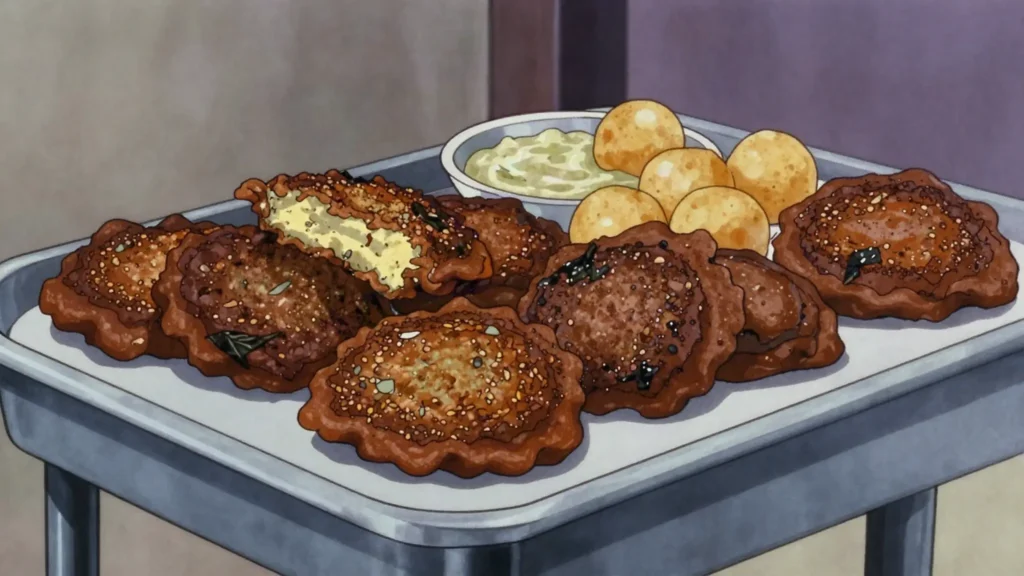
- They are fried noticeably darker than most Indian fritters.
Substitutions
- Chana dal in place of yellow split peas.
- Any chutney or hot sauce alongside.
Variations
- Served in a bread roll, as sold at markets.
- Made hotter, with more green chilli.
- Made with spinach or other greens through the batter.
History
Brought by indentured labourers from India between 1879 and 1916, whose descendants make up much of Fiji’s population and its market food.
Frequently asked questions
What is Bara?
Bara is a street food from Fiji: spiced split-pea fritters fried dark and eaten with chutney, an Indo-Fijian market snack. Brought by indentured labourers from India between 1879 and 1916, whose descendants make up much of Fiji’s population and its market food.
How long does Bara take to make?
Bara takes 30 min plus overnight soaking of preparation and 25 min of cooking. The recipe makes about 20. It is rated medium to make.
What can I substitute in Bara?
Yes, within limits. Chana dal in place of yellow split peas. Any chutney or hot sauce alongside.
What is the most important thing to get right in Bara?
Soak them overnight in plenty of cold water. They must be fully soaked and soft, since undersoaked peas grind into a gritty batter that stays hard in the middle. Drain the soaked peas thoroughly. Blend the drained peas with the garlic, ginger and chillies, using as little water as possible.