
Ingredients
Cassava
- 5 kgbitter cassava root
- salt, optional
Equipment
- a fine grater or mill
- a cassava press, or a strong cloth and a heavy weight
- a flat griddle
Directions
- Peel the cassava completely, taking off the brown bark and the pink layer beneath it, and cut out the woody cord that runs down the centre of each root.
- Grate it very finely into a wet mash.
- Press the mash hard to drive out every drop of liquid, traditionally in a woven sebucán and at home in a strong cloth under a heavy weight, for at least an hour.
- This pressing is the entire safety of the bread. Bitter cassava holds cyanogenic glycosides that concentrate in the liquid, which is precisely why casabe is made from a root that cannot be eaten as it comes out of the ground.
- Throw the pressed liquid away, and never use it raw for anything. Boiled long and hard it becomes cassareep, but that is a separate preparation with its own long cooking.
- Sieve the dry pressed mash through a fine screen into a loose, even flour, breaking up every lump.
- Heat a flat griddle over a moderate flame and use no fat at all.
- Scatter a layer of the flour onto the hot griddle inside a ring or a shaped frame, about 5 mm deep, and press it down flat.
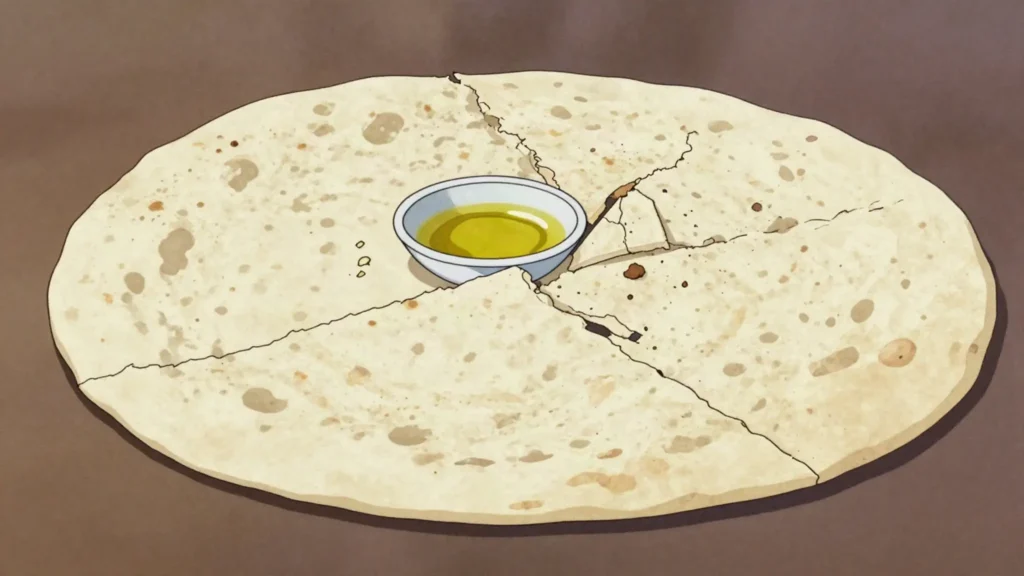
- Cook for 3 to 5 minutes until the starch binds into a solid disc and the underside is dry and lightly speckled, then flip it and cook the other side.
- It welds itself together as it cooks. No water, no binder and no egg go into casabe; the starch alone holds it, which is what makes it such a startling thing to watch being made.
- Dry the finished discs in the sun or in a very low oven until they snap cleanly. Properly dried, casabe keeps for months without refrigeration.
- Eat with stews, moistened with a little broth, or brushed with garlic oil and warmed through.
Technique
- Press it, discard the liquid, dry it hard. Those three steps carry both the safety and the keeping quality.
- It is a Taíno bread that survived the conquest intact, and UNESCO inscribed casabe-making in the Dominican Republic and neighbouring countries in 2024.
- It softens the moment it meets moisture, which is why it is served alongside wet dishes rather than with them.
Substitutions
- Sweet cassava, which needs the same pressing and holds far less glycoside, though it is not the traditional root.
- Ready-made cassava flour from a Caribbean grocer, which skips the grating and pressing entirely.
Variations
- Casabe con ajo, brushed with garlic oil and toasted.
- Layered with meat and sauce into a baked dish.
- The larger, thinner Venezuelan and Guyanese versions.
History
A Taino bread that survived the conquest; UNESCO inscribed casabe-making traditions of the Dominican Republic and neighbouring countries in 2024.
Frequently asked questions
What is Casabe?
Casabe is a bread & pastry from Dominican Republic: crisp flatbread of pressed bitter cassava, eaten with stews or oil. A Taino bread that survived the conquest; UNESCO inscribed casabe-making traditions of the Dominican Republic and neighbouring countries in 2024.
How long does Casabe take to make?
Casabe takes 2 hr of preparation and 1 hr of cooking. The recipe makes 8 flatbreads. It is rated hard to make.
What can I substitute in Casabe?
Yes, within limits. Sweet cassava, which needs the same pressing and holds far less glycoside, though it is not the traditional root. Ready-made cassava flour from a Caribbean grocer, which skips the grating and pressing entirely.
What is the most important thing to get right in Casabe?
This pressing is the entire safety of the bread. Bitter cassava holds cyanogenic glycosides that concentrate in the liquid, which is precisely why casabe is made from a root that cannot be eaten as it comes out of the ground.