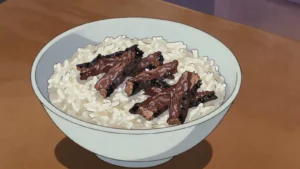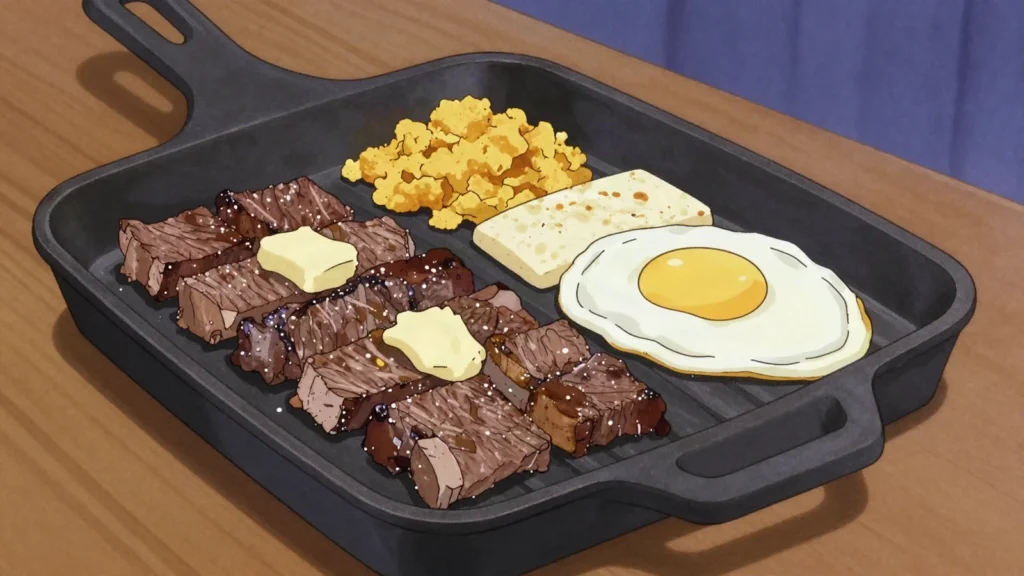

Beef lightly salted and dried in the shade — not the sun, despite the name — in the dry air of the Brazilian sertão. It is softer and less salty than jerked charque, and it is griddled and served with cassava, butter and curd cheese.
A short, light cure that relies on the sertão’s dry wind gives no real margin: in a humid kitchen the same salt level leaves meat wet enough to spoil, and the traditional keeping time is days, not months.
What goes into it
- beef, cut in thick flat sheets
- coarse salt
How it is made
The beef is opened out into wide flat sheets, salted moderately, and hung under cover where the hot dry wind of the interior reaches it but the sun does not. It dries for a day or two only, which is why it stays supple and needs to be eaten or refrigerated soon after — this is a short cure for a few days’ keeping, not a preserve for months.
How long it takes: one to three days of drying
How it is eaten
Griddled or fried, with butter, cassava flour, queijo coalho and a fried egg; the base of paçoca de carne seca.
History
Beef, lightly salted and partially dried, typically for just a day or two rather than fully cured, then grilled or pan-fried, documented across Brazil’s northeastern region as a significant traditional dish, its name meaning literally sun-dried meat, reflecting the traditional method of curing the beef briefly under the sun and wind in that region’s historically hot, dry climate before refrigeration became widely available. Its notably brief curing time, much shorter than a fully dried and salted meat like charque, gives carne de sol a more tender texture and milder salt flavour, distinguishing it from more heavily preserved meats. Carne de sol remains closely associated with Brazil’s northeastern regional cuisine, commonly served with rice, beans and manioc.
Frequently asked questions
What is Carne de sol?
Carne de sol is a charcuterie & cured from Brazil: salt-cured sun-dried beef griddled, with cassava and butter. Beef, lightly salted and partially dried, typically for just a day or two rather than fully cured, then grilled or pan-fried, documented across Brazil’s northeastern region as a significant traditional dish, its name meaning literally sun-dried meat, reflecting the traditional method of curing the beef briefly under the sun and wind in that region’s historically hot, dry climate before refrigeration became widely available. Its notably brief curing time, much shorter than a fully dried and salted meat like charque, gives carne de sol a more tender texture and milder salt flavour, distinguishing it from more heavily preserved meats. Carne de sol remains closely associated with Brazil’s northeastern regional cuisine, commonly served with rice, beans and manioc.
How is Carne de sol made?
The beef is opened out into wide flat sheets, salted moderately, and hung under cover where the hot dry wind of the interior reaches it but the sun does not. It dries for a day or two only, which is why it stays supple and needs to be eaten or refrigerated soon after — this is a short cure for a few days’ keeping, not a preserve for months. It takes one to three days of drying.
Can I make Carne de sol at home?
No, and the atlas gives no method for it. A short, light cure that relies on the sertão’s dry wind gives no real margin: in a humid kitchen the same salt level leaves meat wet enough to spoil, and the traditional keeping time is days, not months.
What goes into Carne de sol?
Beef, cut in thick flat sheets, coarse salt.
How is Carne de sol eaten?
Griddled or fried, with butter, cassava flour, queijo coalho and a fried egg; the base of paçoca de carne seca.