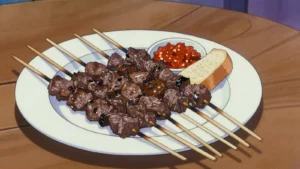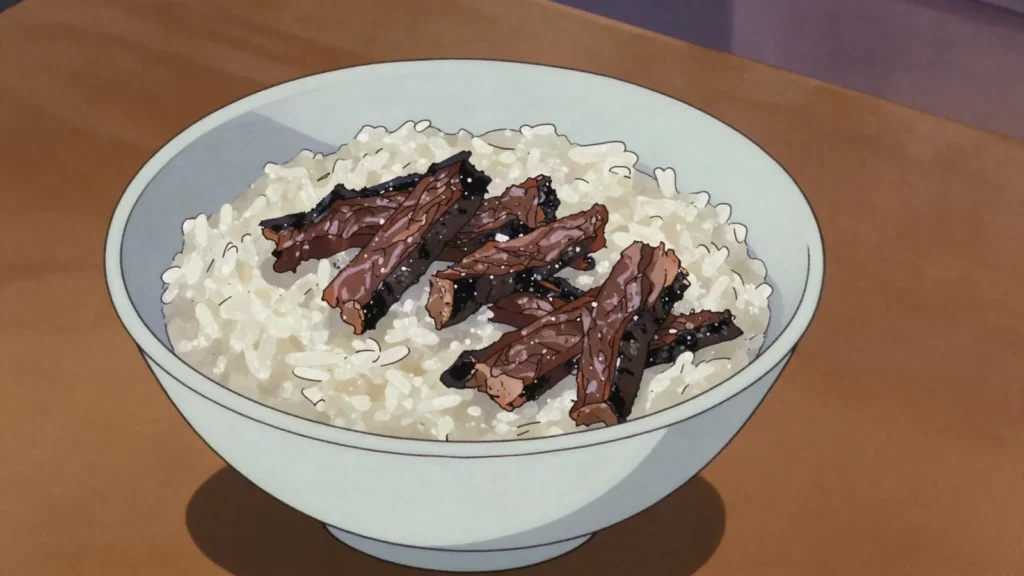

Smoked or dried zebu strips, grilled and eaten with rice porridge for breakfast. Long strips of meat are salted, dried and smoked over the hearth, and they hang in the kitchen until wanted.
The method is a cooking hearth burning daily under a hanging line — smoke and gentle heat for days — and the drying is what preserves the meat; a domestic oven cannot substitute for it.
What goes into it
- zebu beef, cut in long strips
- salt
- hearth smoke
How it is made
The meat is cut into long thin strips, salted, and hung on a line above the cooking hearth where the daily fire smokes and dries it over days or weeks. It is a passive method — the household fire does the work — and the strips end dark and hard, then are grilled or fried before eating.
How long it takes: several days to weeks above the hearth
How it is eaten
Grilled and torn over vary sosoa rice porridge for breakfast, or fried with rice.
History
Long strips of zebu meat salted, dried and smoked over the hearth, then grilled and eaten with rice porridge for breakfast.
Frequently asked questions
What is Kitoza?
Kitoza is a charcuterie & cured from Madagascar: smoked or dried zebu strips, eaten with morning rice. Long strips of zebu meat salted, dried and smoked over the hearth, then grilled and eaten with rice porridge for breakfast.
How is Kitoza made?
The meat is cut into long thin strips, salted, and hung on a line above the cooking hearth where the daily fire smokes and dries it over days or weeks. It is a passive method — the household fire does the work — and the strips end dark and hard, then are grilled or fried before eating. It takes several days to weeks above the hearth.
Can I make Kitoza at home?
No, and the atlas gives no method for it. The method is a cooking hearth burning daily under a hanging line — smoke and gentle heat for days — and the drying is what preserves the meat; a domestic oven cannot substitute for it.
What goes into Kitoza?
Zebu beef, cut in long strips, salt, hearth smoke.
How is Kitoza eaten?
Grilled and torn over vary sosoa rice porridge for breakfast, or fried with rice.