
Ingredients
Starter and batter
- 150 gsorghum flour
- 300 gplain white flour
- 50 gmasago or fine semolina (optional, for texture)
- ½ tspinstant dried yeast, or 100 ml of the previous batch of batter
- 1 tspsugar
- 700 mlwarm water
- 1 tspfine salt, added only at the end
To cook
- 1 tbspvegetable oil, for wiping the pan
To serve
- 60 gghee (subag) or sesame oil
- 3 tbspsugar
- 500 mlsweet tea with cardamom
- 1 tbspsesame seeds, toasted (optional)
Directions
- Whisk the sorghum flour, plain flour, yeast and sugar with the warm water into a thin, lump-free batter roughly the consistency of single cream.
- Cover and leave at warm room temperature, 25–30°C (75–85°F), for 8–12 hours. It is ready when the surface is domed with bubbles, the batter smells distinctly sour and it has visibly loosened.
- Stir in the salt only now; salt added at the start stalls the ferment. Reserve a cupful of batter as the starter for your next batch, which is how Somali households keep the sourness going for years.
- Thin the batter with a little warm water until it pours easily from a ladle in a steady stream.
- Heat a flat non-stick pan or a Somali daawo griddle over medium heat and wipe it with an oiled cloth. It should be hot enough that a drop of batter sizzles instantly but does not brown on contact.
- Pour a ladle into the centre and immediately swirl the pan in a wide spiral from the middle outwards to spread the batter into a 20 cm round.
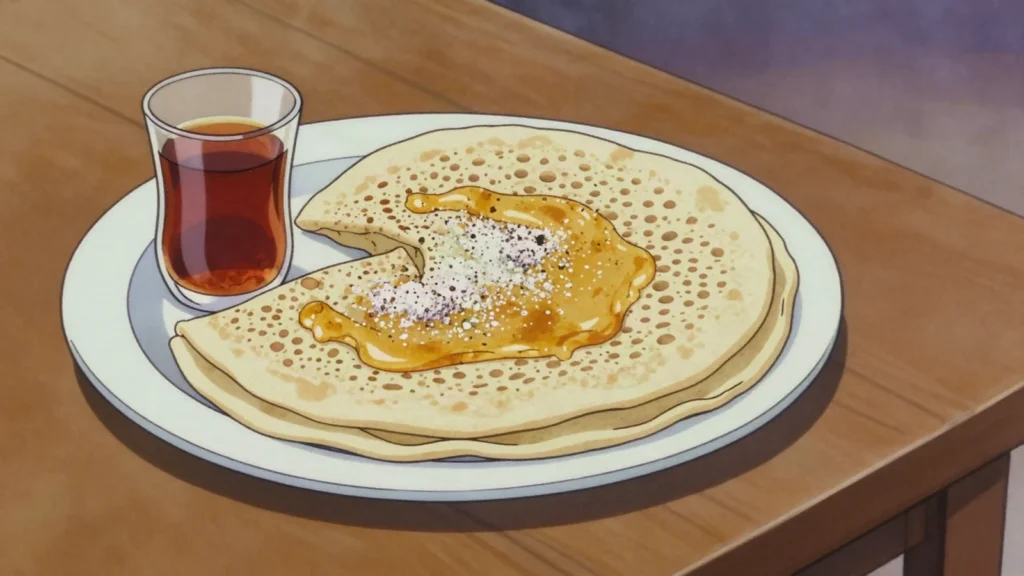
- Cook on one side only, 60–90 seconds, until the top is covered in fine open holes, the surface has turned matte and the edges lift. Never flip it: canjeero is cooked one side, so the top stays spongy and holds sauce.
- Slide onto a plate, smear with ghee and sprinkle with sugar while hot, stack the rest as they come, and serve with cardamom tea, or torn up under a stew.
Technique
- Canjeero, also called canjeelo or lahoh, is thinner and smaller than Ethiopian injera and is fermented with a much shorter, milder sour than teff injera.
- The eyes on the surface come from the ferment, not from baking powder. If your pancakes are smooth, the batter was under-fermented or too thick.
- Keeping back a cup of batter each time builds a house culture; after a few generations of batter the flavour is markedly rounder and more sour.
Substitutions
- No sorghum flour: use all plain flour with 50 g of maize flour, though the flavour is less earthy. Some households use white flour alone.
- In a cold kitchen, ferment the batter in a switched-off oven with the light on to hold 26–28°C (80–80°F).
Variations
- Eaten with subag and sugar for breakfast, the most common household version.
- Torn into pieces and soaked in sweetened tea or warm milk, a dish given to children and called canjeero shaah.
- Served flat under a spiced stew as the base of a main meal.
History
A spongy, fermented flatbread, closely related to Ethiopian injera though made with a different grain base, most commonly a mix of corn, sorghum or wheat flour rather than teff, documented across Somalia for many generations as a staple breakfast food. Its fermentation process, allowing the batter to rise naturally over a day or more before cooking on a flat griddle, gives canjeero its characteristic light, slightly sour flavour and bubbled surface texture, achieved through the same basic fermentation principle found in injera and related East African flatbreads, though using locally available Somali grains rather than teff, which is not as widely cultivated in Somalia as in neighboring Ethiopia. Canjeero remains an essential Somali breakfast staple, typically eaten with a stew, honey or oil.
Frequently asked questions
What is Canjeero?
Canjeero is a breakfast from Somalia: small spongy fermented pancakes eaten with ghee, sugar or stew. A spongy, fermented flatbread, closely related to Ethiopian injera though made with a different grain base, most commonly a mix of corn, sorghum or wheat flour rather than teff, documented across Somalia for many generations as a staple breakfast food. Its fermentation process, allowing the batter to rise naturally over a day or more before cooking on a flat griddle, gives canjeero its characteristic light, slightly sour flavour and bubbled surface texture, achieved through the same basic fermentation principle found in injera and related East African flatbreads, though using locally available Somali grains rather than teff, which is not as widely cultivated in Somalia as in neighboring Ethiopia. Canjeero remains an essential Somali breakfast staple, typically eaten with a stew, honey or oil.
How long does Canjeero take to make?
Canjeero takes 20 min of preparation and 12 hr fermenting plus 20 min cooking of cooking. The recipe makes 4 servings (about 12 pancakes). It is rated medium to make.
What can I substitute in Canjeero?
Yes, within limits. No sorghum flour: use all plain flour with 50 g of maize flour, though the flavour is less earthy. Some households use white flour alone. In a cold kitchen, ferment the batter in a switched-off oven with the light on to hold 26–28°C (80–80°F).
What is the most important thing to get right in Canjeero?
Cook on one side only, 60–90 seconds, until the top is covered in fine open holes, the surface has turned matte and the edges lift. Never flip it: canjeero is cooked one side, so the top stays spongy and holds sauce.