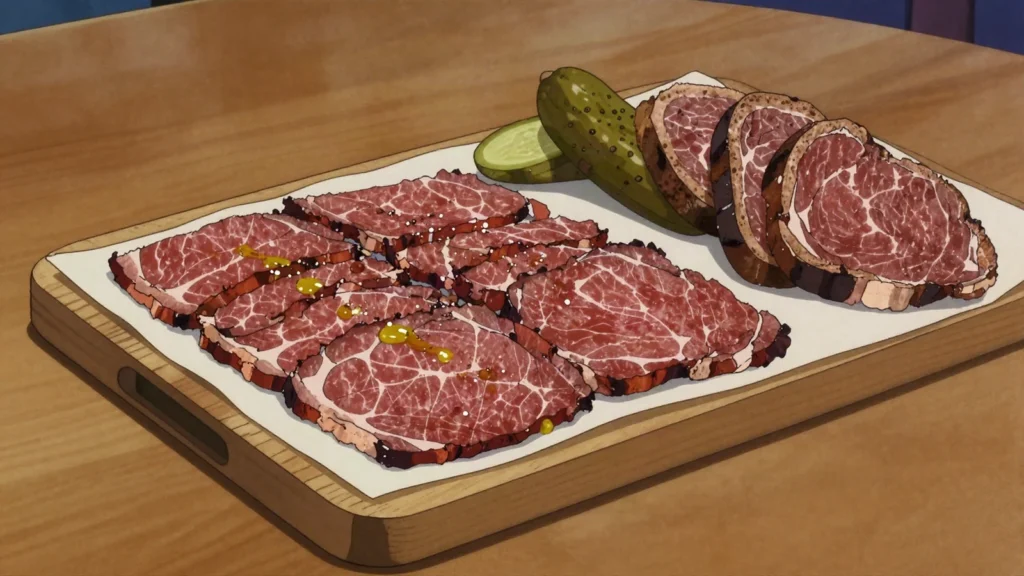

Air-dried beef from Graubünden, pressed into rectangular blocks and shaved paper-thin. The thin dry mountain air preserves the meat without any smoke at all, and it has been PGI protected since 2000.
It is a PGI whole-muscle cure held for months, where the salt must reach the centre and the alpine air’s temperature and humidity are the equipment — no smoke and no nitrite margin to fall back on.
What goes into it
- lean beef from the hind quarter
- salt
- herbs and spices, sparingly
- cold dry alpine air
How it is made
Trimmed lean muscles are salted with a little herb and spice and left in the cold for several weeks, turned regularly. They are then hung in a drying room open to the alpine air for three to four months, and pressed between boards repeatedly during that time, which is what gives the flat rectangular shape and drives the drying evenly.
How long it takes: three to five months
How it is eaten
Shaved paper-thin with a little olive oil and pepper, or on a Graubünden platter.
History
Air-dried beef pressed into rectangular blocks in Graubünden, where thin dry mountain air preserves meat without smoke; PGI protected since 2000.
Frequently asked questions
What is Bündnerfleisch?
Bündnerfleisch is a charcuterie & cured from Switzerland: air-dried beef from Graubünden, shaved paper-thin. Air-dried beef pressed into rectangular blocks in Graubünden, where thin dry mountain air preserves meat without smoke; PGI protected since 2000.
How is Bündnerfleisch made?
Trimmed lean muscles are salted with a little herb and spice and left in the cold for several weeks, turned regularly. They are then hung in a drying room open to the alpine air for three to four months, and pressed between boards repeatedly during that time, which is what gives the flat rectangular shape and drives the drying evenly. It takes three to five months.
Can I make Bündnerfleisch at home?
No, and the atlas gives no method for it. It is a PGI whole-muscle cure held for months, where the salt must reach the centre and the alpine air’s temperature and humidity are the equipment — no smoke and no nitrite margin to fall back on.
What goes into Bündnerfleisch?
Lean beef from the hind quarter, salt, herbs and spices, sparingly, cold dry alpine air.
How is Bündnerfleisch eaten?
Shaved paper-thin with a little olive oil and pepper, or on a Graubünden platter.