
Ingredients
Mash bill
- At least 51% maize (corn), by US federal law; most bourbons run 65–80%
- Malted barley, 5–15%, to provide the enzymes for conversion
- Rye 10–20% for a spicy bourbon, or wheat 10–20% for a soft wheated bourbon
- Limestone-filtered water, iron-free, which is why Kentucky became bourbon country
- Distiller’s yeast, often a proprietary strain kept for generations
- Setback, the acidic stillage from the last run, for the sour mash
To serve
- 50 mlbourbon
- 1large clear ice cube, or a splash of still water
- 1rocks glass or a Glencairn
Directions
- Grain is milled and cooked in water in stages: maize at about 100°C (200°F) to gelatinise its starch, then rye at 77°C (170°F), then malted barley at 64°C (145°F) so its enzymes survive to convert the starch to sugar.
- Around a quarter of the mash liquid is setback from the previous distillation. This sour mash lowers the pH, blocks stray bacteria and keeps house character consistent.
- The mash ferments in cypress or steel fermenters for 3–5 days with yeast to a distiller’s beer of 8–10% abv, which tastes like sour cornbread.
- It is distilled in a continuous column still to no more than 80% abv, then usually again through a doubler or thumper to about 70%.
- By law it enters the barrel at no more than 62.5% abv, and the barrel must be new American white oak, charred inside, usually a number 3 or number 4 alligator char.
- It matures in un-air-conditioned rickhouses in Kentucky, where the whiskey drives in and out of the wood with the seasons. That thermal cycling, not just time, extracts the vanilla, caramel and char.
- Nothing may be added but water. No colouring, no flavouring; straight bourbon must be at least 2 years old and bottled at 40% abv or more, and bottled-in-bond means 4 years and exactly 50%.
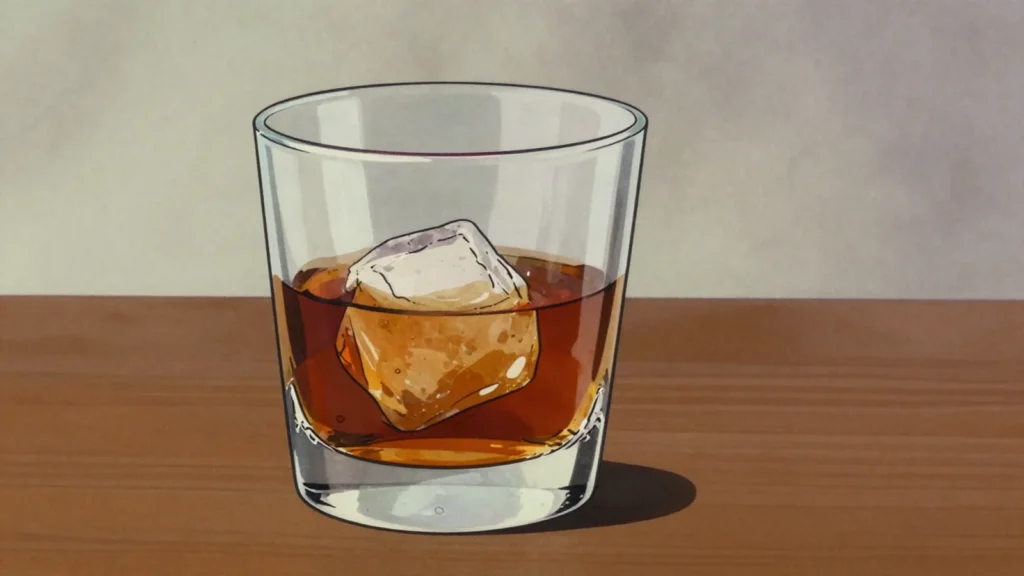
- To drink it, pour 50 ml into a rocks glass, nose it first neat, then add one large cube or a few drops of water to open the sweetness. High-proof bourbon in particular needs the water.
Technique
- Bourbon can legally be made anywhere in the United States, not only Kentucky, but about 95% of it is. Tennessee whiskey is bourbon that has additionally been filtered through sugar maple charcoal.
- There is no minimum age for plain bourbon; the two-year rule applies only to the word straight, and anything under four years must state its age.
- Home distilling is a federal offence in the US without a distilled spirits plant permit; only fermenting beer and wine at home is legal.
Substitutions
- Rye whiskey substitutes in most cocktails and brings pepper and dryness where bourbon brings sweetness.
- For a lower-strength serve, build a highball with 40 ml bourbon and 120 ml ginger ale over ice with a lemon wedge.
Variations
- Wheated bourbon, where wheat replaces rye, giving a rounder, softer whiskey.
- Bottled-in-bond, one distillery, one season, four years, 50% abv, under government supervision.
- Single barrel and barrel proof releases, undiluted and unblended.
History
Distilled by settlers in Kentucky from the late 1700s; a 1964 congressional resolution declared bourbon a distinctive product of the United States.
Frequently asked questions
What is Bourbon?
Bourbon is a wine & spirit from United States: corn-based whiskey aged in new charred oak, drunk neat or in cocktails. Distilled by settlers in Kentucky from the late 1700s; a 1964 congressional resolution declared bourbon a distinctive product of the United States.
How long does Bourbon take to make?
Bourbon takes 5 min of preparation and Minimum 2 years in new charred oak for straight bourbon of cooking. The recipe makes describes a commercial spirit; serves 1 neat. It is rated hard to make.
What can I substitute in Bourbon?
Yes, within limits. Rye whiskey substitutes in most cocktails and brings pepper and dryness where bourbon brings sweetness. For a lower-strength serve, build a highball with 40 ml bourbon and 120 ml ginger ale over ice with a lemon wedge.
What is the most important thing to get right in Bourbon?
By law it enters the barrel at no more than 62.5% abv, and the barrel must be new American white oak, charred inside, usually a number 3 or number 4 alligator char.