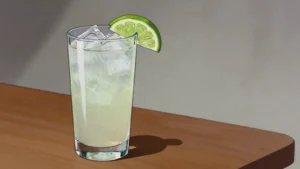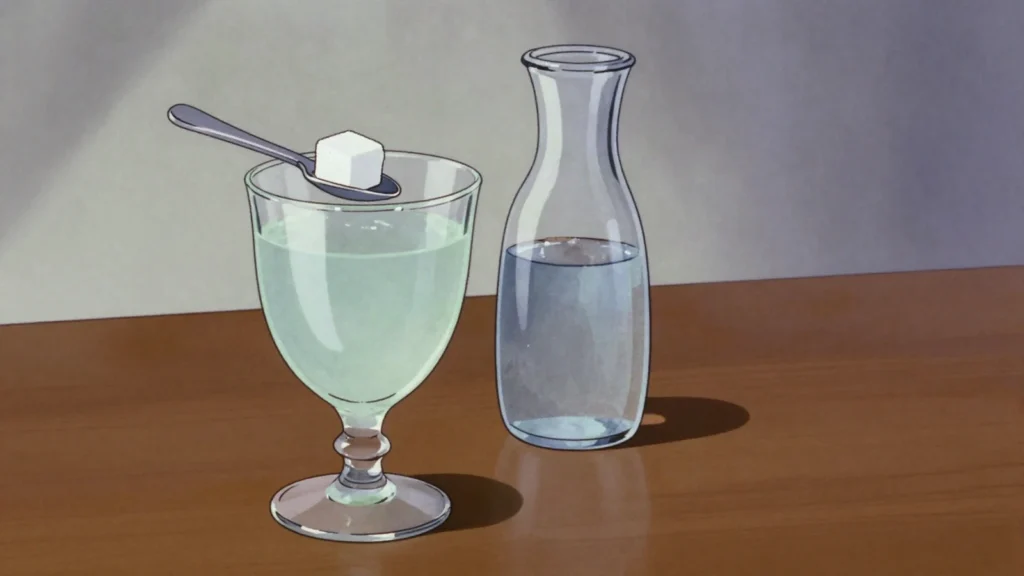

A green anise and wormwood spirit clouded with iced water dripped over a sugar cube. It was born in the Val-de-Travers in Neuchâtel in the late eighteenth century; Switzerland banned it by referendum in 1908 and legalised it again in 2005.
Distilling is illegal without a licence, wormwood’s thujone content is capped by law in every jurisdiction that permits absinthe at all, and the drink was banned outright across Europe for most of the twentieth century.
What goes into it
- grande wormwood — Artemisia absinthium
- green anise
- fennel
- a neutral or wine spirit
- hyssop and lemon balm for the colouring step
How it is made
Wormwood, anise and fennel are macerated in spirit and distilled together. The clear distillate is then coloured by steeping a second set of herbs in it, which draws out chlorophyll and gives the natural green that fades to amber with age. The louche when water is added is anethole coming out of solution as the alcohol drops.
How long it takes: maceration, distillation and a colouring steep; then months of rest
How it is eaten
One part absinthe to three or four of iced water, dripped slowly over a sugar cube on a slotted spoon.
History
Born in the Val-de-Travers in Neuchâtel in the late eighteenth century; Switzerland banned it by referendum in 1908 and legalised it again in 2005.
Frequently asked questions
What is Absinthe?
Absinthe is a wine & spirit from Switzerland: green anise and wormwood spirit clouded with iced water. Born in the Val-de-Travers in Neuchâtel in the late eighteenth century; Switzerland banned it by referendum in 1908 and legalised it again in 2005.
How is Absinthe made?
Wormwood, anise and fennel are macerated in spirit and distilled together. The clear distillate is then coloured by steeping a second set of herbs in it, which draws out chlorophyll and gives the natural green that fades to amber with age. The louche when water is added is anethole coming out of solution as the alcohol drops. It takes maceration, distillation and a colouring steep; then months of rest.
Can I make Absinthe at home?
No, and the atlas gives no method for it. Distilling is illegal without a licence, wormwood’s thujone content is capped by law in every jurisdiction that permits absinthe at all, and the drink was banned outright across Europe for most of the twentieth century.
What goes into Absinthe?
Grande wormwood — Artemisia absinthium, green anise, fennel, a neutral or wine spirit, hyssop and lemon balm for the colouring step.
How is Absinthe eaten?
One part absinthe to three or four of iced water, dripped slowly over a sugar cube on a slotted spoon.