
Ingredients
The groundnuts
- 600 graw shelled peanuts
- skins on or off
- sorted carefully
- see the safety notes
To use the paste
- 1 kgcassava leaves
- pounded, or frozen
- or 800 g fresh fish
- or 800 g other greens
- 1onion, chopped
- 2tomatoes, chopped
- 1 litrewater or stock
- salt, to taste
- 1hot chilli, whole, optional
Sometimes added
- a little red palm oil
- 2 clovesgarlic
- a piece of dried fish
- a spoonful of tomato purée
To serve
- ugali or boiled cassava
- or plain rice
- or boiled plantain
- or sweet potato
Directions
- Spread the nuts out and look at them. Discard any that are shrivelled or dark. Discard any that are discoloured or blotchy. Discard any that look mouldy at all.
- Discard any that smell musty or stale. Store them airtight and completely dry. Spread them in one layer on a tray. Roast at one hundred and seventy degrees. Roast for about fifteen to twenty minutes.
- Shake the tray every five minutes. They should turn golden and smell strongly. Stir them constantly over a medium heat. That roasting takes about ten minutes. Let them cool completely before grinding. Warm nuts turn to oily paste too fast. Tip the hot nuts into a clean tea towel. Wrap them up and rub them vigorously. Both are done and neither is wrong.
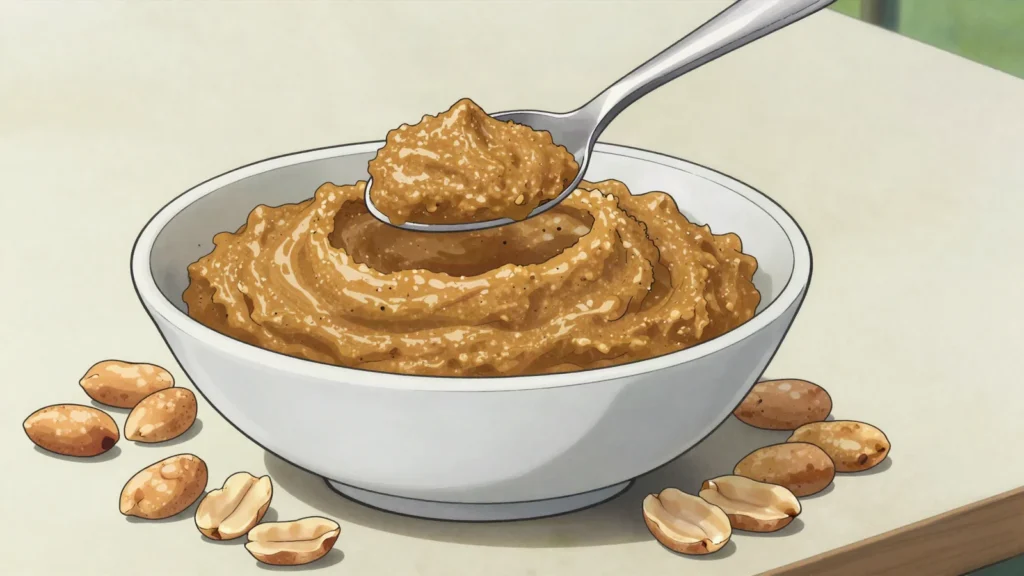
- Put the cooled nuts in the bowl. Keep going and they turn to paste. Stop and scrape down the sides often. Add a pinch of salt if you like. The paste keeps in a jar in the fridge. Stir it back in before using it. Cassava leaves must be cooked thoroughly.
- Boil it for at least thirty minutes regardless. Fry the onion in a little oil until soft. Add the tomatoes and cook them down. Add the greens and the water or stock.
- Add the whole chilli if you use one. Simmer the greens until tender. Cassava leaf needs a full hour or more. Take a ladle of the hot liquid out. Whisk the paste into it in a bowl. Work it into a smooth loose cream. That method gives a smooth sauce every time.
- Simmer for at least twenty minutes. Stir it very frequently throughout. So keep the heat low and keep stirring. Season with salt and taste it carefully. It needs more salt than people expect. Serve it hot over a starchy staple. Ugali is the stiff maize porridge. Stir constantly while reheating it.
Technique
- Groundnuts can carry aflatoxins from mould in warm humid storage. They are linked to liver damage and liver cancer and are not destroyed by roasting or cooking. Buy from a reputable supplier, spread the nuts out and discard anything shrivelled, dark, discoloured, mouldy or musty-smelling, and store them airtight and dry. Sorting is exactly what households already do.
- Peanut allergy can be life-threatening and there is no version of this without peanuts — the paste is the peanuts. Tell guests clearly.
- Never add the thick paste straight to the pot. Take out a ladle of hot liquid, whisk the paste into it until smooth, and stir that back in. Added dry it forms lumps that never break down.
- Groundnut sauce catches and burns very easily, and a burnt batch is bitter throughout with no way to rescue it. Keep the heat low and stir frequently.
- The oil rising to the surface is the sign the paste is properly cooked and the raw chalky taste has gone. Do not stop before that.
- Roasting transforms the flavour — raw peanuts taste flat and green. Watch them closely at the end, since they go from golden to burnt quickly, and cool them fully before grinding or they turn to oily paste too fast.
- Do not add liquid while grinding. Peanuts release their own oil and turn to paste on their own; water at that stage makes the mixture seize.
- Cassava leaves contain cyanogenic compounds and must be pounded and boiled thoroughly — at least thirty minutes even for ready-prepared frozen leaf. Spinach and other greens carry no such concern.
- Peanuts, maize and cassava all crossed the Atlantic from the Americas and became African staples. That exchange was bound up with the slave trade, and the atlas records that rather than presenting it as neutral botany.
Substitutions
- Smooth unsweetened peanut butter replaces homemade paste; check it contains no added sugar or palm oil.
- Spinach, kale or amaranth leaves replace cassava leaves and cook far more quickly.
- Fish, chicken or beef can be cooked in the same groundnut sauce.
- Red palm oil in place of plain oil gives a deeper colour and a distinctly West and Central African flavour.
- A piece of dried fish added to the pot gives savoury depth.
- The chilli is optional; leave it whole for fragrance without fierce heat.
Variations
- Isombe in Rwanda and Burundi is the classic cassava leaf and groundnut dish.
- Groundnut sauce with fish, common around Lake Tanganyika, uses the same paste with fresh or dried fish.
- West African groundnut stews — maafe and its relatives — use the same principle with tomato and meat.
- A version with pumpkin leaves rather than cassava leaves is made where those are grown.
- Some households add a little red palm oil, which colours the sauce orange and deepens the flavour.
- The plain roasted paste is also eaten spread on bread or on boiled cassava.
History
Peanuts crossed from South America with Portuguese Atlantic trade and became the standard sauce thickener of the Great Lakes.
Frequently asked questions
What is Ubunyobwa?
Ubunyobwa is a sauce & condiment from Burundi: thick roasted groundnut paste stirred into cassava leaves or fish. Peanuts crossed from South America with Portuguese Atlantic trade and became the standard sauce thickener of the Great Lakes.
How long does Ubunyobwa take to make?
Ubunyobwa takes 20 minutes of preparation and 30 minutes of cooking. The recipe makes makes about 500 g of paste. It is rated medium to make.
What can I substitute in Ubunyobwa?
Yes, within limits. Smooth unsweetened peanut butter replaces homemade paste; check it contains no added sugar or palm oil. Spinach, kale or amaranth leaves replace cassava leaves and cook far more quickly. Fish, chicken or beef can be cooked in the same groundnut sauce. Red palm oil in place of plain oil gives a deeper colour and a distinctly West and Central African flavour. A piece of dried fish added to the pot gives savoury depth. The chilli is optional; leave it whole for fragrance without fierce heat.
What is the most important thing to get right in Ubunyobwa?
Put the cooled nuts in the bowl. Keep going and they turn to paste. Stop and scrape down the sides often. Add a pinch of salt if you like. The paste keeps in a jar in the fridge. Stir it back in before using it. Cassava leaves must be cooked thoroughly.