
Ingredients
Vegetables
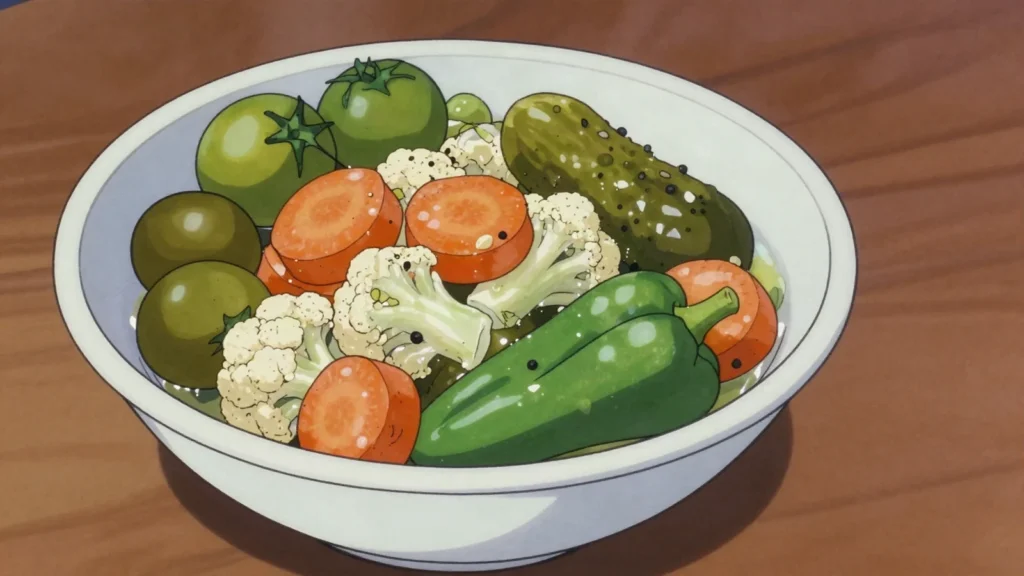
- 500 gsmall green tomatoes
- 400 gcarrots, cut in thick batons
- 400 gcauliflower, in small florets
- 300 gsmall pickling cucumbers
- 2green peppers, cut in wide strips
- 1small white cabbage, cut in wedges through the core
Brine
- 2.5 litreswater
- 125 gcoarse non-iodised salt — 5% of the water’s weight
Aromatics
- 1 headgarlic, cloves peeled
- 2 tbspblack peppercorns
- 4bay leaves
- 1 bunchfresh dill, stalks and all
- 2 tbspcoriander seed
- 1hot chilli, whole
Directions
- Wash the vegetables well and leave them whole or in large pieces. Small pieces go soft; the wedges and batons here are cut deliberately big so they stay crisp for months.
- Dissolve the salt completely in the water. Weigh the salt rather than measuring it by spoon — 5% is what keeps the jar safe while the lactic bacteria get going, and guessing it is the one mistake that spoils a batch.
- Pack the vegetables into a clean 3-litre jar with the garlic, peppercorns, bay, dill, coriander and chilli tucked among them, pressing down as you go so there are no large air pockets.
- Pour over the brine until everything is covered by at least 2 cm, then weight the vegetables down — a small plate, a water-filled freezer bag, or a scrubbed stone. Anything that floats above the brine will go mouldy, and that is the only real failure mode.
- Cover loosely so gas can escape and leave at cool room temperature, around 18°C (64°F), for three to four weeks. It will cloud and bubble in the first week — that is the ferment working.
- Taste after three weeks. When it is pleasantly sour and the vegetables still snap, move the jar somewhere cold. It keeps through the winter and goes on softening slowly.
Technique
- Skim any white film off the surface as it appears. A thin white bloom is harmless yeast; fuzzy coloured mould means something was above the brine, and that batch goes out.
- Non-iodised salt only. Iodine inhibits the bacteria you are relying on, and the ferment stalls half-started.
- Cool is better than warm. At 25°C (77°F) it sours in ten days and goes flabby; at 18°C (64°F) it takes a month and stays crisp.
Substitutions
- Green beans, small onions or beetroot in place of any of the vegetables; the brine ratio stays the same whatever goes in.
- Horseradish root or a few blackcurrant leaves for extra crunch — both carry tannins that keep the vegetables firm.
Variations
- The Serbian and Macedonian versions lean harder on peppers and add more chilli.
- A vinegar version exists and is much quicker, but it is a different thing: sharp rather than sour, and without the depth the ferment gives.
History
Salted vegetable preserving spread with Ottoman rule; the word comes from Persian torshi, meaning sour.
Frequently asked questions
What is Turšija?
Turšija is a fermented & pickled from Bosnia and Herzegovina: mixed winter vegetables soured in brine and packed into jars. Salted vegetable preserving spread with Ottoman rule; the word comes from Persian torshi, meaning sour.
How long does Turšija take to make?
Turšija takes 40 min plus 3 to 4 weeks fermenting of preparation and no cooking at all. The recipe makes fills a 3-litre jar. It is rated easy to make.
What can I substitute in Turšija?
Yes, within limits. Green beans, small onions or beetroot in place of any of the vegetables; the brine ratio stays the same whatever goes in. Horseradish root or a few blackcurrant leaves for extra crunch — both carry tannins that keep the vegetables firm.
What is the most important thing to get right in Turšija?
Dissolve the salt completely in the water. Weigh the salt rather than measuring it by spoon — 5% is what keeps the jar safe while the lactic bacteria get going, and guessing it is the one mistake that spoils a batch.