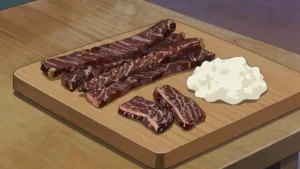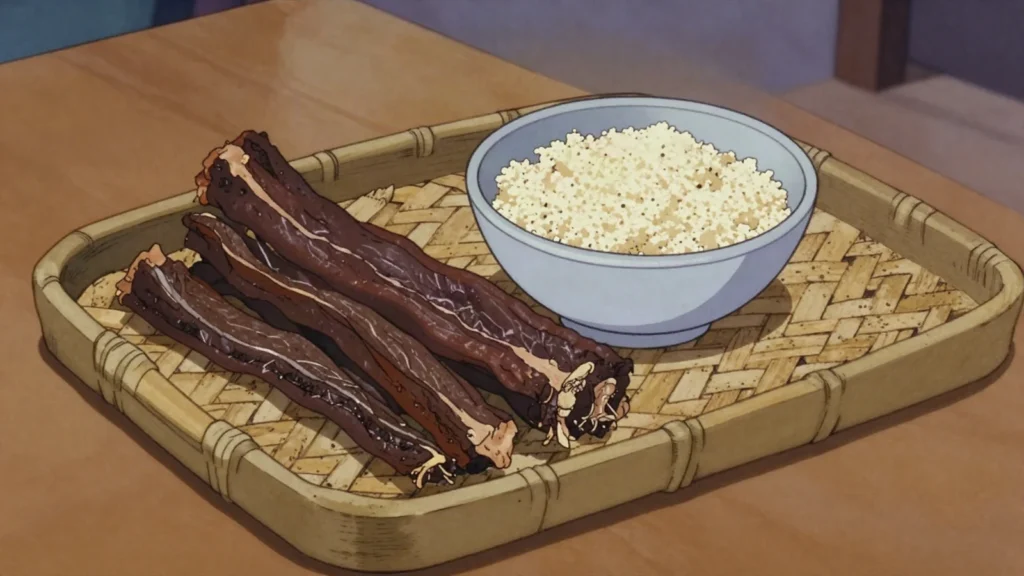

Sun-dried strips of camel or beef, eaten plain or pounded into couscous. The meat is hung to dry in the desert air without salt at all, and it keeps for months.
Drying raw meat with no salt at all works only in Saharan humidity — the same strips hung in a temperate kitchen spoil from the inside while the surface looks dry.
What goes into it
- camel or beef, cut into thin strips
- desert air
How it is made
The meat is cut into long thin strips and hung on lines in the open, out of reach of animals, where Saharan heat and near-zero humidity dry it within days. No salt is used, which is unusual: the dryness of the air is doing the entire job, and the strips must reach a low water content before anything can grow in them.
How long it takes: three to seven days in desert air
How it is eaten
Chewed plain, or pounded and stirred into couscous, rice and stews.
History
Meat is cut into thin strips and hung to dry in the desert air without salt; it keeps for months and is pounded into couscous and stews.
Frequently asked questions
What is Tichtar?
Tichtar is a charcuterie & cured from Mauritania: sun-dried strips of camel or beef, eaten plain or in couscous. Meat is cut into thin strips and hung to dry in the desert air without salt; it keeps for months and is pounded into couscous and stews.
How is Tichtar made?
The meat is cut into long thin strips and hung on lines in the open, out of reach of animals, where Saharan heat and near-zero humidity dry it within days. No salt is used, which is unusual: the dryness of the air is doing the entire job, and the strips must reach a low water content before anything can grow in them. It takes three to seven days in desert air.
Can I make Tichtar at home?
No, and the atlas gives no method for it. Drying raw meat with no salt at all works only in Saharan humidity — the same strips hung in a temperate kitchen spoil from the inside while the surface looks dry.
What goes into Tichtar?
Camel or beef, cut into thin strips, desert air.
How is Tichtar eaten?
Chewed plain, or pounded and stirred into couscous, rice and stews.