
Ingredients
Grain
- 500 gwhole barley or wheat grains
To eat as talkan
- butter, softened
- sugar, to taste
- milk or cream, to loosen
To make zhent
- 200 gtalkan
- 100 gbutter, melted
- 80 gsugar
- 50 graisins, optional
- 50 gchopped nuts, optional
- kurt, crumbled, in some versions
Equipment
- a heavy cast iron pan or cauldron
- a grain mill, a spice grinder or a mortar
Directions
- Use whole grains rather than pearled or processed ones. Rinse them well in cold water to remove dust. Pick out any stones or damaged grains you find.
- Spread them on a cloth and let them dry completely. Wet grain will steam rather than roast in the pan. Heat a heavy dry pan over a medium heat. Add the grain in a layer no more than two deep. Roasting too much at once gives an uneven result.
- Stir it constantly with a wooden spoon. Never leave the pan unattended at any point. Keep going until the grain smells strongly nutty. It should turn a deep golden brown all through. Tip the roasted grain onto a tray to cool. It must be completely cold before grinding. Warm grain gums up a mill and turns pasty.
- Grind it to a coarse flour rather than a fine powder. It should feel slightly gritty between your fingers. Sieve out any large pieces and grind them again. Storing it dry keeps it good for a long time.
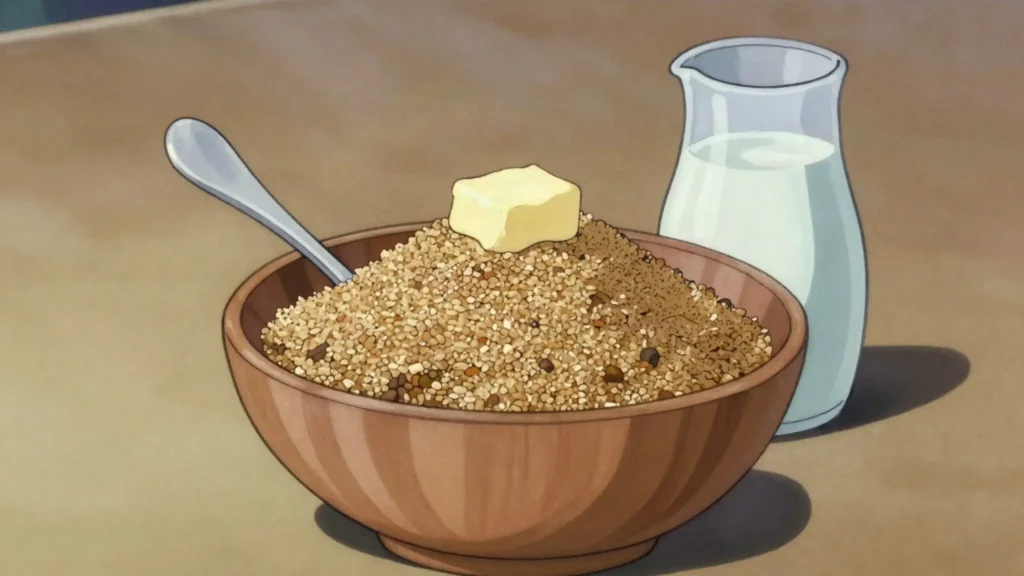
- Put it in a sealed jar or a cloth bag. Keep it somewhere cool, dark and completely dry. It keeps for several months stored properly. Put two spoonfuls into a bowl. Add a knob of soft butter and a spoonful of sugar. Work them together until the mixture is crumbly. Eat it by the spoonful with hot tea.
- Pour warm milk over it and stir it well. Let it stand for a minute to swell before eating. Melt the butter and let it cool a little. Pour it over the talkan in a bowl. Add the sugar and work everything together. Stir in the raisins and nuts if you are using them.
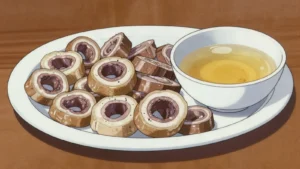
- Press the mixture firmly into a lined tray. Chill it until it is set and firm. Cut it into small squares or diamonds. Serve it with tea at gatherings and holidays. It keeps for a week in a tin in a cool place.
Technique
- Talkan sits in a wide family of roasted grain flours found across Central Asia and the Himalaya.
- Tsampa in Tibet is made the same way from barley, and the two are used almost identically.
Substitutions
- Wheat, barley and millet can each be used, and many households roast a mixture.
- Ready-roasted grain flours sold in Central Asian shops save the roasting step entirely.
Variations
- Zhent is the sweet pressed version made with butter and sugar.
- Some families add dried curd or dried fruit to the zhent mixture.
- A savoury bowl of talkan with salted butter and no sugar is common at breakfast.
History
Toasted grain flour carried by herders; mixed with butter and sugar it becomes the sweet zhent.
Frequently asked questions
What is Talkan?
Talkan is a snack from Kazakhstan: roasted ground barley or wheat, eaten with butter, sugar or milk. Toasted grain flour carried by herders; mixed with butter and sugar it becomes the sweet zhent.
How long does Talkan take to make?
Talkan takes 10 minutes of preparation and 40 minutes of cooking. The recipe makes about 500 g. It is rated medium to make.
What can I substitute in Talkan?
Yes, within limits. Wheat, barley and millet can each be used, and many households roast a mixture. Ready-roasted grain flours sold in Central Asian shops save the roasting step entirely.
What is the most important thing to get right in Talkan?
Use whole grains rather than pearled or processed ones. Rinse them well in cold water to remove dust. Pick out any stones or damaged grains you find.