
Ingredients
Fish
- 2whole zubaidi (silver pomfret), about 600 g each, gutted and scored to the bone on both sides
- 1 tbspground turmeric
- 1 tspbezar, 1 tsp salt
- juice of 1 lime
- 500 mlsunflower oil, for frying
- 3 tbspplain flour, for dusting
Rice
- 500 gbasmati rice, rinsed and soaked 30 min
- 3large onions, thinly sliced
- 4 tbspof the fish frying oil
- 2loomi (dried black limes), pierced
- 1 tspbezar, 1 tsp turmeric, 1 cinnamon stick, 4 cardamom pods
- 1 pinchsaffron in 3 tbsp hot water
- 900 mlwater
- 1.5 tspsalt
To serve
- daqoos: 4 grated tomatoes simmered with 3 crushed garlic cloves, 1 tsp bezar and 1 tbsp ghee
- 1lime, in wedges
- chopped salad of tomato, cucumber and mint
Directions
- Rub the scored pomfret inside and out with the turmeric, bezar, salt and lime juice and leave 20 minutes. Turmeric is not optional here: it colours the fish and the rice alike.
- Dust the fish lightly with flour and shake off the excess.
- Fry the fish in hot oil at 180°C (350°F) for 5–6 minutes a side until the skin is crisp and deep yellow-gold and the flesh at the backbone is opaque. Lift onto a rack. Keep 4 tbsp of the frying oil.
- Fry the sliced onions in the reserved fish oil in a wide heavy pot over medium heat for 15 minutes until dark gold and sweet. Set a third of them aside for the garnish.
- Add the bezar, turmeric, cinnamon, cardamom and the pierced loomi to the pot and fry 1 minute.
- Pour in the water, add the salt, bring to a boil and simmer 5 minutes so the loomi gives up its sourness. Taste and correct the salt.
- Add the drained rice and boil uncovered 8–10 minutes until the water is level with the surface and craters open across the top. Sprinkle over the saffron water.
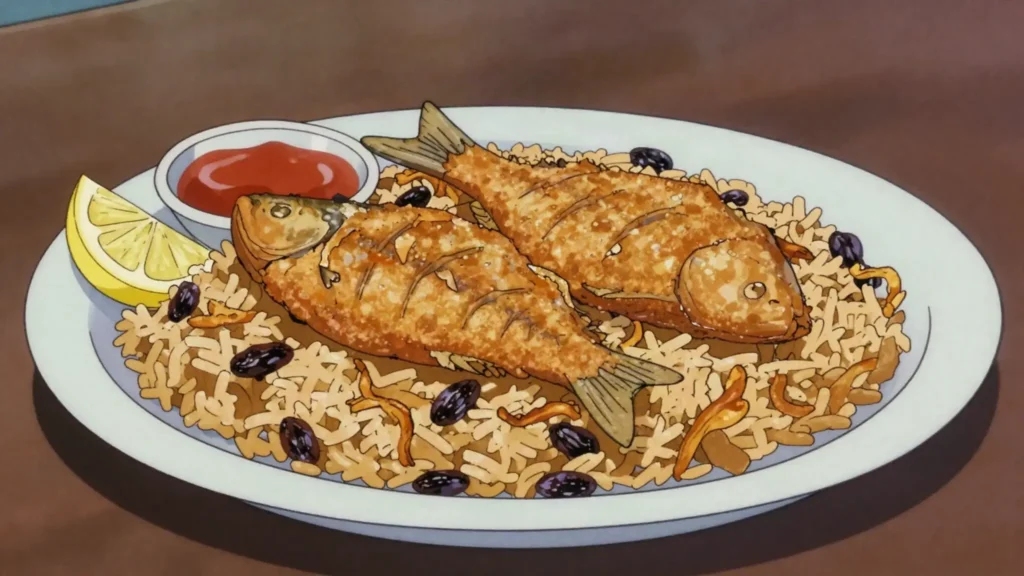
- Lay the fried fish on top of the rice, cover the pot with a cloth and lid, and steam on the lowest heat for 20 minutes so the fish perfumes the rice from above.
- Rest 10 minutes off the heat. Lift the fish off carefully onto a plate, then invert the pot of rice onto a wide platter and set the fish back on top, or flip the whole pot in one movement if you are confident.
- Scatter the reserved fried onion, and serve with daqoos, lime wedges and salad, eaten with the hands from the shared platter.
Technique
- Mutabbaq means folded or flipped, and the dish is named for the moment the pot is turned out so the fish sits over the rice.
- Zubaidi, the silver pomfret, is the prized Kuwaiti fish and its season is a local event. Its flesh is sweet and firm and it fries without falling apart.
- Frying the onions in the fish oil is what ties the two halves of the dish together. Using fresh oil gives a rice that tastes disconnected from the fish.
- Score the fish to the bone before frying so the heat reaches the thick shoulder and the spice paste penetrates.
Substitutions
- No zubaidi: use whole sea bream, John Dory or a thick hamour fillet. Avoid oily fish, which fights the sweet spices.
- No loomi: 2 tbsp lime juice added with the water, plus a strip of lime zest.
- For the sweet Kuwaiti pairing, cook the rice as muhammar, with 4 tbsp of date syrup and a pinch of saffron in place of the bezar and loomi, and serve the same fried fish over it.
Variations
- Muhammar with fried zubaidi, the sweet date-syrup rice version served all along the Gulf coast.
- Machboos samak, where the fish is cooked in a tomato and loomi broth and the rice absorbs it.
- Fried zubaidi served plain with khubz, daqoos and salad, the everyday fisherman’s lunch.
History
A layered fish dish, combining spiced fish with rice and often a tamarind-based sauce, developed in Kuwaiti coastal cooking, reflecting the country’s historic reliance on Gulf fishing and pearl-diving economies before the discovery of oil transformed Kuwait’s economy in the mid-1900s. Its use of tamarind for a sour note alongside warm spices reflects broader historic Indian Ocean trade connections that brought South Asian and East African culinary influence into Gulf Arab coastal cooking over many centuries. Mutabbaq samak remains one of the dishes most closely associated with Kuwait’s traditional maritime and fishing heritage, considered a defining example of the country’s coastal culinary identity distinct from more universally Gulf-wide dishes like machboos.
Frequently asked questions
What is Mutabbaq samak?
Mutabbaq samak is a main from Kuwait: fried zubaidi pomfret layered over sweet-spiced rice. A layered fish dish, combining spiced fish with rice and often a tamarind-based sauce, developed in Kuwaiti coastal cooking, reflecting the country’s historic reliance on Gulf fishing and pearl-diving economies before the discovery of oil transformed Kuwait’s economy in the mid-1900s. Its use of tamarind for a sour note alongside warm spices reflects broader historic Indian Ocean trade connections that brought South Asian and East African culinary influence into Gulf Arab coastal cooking over many centuries. Mutabbaq samak remains one of the dishes most closely associated with Kuwait’s traditional maritime and fishing heritage, considered a defining example of the country’s coastal culinary identity distinct from more universally Gulf-wide dishes like machboos.
How long does Mutabbaq samak take to make?
Mutabbaq samak takes 30 min of preparation and 1 hr of cooking. The recipe makes 4 servings. It is rated medium to make.
What can I substitute in Mutabbaq samak?
Yes, within limits. No zubaidi: use whole sea bream, John Dory or a thick hamour fillet. Avoid oily fish, which fights the sweet spices. No loomi: 2 tbsp lime juice added with the water, plus a strip of lime zest. For the sweet Kuwaiti pairing, cook the rice as muhammar, with 4 tbsp of date syrup and a pinch of saffron in place of the bezar and loomi, and serve the same fried fish over it.
What is the most important thing to get right in Mutabbaq samak?
Rub the scored pomfret inside and out with the turmeric, bezar, salt and lime juice and leave 20 minutes. Turmeric is not optional here: it colours the fish and the rice alike.