
Ingredients
The milk
- 1 litrewhole milk
- cow’s, sheep’s or buffalo
- pasteurised, not UHT
- see the note
The starter
- 2 tablespoonslive qatiq
- from a previous batch
- or plain live yoghurt
- with live cultures on the label
- at room temperature
Equipment
- a heavy pot
- a thermometer
- helpful but not essential
- a bowl or jar with a lid
- a thick towel or blanket
To serve
- salt
- fresh mint or dill
- crushed garlic, for savoury bowls
- cold water, for ayran
- cucumber, for dovga or okroshka
Directions
- Bring the milk slowly to the boil. For an ordinary qatiq, bring it to the boil and take it off. Stir it and watch it. Use a heavy pot. Cool the milk to about forty-five degrees. Never add the starter to hot milk.
- Heat kills the cultures. Above about fifty degrees they die. Hold a clean finger in it. It should be hot but bearable for ten seconds.
- Use live qatiq or live yoghurt. It must contain live cultures. Check the label for live or active cultures. Slacken the starter with a little warm milk first.
- Stir gently and briefly. Cover the pot or pour it into a jar. Wrap it in a thick towel or a blanket. The cultures need steady warmth.
- Discard it if anything is wrong. Use clean pots, jars and spoons. Never dip a used spoon into the jar.
- Start again from a fresh yoghurt when it does. Stir it back in or pour it off. Thin it with cold water and salt it.
- Heat makes the proteins clump. Stir it constantly in one direction. Heat it slowly and never boil it hard. It keeps a week refrigerated. Keep it covered and use a clean spoon.
Technique
- Do not use UHT milk. Its proteins are denatured and the set is weak or absent — the commonest failure with any home yoghurt.
- Never add the starter to hot milk. Above about fifty degrees the cultures die and nothing sets. Cool it to about forty-five — hot but bearable on a clean finger for ten seconds if you have no thermometer.
- Thickness is decided at the boiling stage, not the incubation. Holding the milk at a low boil for ten to twenty minutes denatures the whey proteins so they bind more water, and reducing it by a fifth gives a notably thicker qatiq with a faintly caramelised taste. Longer incubation only makes it sourer.
- Boiling the milk down first is what mainly distinguishes qatiq from a plain yoghurt.
- The starter must say live or active cultures on the label. Heat-treated yoghurt has none and will not start anything.
- Two tablespoons per litre is plenty. More starter gives a sourer, grainier result rather than a better set. Slacken it with a little warm milk first so it disperses evenly.
- Do not move or stir it while it sets. The gel is fragile as it forms and disturbing it gives a lumpy watery result.
- Refrigerate it as soon as it sets — cold stops the souring — and give it a few hours to firm up further.
- Save two tablespoons for the next batch. That is how a household keeps a culture going for years, though it drifts over many generations and eventually needs restarting from a fresh yoghurt.
- Never dip a used spoon into the jar. That is how a good batch goes wrong.
- Judge it by smell: clean and sour like yoghurt is right; yeasty, putrid or ammoniac is not, and any mould or coloured patch means discard it.
- Yoghurt curdles when heated. For dovga or any cooked dish, stabilise it with a beaten egg or a little flour, stir constantly in one direction, heat it slowly and never let it boil hard — the egg in dovga is there for stability, not richness.
- Ayran is savoury, not sweet, which surprises people expecting a sweet yoghurt drink.
- Milk boils over suddenly and catches on the base. Use a heavy pot, stir it and watch it.
Substitutions
- Plain live yoghurt substitutes for qatiq in any dish.
- Sheep’s or buffalo milk replaces cow’s and gives a richer, thicker result.
- Any live yoghurt works as the starter for the first batch.
- Skimmed milk works and gives a thin sharp qatiq.
- Dried mint replaces fresh at about a third of the quantity.
- Ayran can be made from any plain yoghurt thinned and salted.
Variations
- Suzma is qatiq drained to a thick curd.
- Ayran thins and salts it into a summer drink.
- Dovga cooks it into a herb and rice soup with egg for stability.
- Katyk is the same thing under its Russian transliteration.
- Qurut, dried salted balls of drained curd, is the long-keeping form.
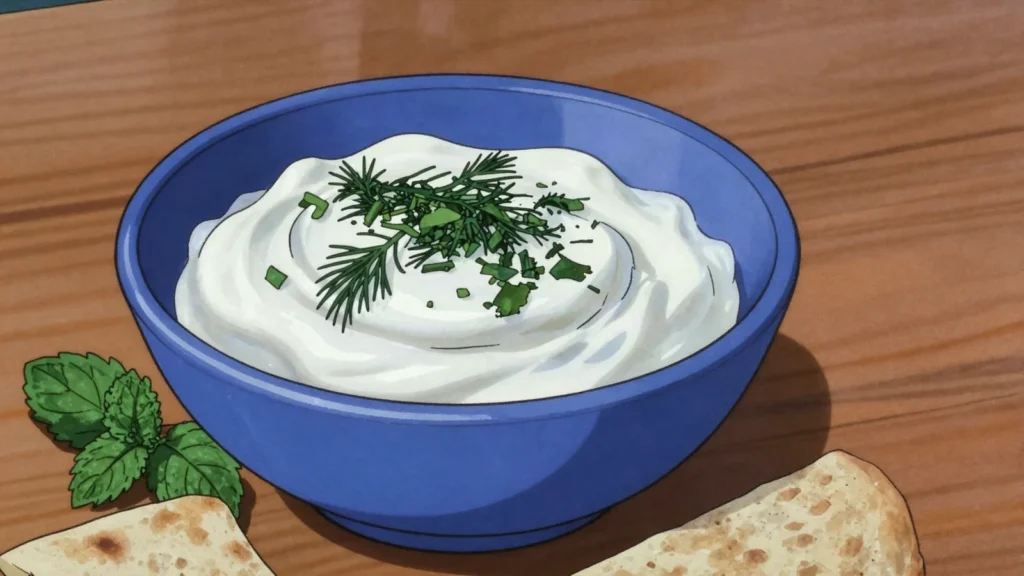
- A garlic and mint qatiq is spooned over kebabs and dumplings.
History
Everyday soured milk of Azerbaijani kitchens; thinned with water it becomes atlama, and it thickens dovga.
Frequently asked questions
What is Qatiq?
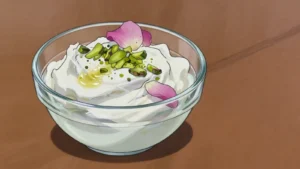
Qatiq is a cheese & dairy from Azerbaijan: thick sour yoghurt eaten with herbs and stirred into soups and dough dishes. Everyday soured milk of Azerbaijani kitchens; thinned with water it becomes atlama, and it thickens dovga.
How long does Qatiq take to make?
Qatiq takes 10 minutes plus 6 hours setting of preparation and 15 minutes of cooking. The recipe makes makes about 1 litre. It is rated easy to make.
What can I substitute in Qatiq?
Yes, within limits. Plain live yoghurt substitutes for qatiq in any dish. Sheep’s or buffalo milk replaces cow’s and gives a richer, thicker result. Any live yoghurt works as the starter for the first batch. Skimmed milk works and gives a thin sharp qatiq. Dried mint replaces fresh at about a third of the quantity. Ayran can be made from any plain yoghurt thinned and salted.
What is the most important thing to get right in Qatiq?
Bring the milk slowly to the boil. For an ordinary qatiq, bring it to the boil and take it off. Stir it and watch it. Use a heavy pot. Cool the milk to about forty-five degrees. Never add the starter to hot milk.