
Ingredients
The plantain discs
- 4large green plantains
- oil, for frying
- salt
- a bowl of salted water
The filling
- 500 gshredded beef
- carne mechada, or chicken
- 200 gwhite cheese, grated
- lettuce, shredded
- tomato, sliced
- onion, thinly sliced
The sauces
- garlic mayonnaise
- tomato ketchup
- hot sauce
- or a green coriander sauce
The equipment
- a tostonera or flat press
- or two plates
- paper, to wrap
Directions
- Use the largest plantains you can find. Cut them into long diagonal pieces. The disc must be flattened wide and thin. Use genuinely green firm ones. Oil your hands before peeling. Oil both of your hands lightly. Cut the ends off each plantain. Score the skin lengthwise in strips. Score down through the skin only. Cut each plantain on a long diagonal.
- Cut them about five centimetres long. Heat the oil in a deep heavy pan. Heat it to about one hundred and sixty degrees. It should sizzle steadily rather than fiercely. Fry the pieces for about four minutes. They should soften but not colour much.
- Lift them out onto kitchen paper. Let them all drain very briefly. Press each piece flat while hot. Any flat and firm press does it. Press firmly and evenly straight down. Do not twist or slide the press.
- Press it out quite thin and wide. About half a centimetre is right. Line it with plastic or damp paper. Wet the press between each one. Dip each flattened disc in salted water. It also helps it crisp in the second fry. Dip it quickly rather than soaking it.
- Shake off the excess immediately. Wet food in hot oil spits violently. Shake off every drop before frying. Stand well back as it goes in. Raise the oil to about one hundred and ninety degrees. Fry all the discs again briefly. Two or three minutes is enough. Keep a lid nearby to smother a flare-up. Never put water on an oil fire at all.
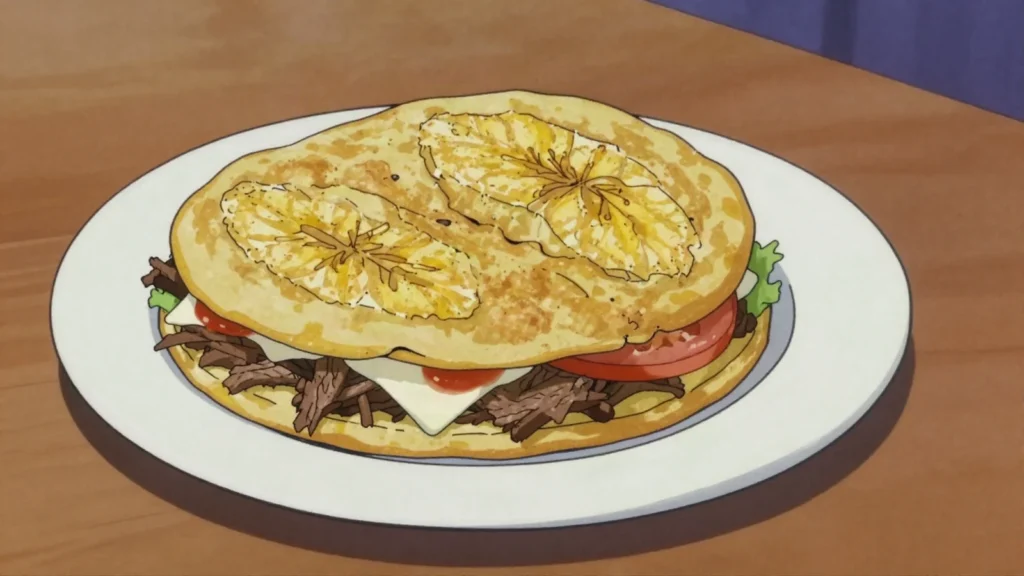
- Keep children well away from the pan. Lift them out onto a wire rack. Salt them while they are still hot. Salt sticks to hot oily surfaces. Salt them straight from the oil. Set one disc on a piece of paper. Pile the shredded beef on the disc.
- Add the grated cheese over it. The cheese melts against the hot plantain. Put it next to the hot disc for that. Add lettuce, tomato and onion. Add garlic mayonnaise and ketchup. Add plenty of hot sauce if you like. Lay the second disc down on top. Wrap the whole thing in paper. Wrap it firmly to hold it together.
- Fold the paper up as you eat it. Serving it is always done immediately. Assemble it at the last moment. It does not keep at all once made. Fry the discs fresh each time.
Technique
- The plantain is fried twice: a moderate first fry at about one hundred and sixty degrees cooks it through, flattening breaks up the structure, and a hotter second fry at about one hundred and ninety crisps the increased surface. One frying only gives a soft disc, and a hot first fry burns the outside while the inside stays raw.
- Press each hot piece firmly and evenly straight down rather than twisting or sliding the press, which tears it apart. Line the press with plastic or damp paper and wet it between each one, since hot plantain sticks and tears as you lift it. Press it thin and wide, about half a centimetre — it is the bread of the sandwich.
- Dipping each flattened disc briefly in salted water seasons it right through and helps it crisp, but wet food in hot oil spits violently — shake off every drop, lower it in very gently and stand back.
Substitutions
- Two plates or a flat pan base stand in for a tostonera, the hinged wooden press; any flat firm press does it.
- Shredded chicken stands in for the carne mechada, and a green coriander sauce for the garlic mayonnaise, though garlic mayonnaise is the essential one.
Variations
- Use genuinely green plantains, which are starchy and firm; ripe ones are soft and sugary, cannot be flattened into a disc and burn from the sugar.
- Green plantain releases a sticky sap that stains hands and clothes darkly, so oil your hands before peeling; score the skin lengthwise and prise each strip away, since it does not slip off.
- Salt the discs straight from the oil while hot and oily, since salt slides off cooled ones, and assemble the sandwich at the last moment — the plantain goes limp from the filling within minutes.
History
A Maracaibo street invention now sold from night stands across Venezuela, stuffed with shredded beef, cheese and sauces.
Frequently asked questions
What is Patacón zuliano?
Patacón zuliano is a street food from Venezuela: sandwich using two fried green plantain discs in place of bread. A Maracaibo street invention now sold from night stands across Venezuela, stuffed with shredded beef, cheese and sauces.
How long does Patacón zuliano take to make?
Patacón zuliano takes 30 minutes of preparation and 30 minutes of cooking. The recipe makes serves 4. It is rated medium to make.
What can I substitute in Patacón zuliano?
Yes, within limits. Two plates or a flat pan base stand in for a tostonera, the hinged wooden press; any flat firm press does it. Shredded chicken stands in for the carne mechada, and a green coriander sauce for the garlic mayonnaise, though garlic mayonnaise is the essential one.
What is the most important thing to get right in Patacón zuliano?
Use the largest plantains you can find. Cut them into long diagonal pieces. The disc must be flattened wide and thin. Use genuinely green firm ones. Oil your hands before peeling. Oil both of your hands lightly. Cut the ends off each plantain. Score the skin lengthwise in strips. Score down through the skin only. Cut each plantain on a long diagonal.