
Ingredients
Mojo marinade
- 300 mlsour orange juice (naranja agria), or 200 ml orange juice plus 100 ml lime juice
- 2whole heads of garlic, cloves peeled (about 20 cloves)
- 1 tbspcoarse salt
- 2 tbspdried oregano
- 1 tbspground cumin
- 2 tspcoarsely ground black pepper
- 1large onion, sliced into rings
- 100 mlolive oil
Pork
- 3 kgbone-in pork shoulder, skin on, scored through the fat in a 2 cm diamond pattern
To serve
- 1onion, sliced into fine rings
- extra sour orange juice
Directions
- Mash the garlic and salt to a wet paste in a mortar, ideally a wooden pilon. Bruising rather than chopping is what gives mojo its raw garlic punch.
- Stir in oregano, cumin and pepper, then the sour orange juice, onion rings and olive oil. Let the marinade sit 30 minutes so the garlic bleeds into the juice.
- Stab the pork all over, deep into the meat, with a thin knife. Push garlic paste into the holes and rub the rest over the flesh side. Keep the skin dry and salted.
- Marinate skin side up, uncovered in the fridge, for 24 hours. The exposed skin dries out, which is what lets it puff later.
- Roast at 150°C (300°F), skin side up and loosely tented with foil, for 4 to 5 hours, basting the flesh with marinade every hour, until the meat pulls away from the bone.
- Pour off the pan juices, pat the skin bone dry, salt it, and blast at 230°C (450°F) for 20–30 minutes until the cuero blisters, bubbles and goes glassy. Watch it constantly; it burns in a minute.
- Rest 20 minutes. Shred the meat, crack the crackling into shards, and pour over fresh mojo made with raw onion rings and sour orange.
Technique
- Sour orange is not sweet orange. The bitter, floral acidity of naranja agria is the whole flavour of Cuban mojo; the orange-lime blend is only an approximation.
- At Nochebuena the whole pig goes into a caja china, a plywood box with charcoal burning on the lid, cooking from above for four hours. A domestic oven plus the final high-heat blast copies that two-stage cooking.
- Never pour marinade over the skin during roasting; wet skin steams and stays leathery.
Substitutions
- No sour orange: 250 ml orange juice, 50 ml lime and 50 ml white grapefruit juice gets very close to the right bitterness.
Variations
- Pierna asada: the same mojo on a boneless leg, roasted faster.
- Masitas de puerco: cubes of the marinated shoulder simmered then fried in lard until crisp.
History
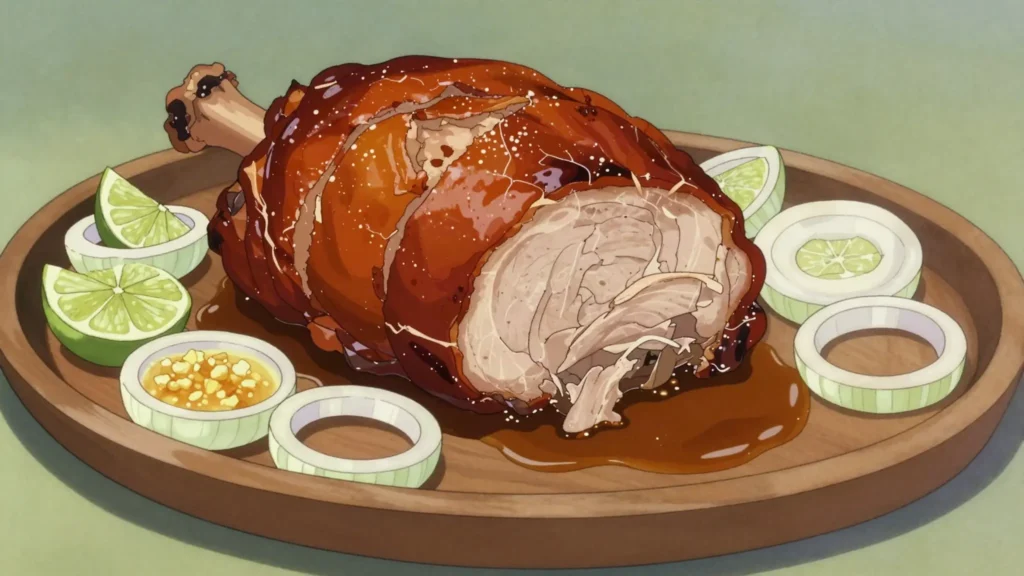
A whole pig, marinated in a citrus-based mojo sauce made from sour orange, garlic and oregano, then roasted slowly, often over an open pit, until the skin turns deeply crisp, considered a centerpiece dish of Cuban celebratory cooking, particularly associated with Christmas Eve, called Nochebuena, and New Year’s celebrations. Its mojo marinade, built on the sour orange, or naranja agria, brought to the Caribbean through Spanish colonization, reflects Cuba’s layered Spanish and Indigenous Caribbean culinary history, and the extended slow-roasting process, traditionally requiring many hours of attentive cooking, has long made lechón asado a dish reserved for major family and community gatherings rather than routine everyday meals. It remains one of Cuba’s most iconic and beloved celebratory dishes.
Frequently asked questions
What is Lechón asado?
Lechón asado is a main from Cuba: mojo-marinated pork slow-roasted for family gatherings. A whole pig, marinated in a citrus-based mojo sauce made from sour orange, garlic and oregano, then roasted slowly, often over an open pit, until the skin turns deeply crisp, considered a centerpiece dish of Cuban celebratory cooking, particularly associated with Christmas Eve, called Nochebuena, and New Year’s celebrations. Its mojo marinade, built on the sour orange, or naranja agria, brought to the Caribbean through Spanish colonization, reflects Cuba’s layered Spanish and Indigenous Caribbean culinary history, and the extended slow-roasting process, traditionally requiring many hours of attentive cooking, has long made lechón asado a dish reserved for major family and community gatherings rather than routine everyday meals. It remains one of Cuba’s most iconic and beloved celebratory dishes.
How long does Lechón asado take to make?
Lechón asado takes 30 min plus 24 hr marinating of preparation and 5 hr 30 min of cooking. The recipe makes 8 servings. It is rated medium to make.
What can I substitute in Lechón asado?
Yes, within limits. No sour orange: 250 ml orange juice, 50 ml lime and 50 ml white grapefruit juice gets very close to the right bitterness.
What is the most important thing to get right in Lechón asado?
Mash the garlic and salt to a wet paste in a mortar, ideally a wooden pilon. Bruising rather than chopping is what gives mojo its raw garlic punch.