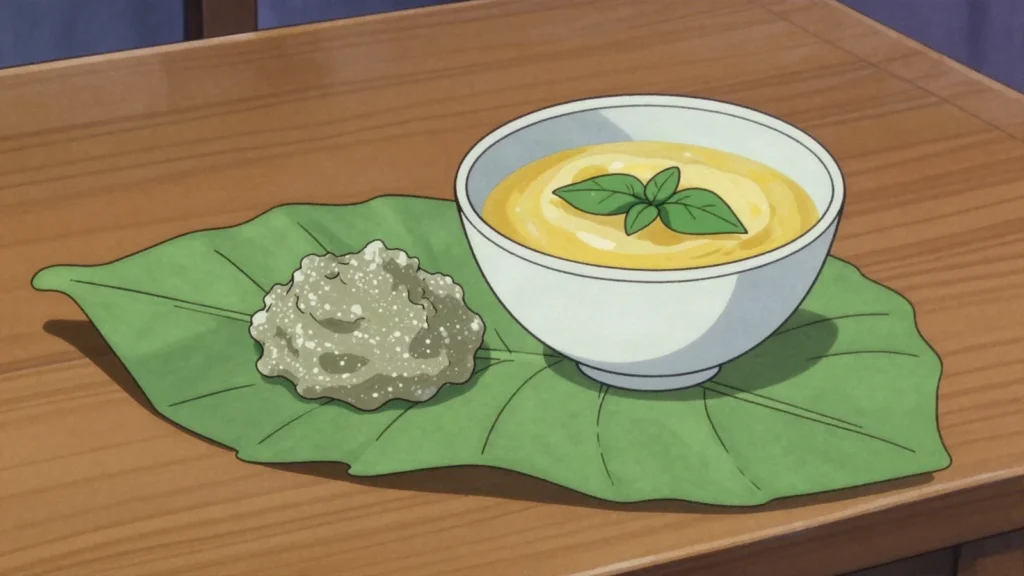

An ash-grey paste of fermented melon or castor seeds, ferociously pungent in soups. It is an Igbo and Yoruba ferment of egusi or castor seeds wrapped in leaves for days, and a spoonful gives ofe and efo their savoury backbone.
It is an alkaline Bacillus ferment of a high-protein seed held warm for days, and castor seeds in particular contain ricin, which the traditional boiling and fermenting is what neutralises.
What goes into it
- egusi melon seeds, or castor seeds
- leaves for wrapping
- sometimes wood ash or salt
How it is made
The seeds are boiled at length, dehulled and pounded, then wrapped warm in leaves and left in a covered basket for three to five days while Bacillus species ferment them into a grey, sticky, ammoniacal paste. The leaves carry the culture, and the paste is used a spoonful at a time.
How long it takes: three to five days of fermenting after boiling
How it is eaten
A spoonful into egusi soup, ofe onugbu, efo riro and ogbono.
History
An Igbo and Yoruba ferment of egusi or castor seeds wrapped in leaves for days; a spoonful gives ofe and efo their savoury backbone.
Frequently asked questions
What is Ogiri?
Ogiri is a fermented & pickled from Nigeria: ash-grey paste of fermented melon or castor seeds, ferociously pungent in soups. An Igbo and Yoruba ferment of egusi or castor seeds wrapped in leaves for days; a spoonful gives ofe and efo their savoury backbone.
How is Ogiri made?
The seeds are boiled at length, dehulled and pounded, then wrapped warm in leaves and left in a covered basket for three to five days while Bacillus species ferment them into a grey, sticky, ammoniacal paste. The leaves carry the culture, and the paste is used a spoonful at a time. It takes three to five days of fermenting after boiling.
Can I make Ogiri at home?
No, and the atlas gives no method for it. It is an alkaline Bacillus ferment of a high-protein seed held warm for days, and castor seeds in particular contain ricin, which the traditional boiling and fermenting is what neutralises.
What goes into Ogiri?
Egusi melon seeds, or castor seeds, leaves for wrapping, sometimes wood ash or salt.
How is Ogiri eaten?
A spoonful into egusi soup, ofe onugbu, efo riro and ogbono.